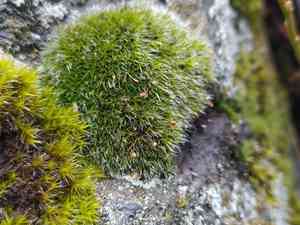
Grimmia dry rock moss (Grimmia longirostris)
Also known as: None
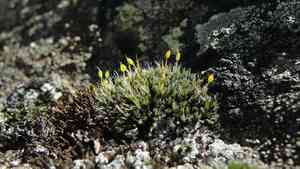
Grimmia dry rock moss exhibits remarkable resilience, thriving on exposed rocks in alpine and harsh environments. Its compact, cushion-like growth and silvery-green to grayish coloration help it endure strong sunlight and desiccation. This moss also features a distinctive long, pointed sporophyte, which facilitates effective spore dispersal in the windy, sparse conditions typical of its habitat. These adaptations enable it to survive and reproduce in challenging environments where other vegetation may struggle.
In This Article
Attributes of Grimmia dry rock moss
Lifespan
Perennial
Plant Type
Moss
Plant Height
1-3 cm
Spread
N/A
Leaf Color
Dark green
Flower Size
N/A
Flower Color
N/A
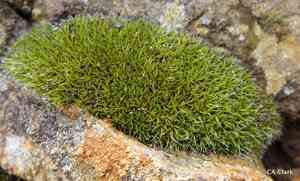
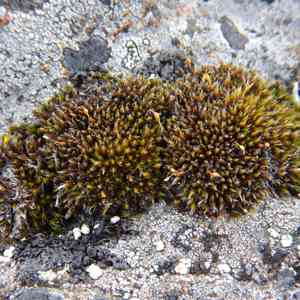
Images of Grimmia dry rock moss
Quickly Identify Grimmia dry rock moss
1
Grimmia longirostris can be identified by its dense, tufted mats forming on rocks, with narrow, elongated leaves that have a pronounced midrib and a dark green color. The leaves are often recurved at the tip.
Scientific Classification of Grimmia dry rock moss
Phylum
Mosses
Class
True mosses
Order
Grimmiales
Family
Rock mosses
Genus
Grimmia
Species
Grimmia dry rock moss
Planting and Growing of Grimmia dry rock moss
Care Difficulty
Hard
Watering Schedule
Every day
Sunlight Requirements
Partial sun
Sunshine Duration
4-6 hours
Ideal Temperature
50-68℉
Soil Type
Potting Mix, Peat Mix
Soil pH
6.5-7.5
Fertilizer Type
Balanced
Pruning Season
Spring, Summer
Pruning Area
Branches, Leaves
Pruning Frequency
2 times a year
Repotting Season
Spring
Pot Type
Plastic, Ceramic
 How to Water Grimmia dry rock moss?
Grimmia longirostris thrives in its natural habitats where it receives minimal water. The key is to mimic these conditions by using a small amount of water, ideally around 50 milliliters, ensuring the substrate is moist but not saturated. This plant prefers slightly drier conditions, so it's crucial to avoid overwatering.
What are the symptoms of an underwatered Grimmia dry rock moss?
›
What should I do if my Grimmia dry rock moss is not getting enough water?
›
What are the symptoms of an overwatered Grimmia dry rock moss?
›
How to save an overwatered Grimmia dry rock moss?
›
 What Are the Sunlight Requirements for Grimmia dry rock moss?
Grimmia longirostris benefits from partial sunlight, which helps maintain its natural green hue and robust texture, essential for its continued healthy development.
What is the best light for Grimmia longirostris?
›
How to ensure ideal light conditions?
›
Benefits of ideal lighting
›
 What Is the Ideal Temperature Range for Grimmia dry rock moss?
Grimmia longirostris thrives best within a temperature range of 50°F to 68°F. This range ensures optimal metabolic rates and photosynthesis efficiency. The consistent conditions within this window facilitate robust moss growth and lush development, providing stability critical to its health. Maintaining this temperature results in vibrant, healthy moss that exhibits its full range of natural characteristics.
 What Soil is Best for Grimmia dry rock moss?
Grimmia longirostris thrives in well-drained soils that prevent excess water retention. This type of soil minimizes the risk of root rot, promoting healthy growth and preventing fungal diseases. The plant prefers soils with moderate nutrient content, which supports its growth while preventing over-fertilization. Having a balanced nutrient content ensures the plant's resilience and vigor. Low salt levels in the soil are crucial for Grimmia longirostris as high salinity can impede nutrient uptake and plant growth, leading to overall poor health and stunted development.
 How to Fertilize Grimmia dry rock moss?
For Grimmia longirostris, which is a type of moss, it is crucial to use a dilute fertilizer solution. Use a quarter-strength liquid fertilizer mixed with water to ensure that the moss receives the necessary nutrients without overwhelming its delicate structure.
 How to Prune Grimmia dry rock moss?
Before starting, inspect the moss thoroughly for any discolored or dead sections. This helps you focus on areas that need attention. Trim away any overgrown, discolored, or dead sections, ensuring to maintain an even shape. This promotes even growth and health. Ensure not to over-prune. The moss needs adequate foliage for photosynthesis; maintain a balance for optimal growth.
 How to Propagate Grimmia dry rock moss plant?
1
Gather mature Grimmia longirostris spore capsules, allowing them to dry and release their spores. The spores need to be prepared by cleaning them of any debris to enhance germination potential.
2
Fill seed trays with a fine, well-draining substrate. Evenly sprinkle the cleaned spores across the surface, ensuring even distribution for optimal growth.
3
Place the covered seed trays in a location with indirect light and maintain a consistent temperature and humidity level to facilitate proper germination.
 How to Repot Grimmia dry rock moss plant?
1
Grimmia longirostris should be repotted when the plant shows signs of outgrowing its current space, such as roots poking through the drainage holes or the plant starting to lift out of the pot. Early spring or autumn are ideal times for repotting, avoiding periods of intense heat or frost.
2
Choose a pot that's just slightly larger than the current one, as Grimmia longirostris prefers a snug environment. Ensure that the pot has drainage holes to prevent waterlogging, which can lead to root rot. Terracotta pots are ideal as they allow moisture to evaporate, keeping the moss's environment stable.
3
A well-draining, gritty soil mix is crucial for Grimmia longirostris to thrive. This provides excellent aeration and prevents root rot by allowing excess water to escape easily, mimicking its natural rock-dwelling habitat. Avoid heavy, clay-rich soils that retain too much moisture.

