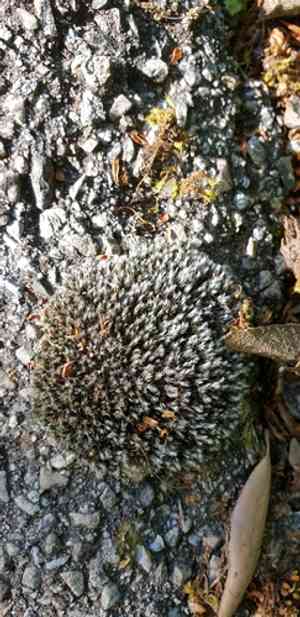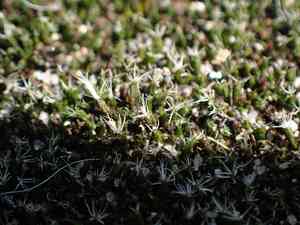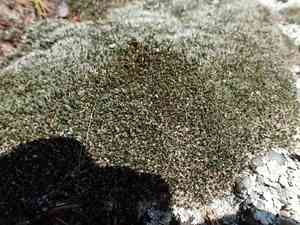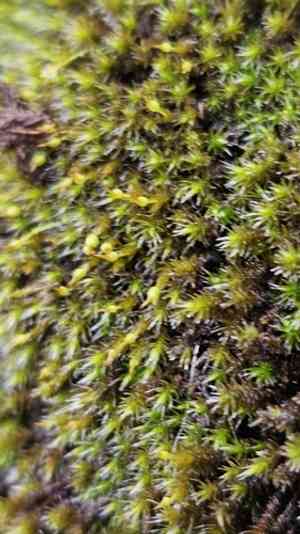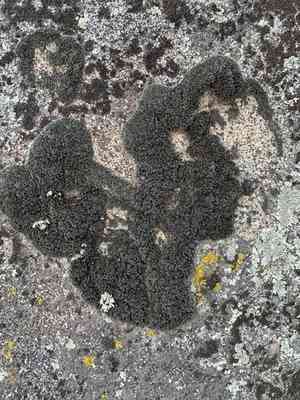
Grimmia dry rock moss(Grimmia laevigata)

Grimmia dry rock moss (Grimmia laevigata)

Also known as: Smooth Grimmia, Cushion Moss

Grimmia dry rock moss exhibits several key adaptations that enable it to thrive on rocky surfaces and in alpine environments:

1. **Cushion Growth Form**: This moss forms dense, cushion-like clusters that help minimize water loss and protect against harsh winds and temperature fluctuations.
2. **Leaf Morphology**: Its leaves fold inward when dry, effectively conserving moisture during periods of dehydration.
3. **Leaf Texture**: The smooth surface of the leaves facilitates water runoff, reducing the risk of prolonged moisture that could promote fungal growth.
4. **Coloration**: The silvery-green color of the moss provides camouflage against rocky backgrounds, helping it blend into its environment.
5. **Durability**: Grimmia dry rock moss can withstand extreme alpine conditions, including high UV radiation and freezing temperatures.
6. **Minimal Soil Dependence**: Its ability to grow directly on rocks allows it to colonize areas with minimal soil.

These adaptations collectively enable Grimmia dry rock moss to persist in environments that are challenging for many other plant species.

Attributes of Grimmia dry rock moss

Lifespan
Perennial
Plant Height
1-3 cm
Spread
N/A
Leaf Color
Dark green to blackish (dry), bright green (moist)
Flower Size
N/A
Flower Color
N/A

ForwardPlant - Identify plants with a snap

Identify and diagnose plants, get toxicity alerts, and explore safety guides for all types of fungi.

Try for Free

Images of Grimmia dry rock moss

Grimmia dry rock moss(Grimmia laevigata)

Quickly Identify Grimmia dry rock moss

1
Identifying Grimmia laevigata involves looking for its dense cushions on rocky surfaces. The leaves are usually spirally arranged, with a distinct dark green to blackish color when dry, and they turn bright green when moistened.

Scientific Classification of Grimmia dry rock moss

Phylum
Bryophyta
Class
Bryopsida
Order
Grimmiales
Family
Grimmiaceae
Genus
Grimmia

Planting and Growing of Grimmia dry rock moss

Care Difficulty
Moderate
Watering Schedule
Every 2 days
Sunlight Requirements
Partial sun
Sunshine Duration
8-12 hours
Ideal Temperature
59-77℉
Soil Type
Potting Mix, Peat Mix
Soil pH
6.5-7.5
Fertilizer Type
Balanced
Pruning Season
Spring, Summer
Pruning Area
Branches, Leaves
Pruning Frequency
2 times a year
Repotting Season
Spring
Pot Type
Plastic, Ceramic

water icon How to Water Grimmia dry rock moss?

Grimmia laevigata prefers a delicate balance in watering. Aim to provide just enough water to slightly moisten the substrate. Typically, around 40 milliliters should suffice, ensuring the plant maintains its unique hydration level without oversaturation.
What are the symptoms of an underwatered Grimmia dry rock moss?
What should I do if my Grimmia dry rock moss is not getting enough water?
What are the symptoms of an overwatered Grimmia dry rock moss?
How to save an overwatered Grimmia dry rock moss?

sunlight icon What Are the Sunlight Requirements for Grimmia dry rock moss?

Sunlight Requirements: Partial sun
Duration of light: Four to six hours
Partial sunlight ensures consistent photosynthetic processes, promoting healthy moss growth. It benefits Grimmia laevigata by maintaining its unique characteristics, such as color and texture, while enhancing its resilience.
What is the optimal lighting condition for Grimmia laevigata?
How to achieve the ideal lighting conditions for Grimmia laevigata?
Benefits of providing ideal lighting to Grimmia laevigata?

temperature icon What Is the Ideal Temperature Range for Grimmia dry rock moss?

Ideal Temperature: 59 ~ 77℉
Grimmia laevigata thrives best in moderate temperatures ranging from 59°F to 77°F. This range allows the plant to perform its physiological activities optimally, supporting not just growth but also photosynthesis and nutrient uptake.

soil icon What Soil is Best for Grimmia dry rock moss?

Soil type: Sandy soil, Sandy loam, Loam
Soil PH: 6.5 ~ 7.5
Grimmia laevigata thrives in soil that provides excellent drainage to prevent root rot. The sandy or sandy loam soil not only complements its drainage preference but also mimics its natural rocky habitats, ensuring the plant remains healthy and vibrant. The soil should be loose and well-aerated, providing necessary air pockets around the roots. This environment encourages effective gas exchange, vital for the plant's respiration and nutrient absorption, optimizing its growth and development. While Grimmia laevigata can tolerate nutrient-poor conditions, a moderate amount of organic matter can enhance soil structure and moisture retention, providing a balanced environment for sustained growth without overwhelming the plant with nutrients.

fertilize icon How to Fertilize Grimmia dry rock moss?

Fertilizer type: Balanced
For Grimmia laevigata, use a weak liquid fertilizer solution at half strength to avoid over-fertilization. Typically, the amount you use should suffice to lightly moisten the entire substrate the plant is growing on. It's essential to balance the quantity to promote healthy growth while ensuring you do not overwhelm this resilient moss.

prune icon How to Prune Grimmia dry rock moss?

Pruning Time: Spring, Summer, Autumn, Winter
Prune Grimmia laevigata best during warm, dry weather. Avoid pruning just before or during periods of rain, as moisture can facilitate the spread of fungal spores or promote rot. Start by removing any dead or discolored moss segments. Trim back overgrown areas to create an even surface, and avoid cutting too deeply into the main body of the moss, which can affect its ability to recover. More About Pruning Techniques

propagate icon How to Propagate Grimmia dry rock moss plant?

Propagate Time: Early spring, Late autumn
1
Collect Grimmia laevigata spores from mature capsules. Ensure the spores are dry and free from any debris before sowing them in a prepared seed tray.
2
Evenly distribute the spores over moist, sterile soil in the seed tray. Avoid covering with additional soil as moss spores require light for germination.
3
Cover the tray with a moisture dome to maintain humidity. Place the tray in a bright location but avoid direct sunlight, which can desiccate the spores.

repot icon How to Repot Grimmia dry rock moss plant?

Repotting frequency: Every 2-3 years
1
Grimmia laevigata, known for its craggy appearance, prefers repotting when its growth becomes stagnant or roots visibly outgrow the current pot. You'll notice it slowing down considerably in nutrient uptake or see roots peeping through drainage holes. These are telltale signs that it's time to offer a fresh home for your moss.
2
Selecting the right pot is crucial for Grimmia laevigata, as it thrives best in shallow, wider containers that mimic its natural habitat. Look for a vessel that allows ample surface area to spread, enhancing aesthetic appeal and promoting healthy expansion. A pot with excellent drainage ensures roots remain aerated and dry.
3
Opt for a well-draining gritty soil mix, designed to simulate rocky, arid conditions. This soil is pivotal in preventing root rot by maintaining dryness while offering necessary stability. Incorporating materials like sand and perlite ensures aeration and keeps the moss in a perfect health state, emulating its rugged natural environment.

ForwardPlant - Identify plants with a snap

Find the best spots for them to optimize their health, simply using your phone.

Try for Free