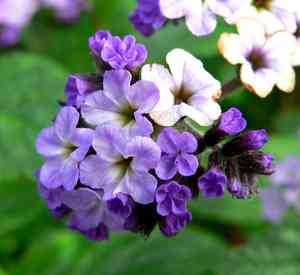
Rosette cushion cryptantha (Greeneocharis circumscissa)
Also known as: None or not commonly known
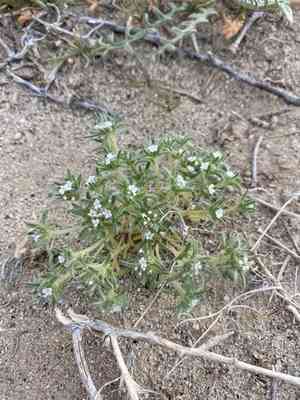
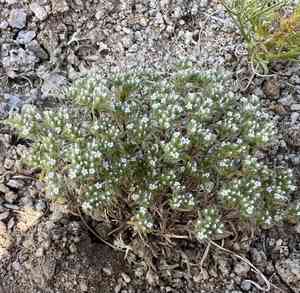
The rosette cushion cryptantha flourishes in dry, desert settings, favoring sandy or rocky soils that ensure excellent drainage. It thrives under full sun exposure and is well-adapted to endure extreme temperature fluctuations. This hardy plant forms low, dense mats with its small, hairy leaves, which are typically arranged in a rosette pattern. Its ability to withstand harsh conditions highlights its remarkable adaptability.
In This Article
Attributes of Rosette cushion cryptantha
Lifespan
Annual
Plant Type
Herb
Plant Height
2.5 cm
Spread
20-30 cm
Leaf Color
Greyish-green
Flower Size
0.5-1 cm
Flower Color
White, pale pink or pale yellow
Images of Rosette cushion cryptantha
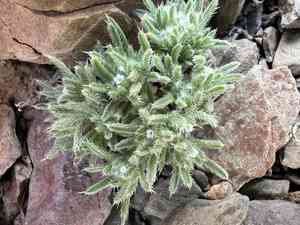
Quickly Identify Rosette cushion cryptantha
1
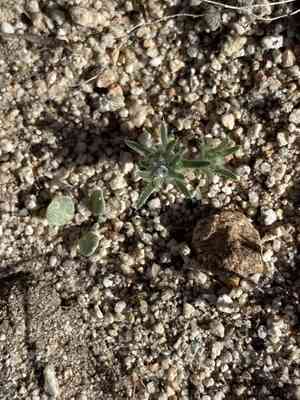
The plant can be identified by its greyish-green, succulent leaves, and small, hermaphroditic flowers which are often white or pale-colored. It typically grows low to the ground and forms dense mats.
Scientific Classification of Rosette cushion cryptantha
Phylum
Vascular plants
Class
Dicotyledons
Order
Caryophyllales
Family
Borage
Genus
Greeneocharis
Species
Rosette cushion cryptantha
Planting and Growing of Rosette cushion cryptantha
Care Difficulty
Hard
Watering Schedule
Every 2 days
Sunlight Requirements
Full sun
Sunshine Duration
6-8 hours
Ideal Temperature
60-75℉
Soil Type
Potting Mix, Peat Mix
Soil pH
6.5-7.5
Fertilizer Type
Balanced
Pruning Season
Spring, Summer
Pruning Area
Branches, Leaves
Pruning Frequency
2 times a year
Repotting Season
Spring
Pot Type
Plastic, Ceramic
 How to Water Rosette cushion cryptantha?
For Greeneocharis circumscissa, the watering amount should be moderate, around 200 milliliters each time. It is essential to ensure the soil is evenly moist but not waterlogged. The amount may vary slightly depending on the plant's size and pot conditions, but it should maintain a balance where water penetrates deeply without water pooling at the bottom.
What are the symptoms of an underwatered Rosette cushion cryptantha?
›
What should I do if my Rosette cushion cryptantha is not getting enough water?
›
What are the symptoms of an overwatered Rosette cushion cryptantha?
›
How to save an overwatered Rosette cushion cryptantha?
›
 What Are the Sunlight Requirements for Rosette cushion cryptantha?
Greeneocharis circumscissa ideally benefits from full to partial sun, aligning with 6 to 8 hours of direct light daily. This ensures maximum photosynthesis, resulting in vigorous growth and a robust plant structure.
What is Greeneocharis circumscissa's ideal light condition?
›
How can you ensure ideal lighting for Greeneocharis circumscissa?
›
What benefits does Greeneocharis circumscissa gain from ideal lighting conditions?
›
 What Is the Ideal Temperature Range for Rosette cushion cryptantha?
For optimal growth, Greeneocharis circumscissa thrives best in temperatures ranging from 60°F to 75°F. This temperature range supports the plant's physiological processes and encourages healthy growth and reproduction. Ensuring this environment will help the plant maintain vibrant foliage and prevent stress-related issues.
 What Soil is Best for Rosette cushion cryptantha?
Greeneocharis circumscissa thrives in soil that ensures excellent drainage. This prevents water stagnation around the roots, which can lead to root rot, and helps the plant absorb necessary nutrients more efficiently. This plant prefers soil with moderate fertility levels, which provide balanced nutrient availability. Overly rich soils can cause excessive foliage at the expense of blooms, ideal conditions encourage balanced growth. Aerated soil is essential for Greeneocharis circumscissa as it promotes root health by allowing air exchange and preventing compacted layers. This enhances root penetration and improves overall plant vigor.
 How to Fertilize Rosette cushion cryptantha?
For Greeneocharis circumscissa, it's crucial to keep the nutrient levels balanced. Use a liquid fertilizer diluted to half-strength, approximately 1/4 teaspoon per gallon of water. For solid fertilizers, apply about 2.5 to 5 grams evenly around the base, taking care not to burn the plant.
 How to Prune Rosette cushion cryptantha?
Start by examining the plant for any dead, diseased, or damaged branches. These should be the first to go as they draw energy away from healthy parts of the plant. Cut back to a healthy part of the branch, ensuring a clean cut with sharp shears. After removing the unhealthy parts, focus on shaping the plant. Cut back long shoots to encourage dense, bushy growth, which not only makes the plant look more lush but helps in managing size and form. Be careful to maintain its natural structure to ensure aesthetic appeal.
More About Pruning Techniques→
 How to Propagate Rosette cushion cryptantha plant?
1
Begin by filling seed trays with a suitable potting mix. The medium should be lightly pressed to remove air pockets and moistened to encourage seed germination.
2
Select healthy parent plants and use sharp pruning shears to take cuttings. Ensure each cutting is 4-6 inches long and has at least two nodes for optimal root development.
3
After preparing the cuttings, plant them in the moistened medium. Ensure nodes are buried under the soil to encourage root growth while keeping the leaves above ground for photosynthesis.
 How to Repot Rosette cushion cryptantha plant?
1
Greeneocharis circumscissa signals its need for a new pot when you notice roots erupting from drainage holes or visible on the soil's surface. Additionally, if you observe water stagnation despite proper watering technique, it could be an indicator of compacted soil, suggesting a timely repot.
2
When selecting the ideal pot, opt for one that is about 1-2 inches larger in diameter than the current one. Terracotta pots work exceptionally well due to their porous nature, allowing the soil to breathe and preventing root rot, which ensures robust plant health.
3
A well-draining cactus mix is paramount. Such soil, often comprised of sand, perlite, and a touch of loam, mimics the plant’s natural desert habitat. This aids in avoiding water stagnation and root rot, pivotal for your plant's longevity and vitality.
Learn More About Rosette cushion cryptantha Diseases
Anthracnose
Bacterial Leaf Spot
Bacterial Soft Rot
Bacterial Wilt
Chemical Injury
Crown Gall
Cyst Nematode
Damping-off
Downy Mildew
Drought Stress
Fusarium Wilt
Gray Mold
Leaf Curl
Leaf Spot
Mosaic
Nutrient Deficiency
Nutrient Toxicity
Powdery Mildew
Root Rot
Root-knot Nematode
Rusts
Sooty Mold
Spider Mites
Temperature Stress
Thrips Damage
White Mold


