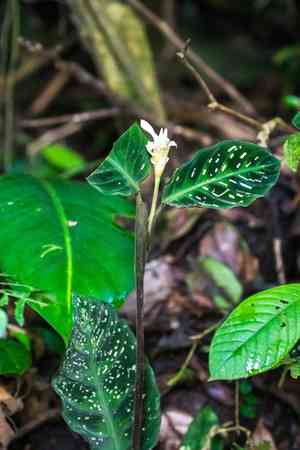
Goeppertia warszewiczii (Goeppertia warszewiczii)
Also known as: Calathea warscewiczii, Warscewicz's Pinstripe Calathea
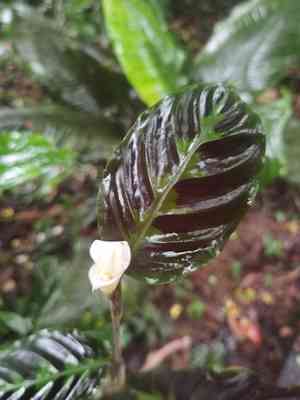
The Goeppertia warszewiczii (formerly known as Calathea warscewiczii) is a native perennial and herbaceous plant of the Marantaceae family found in Costa Rica and Nicaragua. It boasts a growth that extends from 0.5 to 1 meters (20-40 inches) in both height and width, characterized by its noticeable lance-shaped leaves with designs and white, cone-shaped flower clusters that eventually transform into yellow or pink.
In This Article
Images of Goeppertia warszewiczii
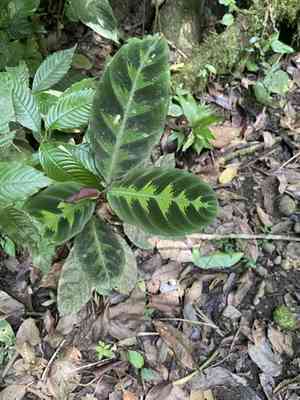
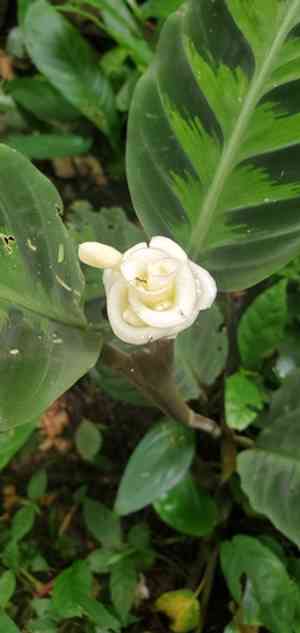
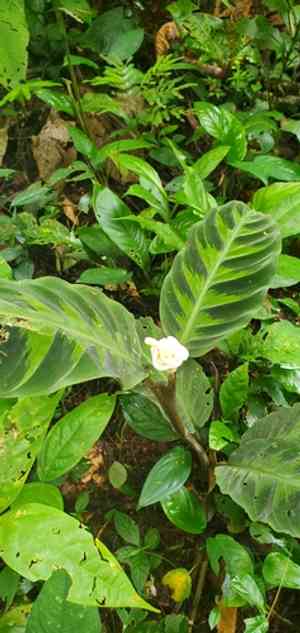
Quickly Identify Goeppertia warszewiczii
1
Look for large, lance-shaped leaves with a velvet texture, dark green coloring, and light green striping or 'pinstripes'. The underside of the leaves is often a rich burgundy.
Scientific Classification of Goeppertia warszewiczii
Phylum
Tracheophyta
Class
Liliopsida
Order
Zingiberales
Family
Marantaceae
Genus
Goeppertia
Species
G. warszewiczii
Planting and Growing of Goeppertia warszewiczii
Care Difficulty
Easy
Watering Schedule
Every 4 days
Sunlight Requirements
Partial sun
Sunshine Duration
6-10 hours
Ideal Temperature
65-75℉
Soil Type
Potting Mix, Peat Mix
Soil pH
6.5-7.5
Fertilizer Type
Balanced
Pruning Season
Spring, Summer
Pruning Area
Branches, Leaves
Pruning Frequency
2 times a year
Repotting Season
Spring
Pot Type
Ceramic, Plastic
 How to Water Goeppertia warszewiczii?
When watering Goeppertia warszewiczii, the goal is to keep the soil consistently moist but not soggy. Water the plant thoroughly until excess water drains out of the bottom of the pot. This ensures that the roots receive a sufficient amount of moisture, preventing any dry pockets in the soil.
What are the symptoms of an underwatered Goeppertia warszewiczii?
›
What should I do if my Goeppertia warszewiczii is not getting enough water?
›
What are the symptoms of an overwatered Goeppertia warszewiczii?
›
How to save an overwatered Goeppertia warszewiczii?
›
 What Are the Sunlight Requirements for Goeppertia warszewiczii?
This plant prefers partial sunlight conditions, with 4 to 6 hours of bright, indirect light daily. Taking advantage of these conditions ensures the plant's vibrant, healthy appearance and steady growth.
What lighting is best for Goeppertia warszewiczii?
›
How can you achieve ideal lighting conditions?
›
What benefits arise from optimal lighting?
›
 What Is the Ideal Temperature Range for Goeppertia warszewiczii?
The ideal temperature range for Goeppertia warszewiczii is between 65°F and 75°F. This temperature range ensures adequate warmth without causing excessive stress on the plant. Consistent temperatures within this range help maintain the plant's health and promote steady growth.
 What Soil is Best for Goeppertia warszewiczii?
Goeppertia warszewiczii thrives in well-draining soil that prevents waterlogging, which can lead to root rot. Loam or peat-based mixes are ideal; they provide excellent drainage and retain moisture well, loosening the soil structure. This plant appreciates consistently moist conditions, but not soggy soil. Using a peat mixture can help retain adequate moisture while preventing excess water accumulation, ensuring the plant remains hydrated without drowning the roots. A nutrient-rich soil, high in organic matter, supports the luxurious foliage of Goeppertia warszewiczii. Add compost or well-rotted manure to the soil mix to ensure a slow release of nutrients and a healthy growing environment.
 How to Fertilize Goeppertia warszewiczii?
Goeppertia warszewiczii thrives with a balanced approach to fertilization. Use a 20-20-20 liquid fertilizer at half-strength, applying it every two weeks during the growing season to avoid nutrient burn. In terms of slow-release pellets, use them sparingly, roughly 1 tbsp per square foot of soil, to ensure a consistent nutrient supply without overwhelming the plant’s roots.
 How to Prune Goeppertia warszewiczii?
Before starting, take a close look at your Goeppertia warszewiczii. Identify any brown, yellow, or damaged leaves, as these are the ones you will want to remove first. Carefully snip off any discolored or dead leaves at their base, close to the stem. This encourages the plant to focus energy on healthier growth. If your plant is becoming too large or unruly, prune back the longer stems just above a leaf node to maintain the desired shape and size. This will encourage bushier, more compact growth.
 How to Propagate Goeppertia warszewiczii plant?
1
Water the parent plant thoroughly a day before division to ensure it is well hydrated. This will make the separating process easier and less stressful for the plant.
2
Carefully remove the plant from its pot and gently untangle the roots. Use your sharp knife or shears to slice through the root ball, ensuring that each section has both roots and shoots.
3
Place each divided section into its pot with fresh potting mix. Ensure it's planted at the same depth it was previously to encourage acclimatization in a new environment.
 How to Repot Goeppertia warszewiczii plant?
1
The best indication that Goeppertia warszewiczii needs repotting is when its roots start peeking out from the drainage holes of the pot, signaling that it's growing too large for its current container. Start checking for this in early spring when the plant begins its growth phase. Another sign is if the plant seems to retain water less effectively than before, or its growth has noticeably slowed.
2
Opt for a pot 2 inches larger in diameter than the current one, ideally made of breathable material like terracotta. This allows excess moisture to escape and provides room for the roots to expand, promoting healthy growth. Ensure the pot has good drainage holes to prevent waterlogging, which is detrimental to the plant's root system.
3
A well-draining peat mix is ideal for Goeppertia warszewiczii, as it retains enough moisture while allowing excess water to drain efficiently. Adding perlite or orchid bark can improve aeration and prevent compacted soil, which is crucial for healthy root development and avoiding root rot.
Learn More About Goeppertia warszewiczii Diseases
Anthracnose
Bacterial Leaf Spot
Bacterial Soft Rot
Damping-off
Downy Mildew
Drought Stress
Fusarium Wilt
Gray Mold
Leaf Curl
Leaf Spot
Mosaic
Nutrient Deficiency
Nutrient Toxicity
Powdery Mildew
Root Rot
Root-knot Nematode
Sooty Mold
Spider Mites
Temperature Stress
Thrips Damage
White Mold
Chemical Injury



