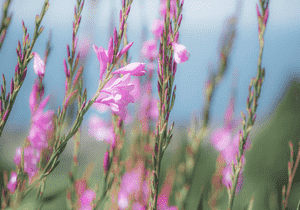
Common corn-flag (Gladiolus communis)
Also known as: Eastern gladiolus, Whistling-jack
The Latin name for the common corn-flag is *Gladiolus communis*. This name originates from the Latin word "gladius," meaning "sword," reflecting the plant's sword-like leaves. *Gladiolus communis* is often cultivated for its tall spikes of magenta flowers, which bloom from late summer to early autumn.
In This Article
Attributes of Common corn-flag
Lifespan
Perennial
Plant Type
Herb
Plant Height
1 m
Spread
10 cm to 15 cm
Leaf Color
Green Blue
Flower Size
5 cm
Flower Color
Pink White Yellow Purple Red Mauve
Images of Common corn-flag
Quickly Identify Common corn-flag
1
Gladiolus communis can be identified by its tall, erect flower spikes that can reach up to 60-90 cm in height. The flowers are arranged in a single row on one side of the stem, and they come in various shades of pink, purple, and red. The leaves are sword-shaped, hence the common name \'sword lily\'.
Scientific Classification of Common corn-flag
Phylum
Vascular plants
Class
Monocotyledons
Order
Asparagales
Family
Iris
Genus
Gladioli
Species
Common corn-flag
Planting and Growing of Common corn-flag
Care Difficulty
Moderate
Watering Schedule
Every 4 days
Sunlight Requirements
Full sun
Sunshine Duration
6-10 hours
Ideal Temperature
60-75℉
Soil Type
Potting Mix, Peat Mix
Soil pH
6.5-7.5
Fertilizer Type
Balanced
Pruning Season
Spring, Summer
Pruning Area
Branches, Leaves
Pruning Frequency
2 times a year
Repotting Season
Spring
Pot Type
Plastic, Ceramic
 How to Water Common corn-flag?
For Gladiolus communis, ensure the soil is moist, but never soggy. Water around 500 ml each time, allowing moisture to evenly penetrate the soil. This prevents both underwatering and overwatering, maintaining optimal soil conditions.
What are the symptoms of an underwatered Common corn-flag?
›
What should I do if my Common corn-flag is not getting enough water?
›
What are the symptoms of an overwatered Common corn-flag?
›
How to save an overwatered Common corn-flag?
›
 What Are the Sunlight Requirements for Common corn-flag?
Full sun to partial sun is ideal. It encourages robust growth, vibrant flower production, and overall plant vigor, ensuring the plant remains healthy and less prone to disease.
More About Sunlight Requirements Techniques→
What is the ideal light condition?
›
How to achieve ideal lighting for Gladiolus communis?
›
What are the benefits of receiving ideal light?
›
 What Is the Ideal Temperature Range for Common corn-flag?
For optimal growth of Gladiolus communis, the ideal temperature range lies between 60°F and 75°F. This range ensures that the plant's metabolic and photosynthetic processes function efficiently, leading to vibrant blooms and healthy foliage. Maintaining this temperature range fosters a microclimate that mimics their native Mediterranean conditions, crucial for their growth cycle and longevity.
 What Soil is Best for Common corn-flag?
Gladiolus communis thrives in well-drained soil to prevent root rot, a common issue in poor draining conditions. Proper drainage aids in healthy root development and results in vibrant blooms. Rich, fertile soil with ample organic matter supports robust growth and maximal flowering. Organic matter boosts soil structure, improving water retention and nutrient availability. The soil should maintain moderate moisture without becoming waterlogged. Consistent moisture ensures sustained growth and supports the plant's need through dry spells.
More About Soil→
 How to Fertilize Common corn-flag?
Gladiolus communis thrive with moderate nutrient levels. For liquid fertilizer, use a balanced formula, such as 10-10-10, diluted to half strength. Each application should cover the soil evenly without waterlogging. For slow-release fertilizers, apply 2 to 3 tablespoons per square foot of growing area, depending on the variety and soil health.
More About Fertilizing Techniques→
 How to Prune Common corn-flag?
Look for stalks that are brown, wilted, or show signs of insect damage. These should be the first to go, as they sap resources from healthier parts of the plant. When you've identified a stalk that needs to be removed, make your cut at the base of the plant using either garden shears or scissors, ensuring a swift, clean cut to prevent disease. Once Gladiolus flowers have faded, remove the flower spikes. This action, known as deadheading, prevents seed formation and encourages the bulb to store more energy for the next season. Do not remove green, healthy leaves during the growing season. These leaves are essential for photosynthesis and help the bulb store nutrients that are crucial for next year's blooms.
More About Pruning Techniques→
 How to Propagate Common corn-flag plant?
1
To propagate Gladiolus communis from seed, fill your seedling tray with a well-draining potting mix and lightly press seeds into the soil without covering them completely. Water gently to keep the soil moist but not waterlogged.
2
For division propagation, carefully dig up the corms during early spring before the growth season fully begins. Use a trowel to separate the corms, ensuring each has roots attached, and replant them promptly at their new location.
3
Once seedlings have sprouted and are strong enough, they can be transplanted into individual pots or directly into the garden. Ensure that the new planting site is well-prepared with fertile soil and adequate humidity.
 How to Repot Common corn-flag plant?
1
Look for signals such as overcrowded bulbs or stunted growth to determine repotting timing. When Gladiolus communis appears to have stopped thriving or becomes too large for its pot, it is a clear indication that repotting is necessary. Spring is the ideal season to repot, as the growing period helps the plant adapt to new conditions.
2
Select a pot that is one or two sizes larger than the current one, ensuring there is plenty of space for bulb expansion. The pot should have drainage holes to prevent waterlogging, promoting healthy roots. A slightly deeper pot is beneficial, allowing Gladiolus communis corms to establish well at varied depths, encouraging strong growth.
3
Opt for a well-draining soil mix, ideally combining equal parts of peat, perlite, and garden loam. Such a blend ensures excellent drainage and maintains adequate moisture, crucial for the plant’s growth. Balanced soil supports healthy root development, reducing the risk of root rot and keeping Gladiolus communis thriving.
Toxicity
Ingestion
WARNING
The judgment on toxicity and danger is for reference only. We DO NOT GUARANTEE any accuracy of such judgment. Therefore, you SHALL NOT rely on such judgment. It is IMPORTANT TO SEEK PROFESSIONAL ADVICE in advance when necessary.
Learn More About Common corn-flag Diseases
Anthracnose
Bacterial Leaf Spot
Bacterial Soft Rot
Bacterial Wilt
Chemical Injury
Crown Gall
Cyst Nematode
Damping-off
Downy Mildew
Drought Stress
Fusarium Wilt
Gray Mold
Leaf Spot
Mosaic
Nutrient Deficiency
Nutrient Toxicity
Powdery Mildew
Root Rot
Root-knot Nematode
Rusts
Sooty Mold
Spider Mites
Temperature Stress
Thrips Damage
White Mold



