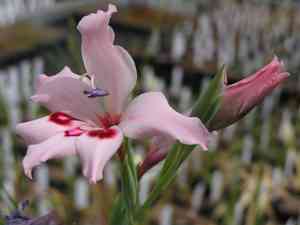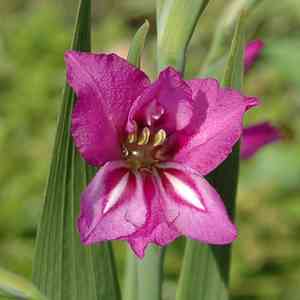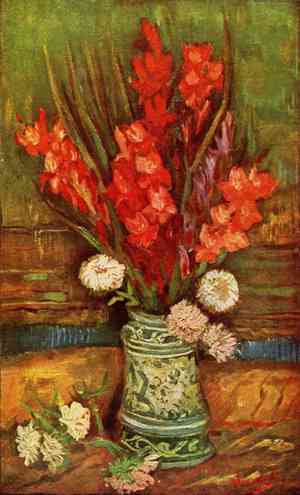
Gladioli (Gladiolus)(Gladiolus)

Gladioli (Gladiolus) (Gladiolus)

Also known as: Sword lily

Gladioli are perennial plants named after the Latin word "gladius," which means "sword," referring to their long, sword-like leaves. These plants are often grown for their ornamental value, both in gardens and as cut flowers. A wide range of gladioli varieties has been hybridized, offering flowers in various colors to meet commercial demands.

Attributes of Gladioli (Gladiolus)

Lifespan
Gladiolus is a perennial plant that typically grows from corms. Each growth cycle involves planting the corms, growth of leaves and stems, flowering, and then the corms become dormant until the next growing season.
Plant Height
30 cm to 1.8 m
Spread
30 cm to 60 cm
Leaf Color
Green
Flower Size
2.5 cm to 8 cm
Flower Color
Red, Pink, White, Yellow, Purple, Orange, and various bicolors

ForwardPlant - Identify plants with a snap

Identify and diagnose plants, get toxicity alerts, and explore safety guides for all types of fungi.

Try for Free

Images of Gladioli (Gladiolus)

Gladioli (Gladiolus)(Gladiolus)

Quickly Identify Gladioli (Gladiolus)

1
Gladiolus can be identified by its tall, erect flower spikes that emerge from sword-like leaves. The flowers are funnel-shaped and come in a variety of colors including red, pink, white, yellow, and purple.

Scientific Classification of Gladioli (Gladiolus)

Phylum
Angiosperms
Class
Liliopsida
Order
Asparagales
Family
Iridaceae
Genus
Gladiolus

Planting and Growing of Gladioli (Gladiolus)

Care Difficulty
Moderate
Watering Schedule
Every 3 days
Sunlight Requirements
Full sun
Sunshine Duration
6-10 hours
Ideal Temperature
60-77℉
Soil Type
Potting Mix, Peat Mix
Soil pH
6.5-7.5
Fertilizer Type
Balanced
Pruning Season
Spring, Summer
Pruning Area
Branches, Leaves
Pruning Frequency
2 times a year
Repotting Season
Spring
Pot Type
Plastic, Ceramic

water icon How to Water Gladioli (Gladiolus)?

Gladiolus requires a moderate amount of water per session. Ensure that the topsoil remains consistently moist but not waterlogged. A thorough watering to the depth of 5-6 inches is ideal, which can be quantified as approximately 500 milliliters per session.
What are the symptoms of an underwatered Gladioli (Gladiolus)?
What should I do if my Gladioli (Gladiolus) is not getting enough water?
What are the symptoms of an overwatered Gladioli (Gladiolus)?
How to save an overwatered Gladioli (Gladiolus)?

sunlight icon What Are the Sunlight Requirements for Gladioli (Gladiolus)?

Sunlight Requirements: Full sun, Partial sun
Duration of light: 6-8 hours daily
Gladiolus needs full sun to partial sun. This range is crucial for vibrant blooms and strong, healthy plants, maximizing their decorative appeal and vigor.
What is the ideal light condition for Gladiolus?
How do I achieve the ideal lighting for Gladiolus?
What are the benefits of ideal lighting for Gladiolus?

temperature icon What Is the Ideal Temperature Range for Gladioli (Gladiolus)?

Ideal Temperature: 60 ~ 77℉
The ideal temperature range for Gladiolus is between 60 and 77 degrees Fahrenheit. These temperatures provide a stable environment that encourages healthy growth and vibrant blooms. Temperatures within this range ensure that the plant's metabolic and physiological processes function optimally.

soil icon What Soil is Best for Gladioli (Gladiolus)?

Soil type: Loam, Sandy loam
Soil PH: 6.5 ~ 7.5
Gladiolus thrives in well-drained soil that prevents waterlogging, which can lead to root rot. A soil structure that allows excess water to exit swiftly is crucial for maintaining healthy roots and ensuring vibrant growth. Rich, nutrient-laden soil is paramount for Gladiolus to produce its signature spectacular blooms. Incorporating organic matter or compost boosts soil fertility, providing essential nutrients for vigorous flowering. While Gladiolus requires well-drained soil, maintaining a moderate moisture level is also important. Consistent moisture keeps the plants hydrated, especially during dry spells, promoting consistent growth and flowering.

fertilize icon How to Fertilize Gladioli (Gladiolus)?

Fertilizer type: Balanced
For Gladiolus, it's important to use a balanced fertilizer with equal parts nitrogen, phosphorus, and potassium. A concentration of 10-10-10 or 5-10-10 applied at 10 grams per square foot is usually sufficient to support their vibrant blooms and strong growth.

prune icon How to Prune Gladioli (Gladiolus)?

Pruning Time: Spring, Summer, Autumn
After the blooming period, trim the flower stalks down to ground level. This prevents the plant from investing energy in seed production and redirects it towards strengthening the corms for better blooms next season. Cut away any brown or yellow leaves to maintain plant health and aesthetics. Ensure that cuts are clean and made close to the base to prevent water or pest entry into hollow stems.

propagate icon How to Propagate Gladioli (Gladiolus) plant?

Propagate Time: Spring, Early spring, Late spring
1
Prepare a seedbed by loosening the soil and removing weeds. Ensure the soil is well-drained and rich in organic matter to promote strong seedling growth.
2
Sow gladiolus seeds in trays or a well-prepared bed in early spring. Plant seeds at a depth of about half an inch, spacing them one to two inches apart.
3
In late spring, dig up the gladiolus corms. Gently separate the cormels from the main corm, making sure each piece has healthy roots attached for optimal growth.

repot icon How to Repot Gladioli (Gladiolus) plant?

Repotting frequency: Every 2-3 years
1
You should consider repotting Gladiolus when you notice the plant is becoming root-bound or when its growth appears stunted. Usually, signs such as yellowing leaves and poor drainage indicate the need for a new pot. Spring is the ideal time for repotting as the plant is gearing up for its growth phase.
2
Choose a pot that is 2-3 inches larger in diameter than the current one. Ensure it has adequate drainage holes to prevent waterlogging, which can lead to root rot. A well-chosen pot allows for better root expansion and healthier growth.
3
Opt for a well-draining loamy soil mix enriched with organic matter. This type of soil aids in providing essential nutrients and prevents compaction, which ensures proper air circulation around the roots and helps maintain plant health.

ForwardPlant - Identify plants with a snap

Find the best spots for them to optimize their health, simply using your phone.

Try for Free

Toxicity of Gladioli (Gladiolus)

Is Gladioli (Gladiolus) toxic to humans?

Gladiolus is a perennial flowering herb that possesses bulbs which can be classified as mildly to moderately toxic. Individuals who are particularly sensitive may experience skin irritation when they come into direct contact with the plant's green parts.

Is Gladioli (Gladiolus) toxic to cat?

Numerous species and cultivars within the Gladiolus genus exhibit significant toxicity to felines, necessitating prompt veterinary care. Every part of the gladiolus plant is toxic if ingested, with the bulbs containing the highest levels of harmful substances. Initial signs of poisoning involve excessive drooling, decreased appetite, vomiting, diarrhea, and overall lethargy. If not addressed swiftly, the poisoning may result in complications affecting the heart, liver, and kidneys.

Is Gladioli (Gladiolus) toxic to dog?

Every component of the gladiolus plant (Gladiolus) is poisonous, especially the bulbs, which can induce serious symptoms like convulsions if ingested. Keep your dog away from areas where gladioli thrive, as the bulbs may resemble hidden toys or balls. To prevent any risk of fatality, promptly consult a veterinarian if a dog is discovered engaging with the bulbs.


Identify toxic plants for your safety

Learn which plants are harmful to you and your pets, and make informed choices for a safer home!

Try for Free
WARNING
The judgment on toxicity and danger is for reference only. We DO NOT GUARANTEE any accuracy of such judgment. Therefore, you SHALL NOT rely on such judgment. It is IMPORTANT TO SEEK PROFESSIONAL ADVICE in advance when necessary.
More About Toxic Techniques