Giliastrum (Giliastrum) (Giliastrum)
Also known as: Blue Throatwort
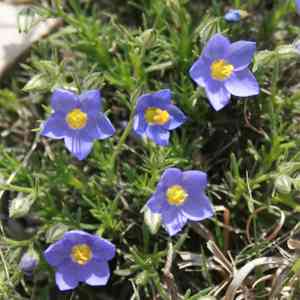
Giliastrum is a genus of flowering plants in the family Polemoniaceae. These plants are typically found in arid and semi-arid regions and are known for their brightly colored flowers, often blue or violet. They are small herbaceous plants suited to dry climates.
In This Article
Attributes of Giliastrum (Giliastrum)
Lifespan
Perennial
Plant Height
Up to 30 cm
Spread
Not applicable
Leaf Color
Green
Flower Size
1 to 2 cm
Flower Color
Blue, Violet
Images of Giliastrum (Giliastrum)
Quickly Identify Giliastrum (Giliastrum)
1
Recognizing Giliastrum involves looking for its small stature, typically less than 1 foot tall, and identifying its blue or violet tubular flowers. The flowers usually have five petals and are grouped in a tight cluster.
Scientific Classification of Giliastrum (Giliastrum)
Phylum
Magnoliophyta
Class
Magnoliopsida
Order
Ericales
Family
Polemoniaceae
Genus
Giliastrum
Planting and Growing of Giliastrum (Giliastrum)
Care Difficulty
Moderate
Watering Schedule
Every 2 days
Sunlight Requirements
Full sun
Sunshine Duration
4-8 hours
Ideal Temperature
65-75℉
Soil Type
Potting Mix, Peat Mix
Soil pH
6.5-7.5
Fertilizer Type
Balanced
Pruning Season
Spring, Summer
Pruning Area
Branches, Leaves
Pruning Frequency
2 times a year
Repotting Season
Spring
Pot Type
Plastic, Ceramic
 How to Water Giliastrum (Giliastrum)?
For Giliastrum, 150 milliliters of water per session typically ensures the soil receives adequate moisture without becoming overly saturated. The principle is to water just enough to see a minimal amount draining from the pot's base, signaling deep soil penetration without waterlogging. This balance helps sustain root health and prevents the onset of rot.
What are the symptoms of an underwatered Giliastrum (Giliastrum)?
›
What should I do if my Giliastrum (Giliastrum) is not getting enough water?
›
What are the symptoms of an overwatered Giliastrum (Giliastrum)?
›
How to save an overwatered Giliastrum (Giliastrum)?
›
 What Are the Sunlight Requirements for Giliastrum (Giliastrum)?
Giliastrum thrives in environments delivering 6-8 hours of full sunlight or partial sun daily. Ideal lighting supports healthy photosynthesis, promoting robust growth, resistance to diseases, and vibrant foliage.
Question 1
›
Question 2
›
Question 3
›
 What Is the Ideal Temperature Range for Giliastrum (Giliastrum)?
For optimal growth, Giliastrum thrives in a temperature range between 65°F and 75°F. This range supports not only flowering but also healthy leaf development and root growth. Maintaining this consistent temperature enables the plant to photosynthesize efficiently and absorb nutrients at an ideal rate.
 What Soil is Best for Giliastrum (Giliastrum)?
Giliastrum requires soil that drains well to avoid root rot caused by water accumulation. Optimal drainage ensures that the roots can access oxygen and nutrients efficiently, leading to healthier and more vigorous plant growth. A balanced nutrient profile in the soil is vital for Giliastrum's optimal growth. Adequate levels of nitrogen, phosphorus, and potassium promote flowering and foliage development, ensuring the plant remains robust and attractive. The soil should have a light, airy texture that allows for easy root expansion and aeration. Soils with good texture prevent compaction, ensuring that roots can grow without obstruction.
 How to Fertilize Giliastrum (Giliastrum)?
For Giliastrum, a modest fertilization regime is ideal. During the growth period, apply a balanced 10-10-10 liquid fertilizer at a rate of 1 tablespoon per gallon of water every two weeks. Avoid excessive fertility to prevent root damage.
 How to Prune Giliastrum (Giliastrum)?
Locate the growth nodes on each stem; cutting just above these will promote branch formation, leading to a fuller plant. Be careful to leave a small amount of stem above the node to avoid dieback. Cut away any dead or diseased stems at their base. This encourages healthy growth and reduces the chance for disease to spread through the plant.
 How to Propagate Giliastrum (Giliastrum) plant?
1
Before planting, soak Giliastrum seeds in water for 24 hours to soften and promote germination. This increases the chances of successful sprouting by simulating natural conditions for the seeds.
2
Scatter the soaked seeds evenly onto the prepared soil in the seed tray. Lightly cover them with a thin layer of soil mix. This ensures the seeds remain in contact with soil while not being buried too deep, which could hinder germination.
3
Maintain consistent moisture in the soil during the germination period. Mist the soil surface regularly to prevent drying out but avoid overwatering, which can lead to seed rot.
 How to Repot Giliastrum (Giliastrum) plant?
1
Repotting Giliastrum is best done when you notice that the plant has outgrown its container and roots are beginning to tangle. It's also important to repot when the soil appears depleted or hard, leading to poor drainage. Plan to do this in either early Spring or during Autumn when the plant is not in its peak growing phase.
2
Choose a pot that provides adequate drainage, with holes at the bottom to allow excess water to escape. It should be one size larger than the current pot, giving enough room for roots to spread. A breathable material like terracotta is ideal, as it helps prevent root rot by promoting air circulation around the root system.
3
Opt for a well-draining sandy soil mix that mimics the plant's natural arid environment. A mix containing perlite can enhance aeration and drainage. This type of soil ensures that roots do not stay waterlogged, preventing root rot and fostering healthy growth.
Toxicity
N/A
WARNING
The judgment on toxicity and danger is for reference only. We DO NOT GUARANTEE any accuracy of such judgment. Therefore, you SHALL NOT rely on such judgment. It is IMPORTANT TO SEEK PROFESSIONAL ADVICE in advance when necessary.

