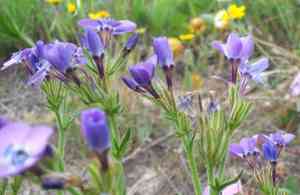
Hoffman's gilia (Gilia tenuiflora)
Also known as: Monterey gilia, Slender-flowered gilia
Hoffman's gilia (Gilia tenuiflora) is a flowering plant found primarily in coastal scrubs and woodlands along California's central coast, including the coastal highlands and the Channel Islands. Endemic to this region, it boasts several subspecies, such as Hoffmann's slender-flowered gilia (ssp. hoffmannii) and Monterey gilia (ssp. arenaria), both of which are considered endangered.
In This Article
Attributes of Hoffman's gilia
Lifespan
Annual
Plant Type
Herb
Plant Height
30-60 cm
Spread
Not typically characterized by crown diameter as it is an herbaceous plant
Leaf Color
Green
Flower Size
0.5-1 cm
Flower Color
White to pale pink
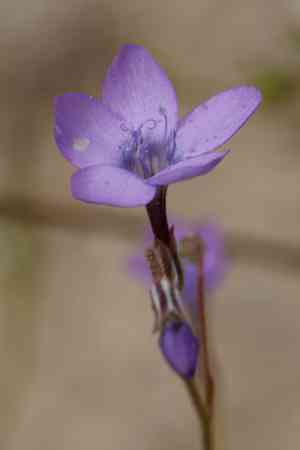
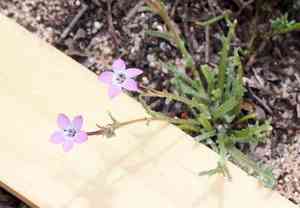
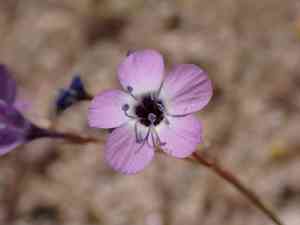
Images of Hoffman's gilia
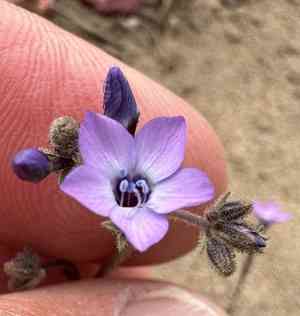
Quickly Identify Hoffman's gilia
1
To identify Gilia tenuiflora, look for its delicate, slender stems and narrow, finely divided leaves. The flowers are typically small, ranging from white to pale pink, and arranged in loose, open clusters.
Scientific Classification of Hoffman's gilia
Phylum
Vascular plants
Class
Dicotyledons
Order
Ericales
Family
Phlox
Genus
Gilia
Species
Hoffman's gilia
Planting and Growing of Hoffman's gilia
Care Difficulty
Moderate
Watering Schedule
Every 2 days
Sunlight Requirements
Partial sun
Sunshine Duration
4-6 hours
Ideal Temperature
60-75℉
Soil Type
Potting Mix, Peat Mix
Soil pH
6.5-7.5
Fertilizer Type
Balanced
Pruning Season
Spring, Summer
Pruning Area
Branches, Leaves
Pruning Frequency
Once a year
Repotting Season
Spring
Pot Type
Plastic, Terracotta
 How to Water Hoffman's gilia?
Gilia tenuiflora prefers moderate watering. You should aim to keep the soil evenly moist but not soggy. Ensure that each watering session delivers around 150 milliliters of water, enough to moisten the soil to a depth of several inches, promoting root hydration without risking root rot.
What are the symptoms of an underwatered Hoffman's gilia?
›
What should I do if my Hoffman's gilia is not getting enough water?
›
What are the symptoms of an overwatered Hoffman's gilia?
›
How to save an overwatered Hoffman's gilia?
›
 What Are the Sunlight Requirements for Hoffman's gilia?
Partial sun, providing 4-6 hours of sunlight daily, improves growth and flowering, optimizing health and vitality in Gilia tenuiflora.
What is the best light for Gilia tenuiflora?
›
How can I provide ideal lighting for Gilia tenuiflora?
›
What benefits does ideal lighting offer Gilia tenuiflora?
›
 What Is the Ideal Temperature Range for Hoffman's gilia?
The ideal temperature range for growing Gilia tenuiflora is between 60°F and 75°F. This range provides optimal conditions for the plant’s physiological processes, including photosynthesis and nutrient uptake. Maintaining this temperature ensures healthy growth and flowering.
 What Soil is Best for Hoffman's gilia?
Gilia tenuiflora thrives in well-drained soil that prevents root rot. A soil structure that swiftly drains excess water is essential. By utilizing well-drained soil, the plant can maintain optimal moisture without waterlogging, which supports healthy root development and flower growth. This plant prefers slightly nutrient-poor soil environments akin to its native habitat. In nutrient-poor conditions, Gilia tenuiflora efficiently allocates resources, enhancing its resilience and promoting natural growth patterns without the risk of excessive foliage or reduced flowering. A moderately aerated soil ensures adequate oxygen supply to the roots, which is vital for the plant's respiration and nutrient uptake. Aerated conditions prevent compaction, allowing roots to expand freely and improving the plant's overall health and vigor.
 How to Fertilize Hoffman's gilia?
For Gilia tenuiflora, it's important to use a light hand when applying fertilizer. This plant thrives on nutrient-rich but not overwhelming soils. A diluted liquid fertilizer solution, with a half-strength mix of nitrogen, phosphorus, and potassium, is ideal for promoting healthy growth. Ensure that the liquid fertilizer is diluted to a quarter of its recommended strength to prevent over-fertilization.
 How to Prune Hoffman's gilia?
Start by inspecting the plant for dead or damaged stems and leaves. Use clean, sharp scissors or pruning shears to trim these parts back to healthy tissue. Focus on creating an open, bushy appearance by removing stems that are crossing or growing inward. This helps promote light penetration and even growth. To encourage blooming, trim back the tips of stems to promote branching. This is best done in early spring before the plant begins its vigorous growth season. Be careful not to remove too much at once, as Gilia tenuiflora depends on older growth to sustain flowering cycles.
More About Pruning Techniques→
 How to Propagate Hoffman's gilia plant?
1
Harvest seeds from mature plants once the flowering period ends. Allow seed pods to dry on the plant, then collect them before they disperse. Store seeds in a cool, dry place until you're ready to sow them in early spring.
2
Fill a seed tray with potting mix, lightly tamping it down. Water the soil mix until moisture evenly reaches the surface but avoid making it too soggy, which can lead to mold and poor germination rates.
3
Scatter the seeds thinly on the tray's surface, then cover them with a thin layer of potting mix. Gently press down to ensure good seed-to-soil contact, which improves germination rates. Maintain consistent moisture levels during germination.
 How to Repot Hoffman's gilia plant?
1
Gilia tenuiflora shows signs of needing a repot when its roots start to emerge from the drainage holes, indicating it has outgrown its current container. The ideal time to repot is in early spring, just before its active growth phase begins, allowing the plant to establish itself in the fresh soil as the warmth increases.
2
Select a pot that is one size larger than the current one to give roots room to expand without excess moisture. Ideally, use a pot made from breathable materials like terracotta, which helps improve aeration and prevent overwatering, enhancing root health.
3
Opt for well-draining sandy soil to mimic Gilia tenuiflora's natural habitat. This type of soil prevents waterlogging, reduces the risk of root rot, and provides the optimal environment for securing aeration and moisture balance, crucial for this species.
Learn More About Hoffman's gilia Diseases
Anthracnose
Bacterial Leaf Spot
Bacterial Wilt
Chemical Injury
Crown Gall
Cyst Nematode
Damping-off
Downy Mildew
Drought Stress
Fusarium Wilt
Gray Mold
Leaf Curl
Leaf Spot
Mosaic
Nutrient Deficiency
Nutrient Toxicity
Powdery Mildew
Root Rot
Root-knot Nematode
Rusts
Sooty Mold
Spider Mites
Temperature Stress
Thrips Damage
White Mold



