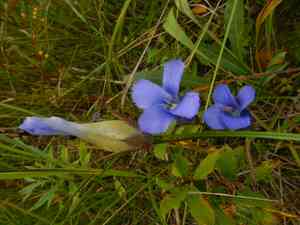
Lesser fringed gentian (Gentianopsis virgata)
Also known as: Fringed Gentian, Prairie Gentian
The wildflower you're referring to is likely the Lesser Fringed Gentian (Gentianopsis virgata). This slender perennial boasts striking blue to violet, trumpet-shaped flowers that bloom individually at the tips of each stalk from late summer to early fall. It typically thrives in moist, well-drained soils and open areas such as meadows, marking the onset of autumn with its vibrant hues.
In This Article
Attributes of Lesser fringed gentian
Lifespan
Biennial
Plant Type
Herb
Plant Height
8 cm to 46 cm
Spread
N/A
Leaf Color
Green
Flower Size
2-4 cm
Flower Color
Deep blue to violet
Images of Lesser fringed gentian
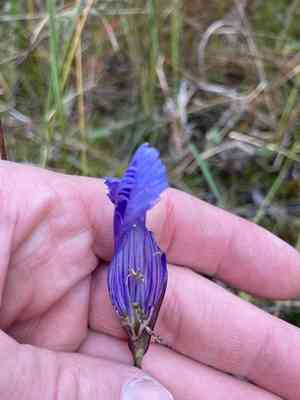
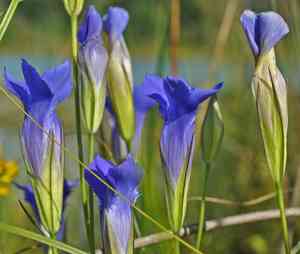
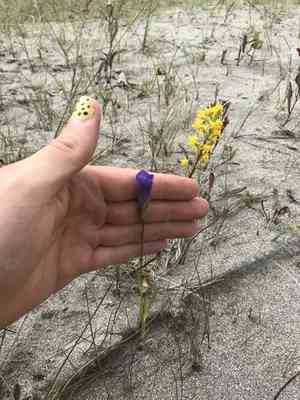
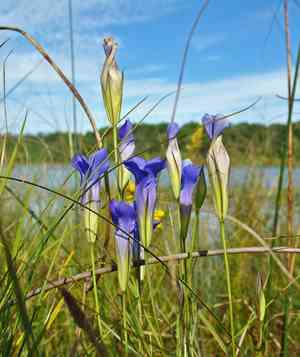
Quickly Identify Lesser fringed gentian
1
Look for a slender stem, typically around 20-60 cm tall, with opposite leaves. The flowers are the key feature, with their fringed or deeply cut petal edges, which appear in late summer to fall.
Scientific Classification of Lesser fringed gentian
Phylum
Vascular plants
Class
Dicotyledons
Order
Gentianales
Family
Gentian
Genus
Fringed gentians
Species
Lesser fringed gentian
Planting and Growing of Lesser fringed gentian
Care Difficulty
Hard
Watering Schedule
Every 2 days
Sunlight Requirements
Partial sun
Sunshine Duration
6-10 hours
Ideal Temperature
50-68℉
Soil Type
Potting Mix, Peat Mix
Soil pH
6.5-7.5
Fertilizer Type
Balanced
Pruning Season
Spring, Summer
Pruning Area
Branches, Leaves
Pruning Frequency
2 times a year
Repotting Season
Spring
Pot Type
Plastic, Ceramic
 How to Water Lesser fringed gentian?
Gentianopsis virgata requires careful watering. Ensure the soil is kept moist but not soggy. Water approximately 250 ml each time, allowing it to infiltrate thoroughly but avoid pooling. The roots thrive when they have consistent access to water that doesn't lead to waterlogging. Adjust based on ambient humidity and temperature, ensuring water reaches the root zone evenly.
What are the symptoms of an underwatered Lesser fringed gentian?
›
What should I do if my Lesser fringed gentian is not getting enough water?
›
What are the symptoms of an overwatered Lesser fringed gentian?
›
How to save an overwatered Lesser fringed gentian?
›
 What Are the Sunlight Requirements for Lesser fringed gentian?
Gentianopsis virgata thrives best in partial sun, where it can benefit from 4 to 6 hours of sunlight each day. This balance provides necessary light for photosynthesis, promoting robust growth and vivid blooming without risk of overheating.
How much sunlight does Gentianopsis virgata need?
›
What are the best strategies to provide ideal light?
›
What are the benefits of ideal lighting for this plant?
›
 What Is the Ideal Temperature Range for Lesser fringed gentian?
Gentianopsis virgata thrives best in temperatures ranging from 50°F to 68°F. This range closely mimics their natural montane or subalpine habitat, providing the balance of warmth and coolness required for optimal growth and flowering. Maintaining this temperature range encourages vigorous plant health, robust growth, and prolific blooming.
 What Soil is Best for Lesser fringed gentian?
Gentianopsis virgata thrives in soil that offers good drainage, which prevents waterlogging and root rot. This drainage allows for optimal nutrient uptake, promoting healthy growth and vibrant blooms. This plant prefers soils of moderate fertility, which provide essential nutrients without the risk of nutrient burn. Such balanced fertility ensures the plant receives consistent, long-term nourishment. While Gentianopsis virgata needs good drainage, soil that can retain some moisture is beneficial. This characteristic aids in maintaining hydration during dry spells, ensuring continuous plant vitality.
 How to Fertilize Lesser fringed gentian?
The fertilizing amount for Gentianopsis virgata should be moderate, focusing on providing a consistent but not overwhelming nutrient supply. For liquid fertilizers, use a balanced 10-10-10 NPK ratio, diluting to half strength, and apply approximately 250 ml per application. For slow-release fertilizers, use about 20 grams per application, ensuring even distribution around the base of the plant.
 How to Prune Lesser fringed gentian?
Always opt for high-quality, sharp pruning tools to ensure clean cuts that won't damage the plant. Dull tools can tear the plant tissue, which may lead to disease. It's important to sanitize your tools between uses to minimize the risk of spreading pathogens. While regular pruning is beneficial, avoid removing more than one-third of the plant's foliage at any one time. Over-pruning can weaken Gentianopsis virgata, making it susceptible to pests and environmental stressors. Strive to maintain a balance, focusing on removing only what is necessary to boost the plant's health and aesthetic.
More About Pruning Techniques→
 How to Propagate Lesser fringed gentian plant?
1
Collect seeds from mature Gentianopsis virgata plants in late summer or early autumn. Ensure the seeds are fully developed and dry them properly before storage or sowing.
2
Prepare a seed tray with a fine, well-draining potting mix. Moisten the soil before sowing seeds to facilitate germination.
3
Scatter seeds evenly across the surface of the soil and cover them lightly with a thin layer. Ensure even spacing to allow seedlings ample room to grow.
 How to Repot Lesser fringed gentian plant?
1
Gentianopsis virgata should be repotted when you notice its roots emerging from the pot's drainage holes or when the plant's growth appears stunted. These are clear signals from your plant asking for more space to stretch out. Ideally, this should coincide with its active growing seasons to minimize stress.
2
Select a pot that is one or two sizes larger than the existing one, ensuring it has ample drainage holes. The right size allows space for new growth, while drainage holes prevent waterlogging. Opting for a pot that breathes can greatly enhance root aeration and growth.
3
Use loamy, well-drained soil to ensure adequate water retention without the risk of waterlogging. This kind of soil supports the plant's nutrient needs and replicates its natural habitat, allowing for healthier root development and overall plant vigor.
Learn More About Lesser fringed gentian Diseases
Anthracnose
Bacterial Leaf Spot
Bacterial Soft Rot
Damping-off
Downy Mildew
Drought Stress
Fusarium Wilt
Gray Mold
Leaf Spot
Mosaic
Nutrient Deficiency
Nutrient Toxicity
Powdery Mildew
Root Rot
Root-knot Nematode
Rusts
Sooty Mold
Spider Mites
Temperature Stress
Thrips Damage
White Mold
Chemical Injury


