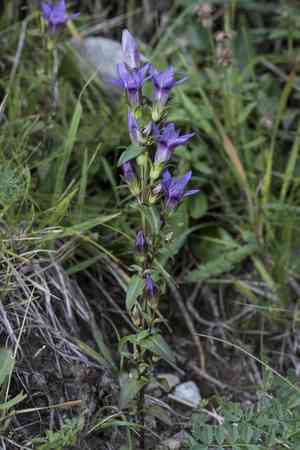
Scarce autumn felwort (Gentianella germanica)
Also known as: German gentian
Scarce autumn felwort is the county flower of Buckinghamshire in the United Kingdom. This species is similar to the Autumn Gentian but its flowers possess a more vibrant shade of purple. One of its common names, Chiltern gentian, is given because it is native to the Chiltern Hills in the south of England.
In This Article
Attributes of Scarce autumn felwort
Lifespan
Biennial
Plant Type
Herb
Plant Height
5 cm to 30 cm
Spread
not applicable
Leaf Color
Green
Flower Size
1-2 cm
Flower Color
Purple
Images of Scarce autumn felwort
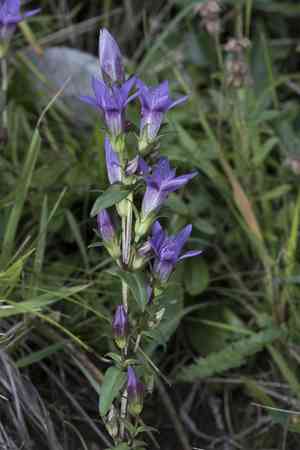
Quickly Identify Scarce autumn felwort
1
To identify Gentianella germanica, look for its striking blue-purple bell-shaped flowers and its height, which typically ranges from 10 to 30 cm. The stem is unbranched and the leaves are lanceolate.
Scientific Classification of Scarce autumn felwort
Phylum
Vascular plants
Class
Dicotyledons
Order
Gentianales
Family
Gentian
Genus
Dwarf gentians
Species
Scarce autumn felwort
Planting and Growing of Scarce autumn felwort
Care Difficulty
Hard
Watering Schedule
Every day
Sunlight Requirements
Partial sun
Sunshine Duration
4-6 hours
Ideal Temperature
60-75℉
Soil Type
Potting Mix, Peat Mix
Soil pH
6.5-7.5
Fertilizer Type
Balanced
Pruning Season
Spring, Summer
Pruning Area
Branches, Leaves
Pruning Frequency
2 times a year
Repotting Season
Spring
Pot Type
Plastic, Ceramic
 How to Water Scarce autumn felwort?
Gentianella germanica requires about 500 milliliters of water per session. Water deeply until the soil is thoroughly moistened but not soggy. Ensure excess water drains out to prevent waterlogging, adhering to a principle of allowing the soil to dry out slightly between waterings.
What are the symptoms of an underwatered Scarce autumn felwort?
›
What should I do if my Scarce autumn felwort is not getting enough water?
›
What are the symptoms of an overwatered Scarce autumn felwort?
›
How to save an overwatered Scarce autumn felwort?
›
 What Are the Sunlight Requirements for Scarce autumn felwort?
Gentianella germanica does best in an environment with partial sun, enjoying both sun and shade. This balance encourages optimal growth, vibrant flower production, and overall plant health.
What is the ideal light condition?
›
Solutions for achieving ideal light?
›
Benefits of ideal lighting?
›
 What Is the Ideal Temperature Range for Scarce autumn felwort?
The ideal temperature range for Gentianella germanica is between 60°F and 75°F. This range provides optimal conditions for growth, allowing the plant to maintain its metabolism and photosynthesis efficiency. Temperatures above or below this can stress the plant, affecting its growth and flowering.
 What Soil is Best for Scarce autumn felwort?
Gentianella germanica thrives in well-drained soils that prevent waterlogging, which can lead to root rot. Such soil ensures the roots receive adequate oxygen, promoting healthy growth and vibrant flowering. This plant favors soils rich in nutrients, providing essential elements needed for its robust growth. The presence of organic matter can significantly enhance nutrient availability, resulting in lush foliage. While good drainage is crucial, retaining some moisture ensures that Gentianella germanica does not suffer from drought stress. A balance helps maintain plant vigor throughout its growth cycle.
 How to Fertilize Scarce autumn felwort?
For Gentianella germanica, the recommended amount of fertilizer largely depends on the type being used. A balanced 10-10-10 liquid fertilizer can be applied at a dilution rate of one tablespoon per gallon of water. This should ensure that the plant receives the essential nutrients without overwhelming its root system.
 How to Prune Scarce autumn felwort?
Begin by using clean, sharp scissors or pruners to remove any dead or diseased stems. Focus on cutting back overgrown stems to just above a pair of healthy leaves. Keep the center of the plant open to allow light and air circulation. To shape Gentianella germanica, trim back the longer branches to promote a denser and more bushy appearance. Achieve this by cutting just above a leaf node, and preserving the plant's compact and vibrant structure.
More About Pruning Techniques→
 How to Propagate Scarce autumn felwort plant?
1
Fill a seed tray with a well-draining seed-starting mix. Moisten the mix lightly, ensuring it's damp but not waterlogged. This prepares the perfect medium for the seeds to germinate, maintaining adequate moisture and aeration.
2
Scatter Gentianella germanica seeds over the moist seed-starting mix. Gently press them into the soil surface without covering them too deeply, as they require light to germinate. Ensure seeds are evenly spaced to avoid overcrowding, which can stunt growth.
3
In early spring or early autumn, select healthy, non-flowering shoots about 10 cm long for cuttings. Use sharp pruning shears or a knife to make clean cuts just below a leaf node. Remove the lower leaves, then dip the cut ends in rooting hormone to enhance root development.
 How to Repot Scarce autumn felwort plant?
1
Gentianella germanica signals its need for repotting when you notice roots growing out of the drainage holes or if its growth has noticeably slowed. Ideally, repotting should be done during its active growing seasons, which are spring and autumn, to minimize stress on the plant. Another sign to look out for is the soil drying out much faster than usual, indicating that the roots are taking up most of the pot's space.
2
When choosing a new pot for your Gentianella germanica, it is vital to select one that is one size larger than its current home to allow for growth without overwhelming the plant. Ensure the pot has adequate drainage holes to prevent waterlogged soil, which can lead to root rot. Opting for a clay pot can be beneficial as it allows for air exchange through the pot walls, helping to keep the roots healthy.
3
Gentianella germanica thrives in well-drained, sandy loam soil. This type of soil provides the necessary drainage to prevent water from pooling around the roots, which is essential for reducing the risk of root rot. The sandy component aids in keeping the soil loose, allowing roots to grow freely and facilitating the uptake of nutrients and oxygen.



