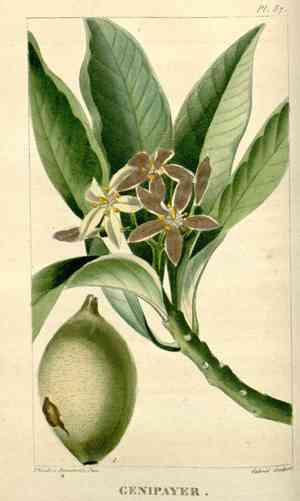
Genipa (Genipa) (Genipa)
Also known as: Genip, Jagua, Huito
Genipa trees are towering, thornless trees native to American tropical forests. They feature large, opposite leaves that can be either smooth or hairy, often with a leathery feel. The trees have distinctive triangular interpetiolar stipules. Their sizable flowers form in terminal clusters known as cymes. The fruit, a nearly spherical or oval berry, is smooth, fleshy, and encased in a thick rind. Inside, you'll find large, flat seeds.
In This Article
Attributes of Genipa (Genipa)
Lifespan
Perennial
Plant Height
10-18 meters
Spread
5-8 meters
Leaf Color
Glossy green
Flower Size
2-3 centimeters
Flower Color
White
Images of Genipa (Genipa)
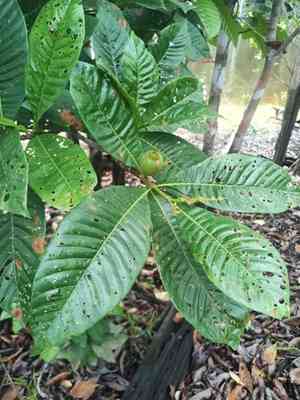
Quickly Identify Genipa (Genipa)
1
Identify Genipa plants by their glossy, opposite leaves, tube-shaped, fragrant white flowers, and distinctive round fruit that turns blue when exposed to air.
Scientific Classification of Genipa (Genipa)
Phylum
Magnoliophyta
Class
Magnoliopsida
Order
Gentianales
Family
Rubiaceae
Genus
Genipa
Planting and Growing of Genipa (Genipa)
Care Difficulty
Moderate
Watering Schedule
Every 8 days
Sunlight Requirements
Partial sun
Sunshine Duration
6-8 hours
Ideal Temperature
68-86℉
Soil Type
Potting Mix, Peat Mix
Soil pH
5.5-7.5
Fertilizer Type
Balanced
Pruning Season
Spring, Summer
Pruning Area
Branches, Leaves
Pruning Frequency
Once a year
Repotting Season
Spring
Pot Type
Plastic, Ceramic
 How to Water Genipa (Genipa)?
Genipa plants require a moderate amount of water, aiming to thoroughly soak the soil without causing waterlogging. Ensure that the water reaches the root zone, approximately five to six inches deep, to promote healthy growth. Aim for approximately 250 ml of water each time.
What are the symptoms of an underwatered Genipa (Genipa)?
›
What should I do if my Genipa (Genipa) is not getting enough water?
›
What are the symptoms of an overwatered Genipa (Genipa)?
›
How to save an overwatered Genipa (Genipa)?
›
 What Are the Sunlight Requirements for Genipa (Genipa)?
Genipa flourishes in partial to full sun environments. This range helps in optimal photosynthesis and energy storage, ensuring vigorous growth and resilience against environmental stresses like pests and nutrient deficiencies.
Why is partial sun ideal?
›
How to provide optimal lighting?
›
What are the benefits of ideal lighting?
›
 What Is the Ideal Temperature Range for Genipa (Genipa)?
For optimal growth, Genipa thrives in temperatures ranging from 68°F to 86°F. This range ensures that the plant's metabolic functions operate efficiently, promoting healthy growth and development. Maintaining this temperature range helps in achieving optimum photosynthesis rates and nutrient absorption.
 What Soil is Best for Genipa (Genipa)?
Genipa plants thrive in soil that is rich in organic matter. This provides them with essential nutrients that promote vigorous growth and robust fruit production, ensuring a healthy lifecycle. The soil should have good drainage properties to prevent waterlogging, which can lead to root rot. Efficient drainage ensures plants absorb necessary moisture without being overwhelmed by excess water. Adequate moisture retention is vital for Genipa, facilitating consistent water availability. This feature prevents the stress associated with drought and supports sustained plant health.
 How to Fertilize Genipa (Genipa)?
For Genipa plants, the ideal amount of fertilizer should be balanced and precise. When using liquid fertilizer, a concentration of 1/2 teaspoon per gallon is usually sufficient. For solid fertilizers, such as slow-release granules, use about 1 ounce per plant per application. Over-fertilizing should be avoided as it can lead to nutrient burn, while under-fertilizing may stunt plant growth.
 How to Prune Genipa (Genipa)?
Start by removing any dead, damaged, or diseased branches. This not only improves the plant's appearance but also prevents potential pest and disease problems. Make cuts at a 45-degree angle, just above a node or lateral branch, to promote healthy new growth. After removing unhealthy growth, step back and assess the plant's shape. Choose branches that are growing in undesirable directions or are crossing over others, and trim them to maintain an open structure. This helps light penetrate the plant, encouraging balanced growth. To encourage bushier growth, trim back the tips of the branches, cutting just above a leaf node. This encourages lateral buds to develop and can result in a more robust and fuller plant. Be mindful not to over-trim as this can lead to sparse growth.
 How to Propagate Genipa (Genipa) plant?
1
Begin by sowing seeds in seedling trays filled with a suitable potting mix. Ensure the seeds are covered lightly with soil and water them gently, keeping the soil moist but not waterlogged.
2
Select healthy stems for cuttings and use sterilized pruning shears to cut them. Remove the lower leaves and dip the cut ends in rooting hormone before planting them in a well-draining potting medium.
3
For layering propagation, bend a low-growing branch to the ground and cover a portion with soil, leaving the tip exposed. Secure it with a peg or toothpick and keep the soil moist until roots develop.
 How to Repot Genipa (Genipa) plant?
1
Repot when the plant outgrows its current pot or shows signs of poor drainage. If you notice roots coming out of the bottom, it's time to give Genipa a new home. Spring or early summer is the ideal time, as the plant is in its active growth phase, making it more adaptable to the changes.
2
Select a pot that is one size larger than the current one. Ensure it has ample drainage holes to prevent waterlogging, which can lead to root rot. A ceramic pot not only provides stability but also adds a touch of elegance to your plant display.
3
Opt for well-draining loamy soil with added organic matter. This combination allows proper air circulation around the roots and retains enough moisture without becoming waterlogged. The right soil mix will support healthy growth and nutrient uptake.
Learn More About Genipa (Genipa) Diseases
Anthracnose
Bacterial Leaf Spot
Bacterial Soft Rot
Bacterial Wilt
Crown Gall
Damping-off
Downy Mildew
Drought Stress
Fusarium Wilt
Gray Mold
Leaf Spot
Mosaic
Nutrient Deficiency
Nutrient Toxicity
Powdery Mildew
Root Rot
Root-knot Nematode
Rusts
Sooty Mold
Spider Mites
Temperature Stress
Thrips Damage
White Mold

