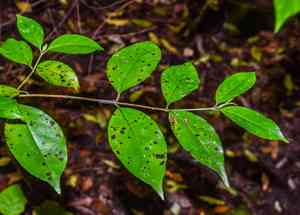
Geniostoma rupestre (Geniostoma rupestre)
Also known as: Buttonwood, Hangehange
Geniostoma rupestre is a hardy shrub well-suited for rocky terrains. It features shiny green leaves and small, understated flowers that produce purple-black berries. Its waxy leaves and sturdy build showcase its ability to thrive in challenging, nutrient-poor settings with limited moisture.
In This Article
Attributes of Geniostoma rupestre
Lifespan
Perennial
Plant Height
0.5 to 3 meters
Spread
0.5 to 1 meter
Leaf Color
Dark green
Flower Size
0.5 to 1 cm
Flower Color
Greenish
Images of Geniostoma rupestre
Quickly Identify Geniostoma rupestre
1
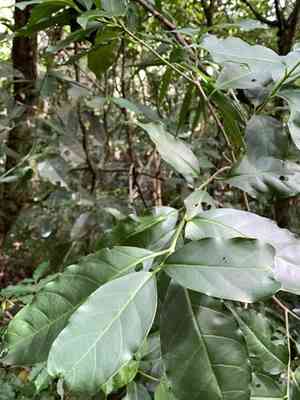
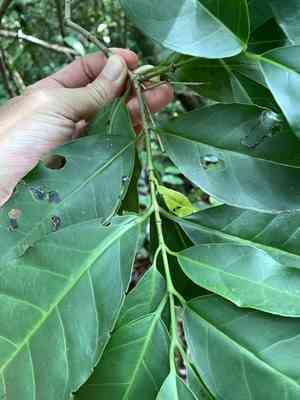
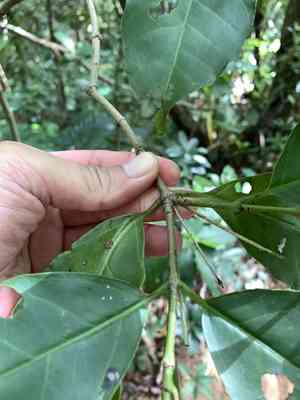
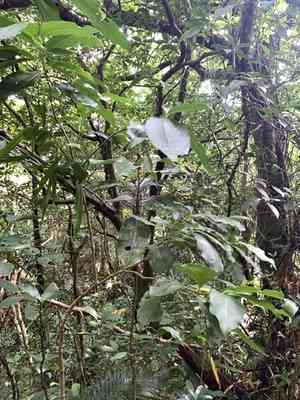
Geniostoma rupestre can be identified by its glossy, dark green leaves which are elliptic to obovate and its small, inconspicuous greenish flowers. The fruit is a small, capsule-like structure that turns black when mature.
Scientific Classification of Geniostoma rupestre
Phylum
Vascular plants
Class
Dicotyledons
Order
Gentianales
Family
Logania
Genus
Geniostoma
Species
Geniostoma rupestre
Planting and Growing of Geniostoma rupestre
Care Difficulty
Moderate
Watering Schedule
Every 3 days
Sunlight Requirements
Partial sun
Sunshine Duration
6-10 hours
Ideal Temperature
59-77℉
Soil Type
Potting Mix, Peat Mix
Soil pH
6.5-7.5
Fertilizer Type
Balanced
Pruning Season
Spring, Summer
Pruning Area
Branches, Leaves
Pruning Frequency
2 times a year
Repotting Season
Spring
Pot Type
Plastic, Ceramic
 How to Water Geniostoma rupestre?
For Geniostoma rupestre, the goal is to thoroughly moisten the soil without causing any pooling or waterlogging. This species prefers a humidity that mimics its natural rainforest habitat, ensuring the soil remains consistently damp but never soaking wet. About 250 milliliters per watering session is ideal, but adjustments might be necessary depending on room temperature and humidity.
What are the symptoms of an underwatered Geniostoma rupestre?
›
What should I do if my Geniostoma rupestre is not getting enough water?
›
What are the symptoms of an overwatered Geniostoma rupestre?
›
How to save an overwatered Geniostoma rupestre?
›
 What Are the Sunlight Requirements for Geniostoma rupestre?
This plant's bright condition is partial to full shade, which enables lush foliage. Ensuring minimal direct sunlight exposure preserves its natural growth and vitality.
How does Geniostoma rupestre thrive with ideal lighting?
›
What solutions exist to achieve ideal lighting for Geniostoma rupestre?
›
What benefits does Geniostoma rupestre gain from ideal lighting?
›
 What Is the Ideal Temperature Range for Geniostoma rupestre?
The ideal temperature range for Geniostoma rupestre is between 59°F and 77°F. These conditions emulate its native tropical and subtropical habitats where the plant thrives best. Within this range, the plant can maintain optimal physiological processes such as photosynthesis, respiration, and growth. It is crucial to provide stable temperatures within this range to ensure the plant remains healthy and vigorous.
 What Soil is Best for Geniostoma rupestre?
Geniostoma rupestre thrives in well-drained soils, which prevent waterlogging and root rot. Well-drained soil ensures that the plant's roots receive adequate oxygen, promoting healthy growth. This plant benefits from nutrient-rich soils that provide essential minerals and organic matter. Such soils support vigorous growth and enhance the plant’s natural resistance to pests and diseases. While good drainage is essential, soil that retains some moisture helps Geniostoma rupestre by ensuring a consistent water supply during dry periods, reducing stress and promoting lush foliage.
 How to Fertilize Geniostoma rupestre?
When it comes to fertilizing Geniostoma rupestre, it’s crucial to apply the right amount. Typically, use a balanced 10-10-10 NPK fertilizer at half-strength for liquid applications. For slow-release fertilizers, use about 2 grams per plant each time. Over-fertilization can be harmful, so start with a conservative approach and adjust based on the plant's health and growth.
 How to Prune Geniostoma rupestre?
Begin by identifying dead or damaged branches and remove them entirely. This stimulates new growth and keeps the plant healthy. Use sharp pruning shears to make clean cuts just above a node or leaf joint to encourage bushier growth. To maintain a desired shape or size, trim back the longest branches. Focus on cutting just above a node where new growth will emerge. This is particularly important if you're growing the plant as part of a designed landscape or container garden.
More About Pruning Techniques→
 How to Propagate Geniostoma rupestre plant?
1
Collect seeds from a mature Geniostoma rupestre plant and clean them to remove any flesh. Soak the seeds in warm water for 24 hours to enhance germination.
2
Select healthy, disease-free stems and cut them with sharp pruning shears at an angle. Each cutting should be at least 10 cm long and include at least two leaf nodes.
3
For seeds, fill a tray with a seed-starting mix, plant the seeds lightly into the soil, and water gently. For cuttings, insert the cuttings into a pot filled with a moist and well-draining potting mix.
 How to Repot Geniostoma rupestre plant?
1
Look for signs like roots emerging from drainage holes or the soil becoming compact. These indicate that Geniostoma rupestre needs more space for further growth. The best time to execute repotting is during the active growth phases in spring or summer.
2
Select a pot that's one size larger than the current one with sufficient drainage holes. This prevents root rot and provides adequate space for root development, ensuring steady growth.
3
Use a well-draining potting mix that retains moisture without becoming soggy. Such soil prevents root rot and encourages healthy growth by maintaining the perfect moisture balance.
Toxicity
ingestion
WARNING
The judgment on toxicity and danger is for reference only. We DO NOT GUARANTEE any accuracy of such judgment. Therefore, you SHALL NOT rely on such judgment. It is IMPORTANT TO SEEK PROFESSIONAL ADVICE in advance when necessary.
Learn More About Geniostoma rupestre Diseases
Anthracnose
Bacterial Leaf Spot
Bacterial Soft Rot
Bacterial Wilt
Black Spot
Chemical Injury
Crown Gall
Damping-off
Downy Mildew
Drought Stress
Fusarium Wilt
Gray Mold
Leaf Curl
Leaf Spot
Mosaic
Nutrient Deficiency
Nutrient Toxicity
Powdery Mildew
Root Rot
Root-knot Nematode
Rusts
Sooty Mold
Spider Mites
Temperature Stress
Thrips Damage
White Mold



