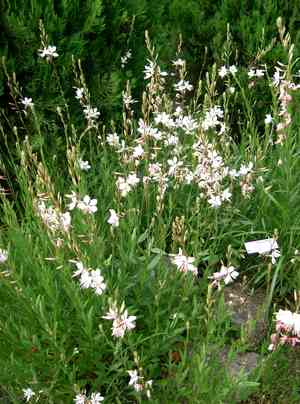
Gaura (Gaura) (Gaura)
Also known as: Bee Blossom, Wandflower
Gaura, also known as "Whirling Butterflies," showcases delicate, fluttering blooms in white or pink that dance in the wind. This hardy, drought-tolerant plant is a magnet for bees, butterflies, and hummingbirds. Ideal for rock gardens, borders, or mixed with wildflowers, Gaura adds a charming, natural touch to any landscape.
In This Article
Attributes of Gaura (Gaura)
Lifespan
Perennial
Plant Height
1 m
Spread
70 cm
Leaf Color
Green, often with a reddish tint
Flower Size
0.5 to 1 inch (1.3 to 2.5 cm)
Flower Color
White, pink
Images of Gaura (Gaura)
Quickly Identify Gaura (Gaura)
1
Gaura can be identified by its long stems that bear small, delicate flowers which are usually white or pink. The flowers have four petals and bloom sequentially along the stems. The plant has an overall wispy and graceful habit.
Scientific Classification of Gaura (Gaura)
Phylum
Magnoliophyta
Class
Magnoliopsida
Order
Myrtales
Family
Onagraceae
Genus
Gaura
Planting and Growing of Gaura (Gaura)
Care Difficulty
Easy
Watering Schedule
Every 3 days
Sunlight Requirements
Full sun
Sunshine Duration
4-8 hours
Ideal Temperature
65-75℉
Soil Type
Potting Mix, Peat Mix
Soil pH
6.5-7.5
Fertilizer Type
Balanced
Pruning Season
Spring, Summer
Pruning Area
Branches, Leaves
Pruning Frequency
2 times a year
Repotting Season
Spring
Pot Type
Plastic, Ceramic
 How to Water Gaura (Gaura)?
For Gaura, watering should be thorough enough to reach the root zone. Use approximately 250 ml of water per session, ensuring the soil is moist but not waterlogged. The goal is to simulate a natural rain shower, allowing the water to penetrate several inches into the soil.
What are the symptoms of an underwatered Gaura (Gaura)?
›
What should I do if my Gaura (Gaura) is not getting enough water?
›
What are the symptoms of an overwatered Gaura (Gaura)?
›
How to save an overwatered Gaura (Gaura)?
›
 What Are the Sunlight Requirements for Gaura (Gaura)?
Full sun, ideally 6 to 8 hours. Adequate sunlight ensures Gaura's lush growth and prolific blooming. Under ideal sunlight, the plant develops strong stems, more flowers, and enhanced resistance to common pests and diseases.
What is the ideal lighting condition for Gaura?
›
What are some solutions to achieve ideal lighting for Gaura?
›
What benefits does Gaura gain from ideal lighting?
›
 What Is the Ideal Temperature Range for Gaura (Gaura)?
The ideal temperature range for Gaura species to thrive is between 65°F and 75°F. This range supports optimal growth and flowering, as it mimics their native environment conditions. Maintaining this temperature range ensures that the plant can execute its natural biological processes efficiently, contributing to vibrant blooms and healthy foliage.
 What Soil is Best for Gaura (Gaura)?
Gaura thrives in well-draining soils which prevent root rot and promote healthy root growth. This type of soil ensures water does not sit around the roots, which is essential in avoiding diseases and encouraging robust development. A nutrient-rich soil provides the essential minerals Gaura needs for vibrant foliage and prolific blooming. Regularly replenishing the soil's nutrients through compost or organic fertilizers can significantly enhance the plant's growth. Soil that retains moderate moisture without becoming waterlogged ensures Gaura has consistent access to water. This balance supports sustained growth and prevents stress from drought conditions.
 How to Fertilize Gaura (Gaura)?
For Gaura, a light touch is key when it comes to fertilization. Use a balanced, all-purpose fertilizer diluted to half the recommended strength. Approximately 1-2 tablespoons per gallon is ideal for liquid fertilizers. Gaura thrives with modest nutrient input, so over-fertilizing can do more harm than good.
 How to Prune Gaura (Gaura)?
To maximize blooming, deadhead the spent flowers regularly by cutting just above a leaf node. This will stimulate the plant to produce more branches and flowers, resulting in a fuller, more colorful display. Ensure your cuts are clean to avoid damaging the plant. Prune Gaura in early spring by cutting back around one-third of the plant’s height. This helps manage the plant’s height and encourages a tidy, compact form. Use sharp shears for this task to ensure smooth cuts that promote swift healing. Every few years, consider cutting Gaura back to a few inches above the ground in late winter or early spring. This rejuvenation prune refreshes the plant, encourages vigorous new growth, and improves overall health and bloom quality.
 How to Propagate Gaura (Gaura) plant?
1
To propagate Gaura from seeds, fill seed trays with a well-draining potting mix. Sprinkle the seeds evenly over the surface and lightly cover with soil. Keep the trays in a warm, sunny location and water regularly to maintain moisture.
2
For cutting propagation, select healthy stems from the Gaura plant, preferably those that have not flowered yet. Cut approximately 4-6 inches sections with at least two sets of leaves, and remove the lower leaves before planting.
3
Division involves carefully digging up the Gaura plant in early spring or autumn and dividing the roots into sections. Ensure each section has a good root system and then replant them immediately at the same depth they were growing.
 How to Repot Gaura (Gaura) plant?
1
Repot your Gaura when you notice it's outgrowing its current pot or the roots are becoming too crowded. Spring or early Summer is the best time. These are the growing seasons, and the plant will recover faster. Also, look for roots coming out of the drainage holes or if water is not draining well, indicating it's time to provide fresh soil and more room for growth.
2
Select a pot that's just one size larger than the current one to encourage healthy root growth. Ensure it has sufficient drainage holes to prevent waterlogging, which Gaura doesn't tolerate well. Clay pots are ideal as they allow the soil to breathe, preventing excess moisture retention and root rot.
3
Use a well-draining potting mix, ideally one formulated for perennials or wildflowers. This soil mix helps to retain the necessary moisture without becoming waterlogged. You can add perlite or coarse sand to improve drainage further, providing an environment that mimics Gaura's natural habitat.
Learn More About Gaura (Gaura) Diseases
Anthracnose
Bacterial Leaf Spot
Bacterial Wilt
Crown Gall
Cyst Nematode
Damping-off
Downy Mildew
Drought Stress
Fusarium Wilt
Gray Mold
Leaf Spot
Mosaic
Nutrient Deficiency
Nutrient Toxicity
Powdery Mildew
Root Rot
Root-knot Nematode
Rusts
Sooty Mold
Spider Mites
Temperature Stress
Thrips Damage
White Mold

