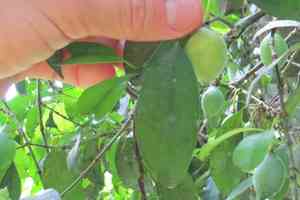
Saptrees (Garcinia) (Garcinia)
Also known as: Garcinias
Saptrees, found in regions such as Asia, the Americas, Australia, tropical and southern Africa, and Polynesia, are evergreen trees and shrubs. They are typically dioecious and sometimes exhibit apomictic reproduction. The fruit they produce is a berry with a fleshy endocarp, and in some species, these berries are edible and tasty.
In This Article
Attributes of Saptrees (Garcinia)
Lifespan
Perennial
Plant Height
6-25 meters (20-82 feet)
Spread
5-8 meters (16-26 feet)
Leaf Color
Dark green
Flower Size
2-5 cm (0.8-2 inches)
Flower Color
Yellow, red, or pink
Images of Saptrees (Garcinia)
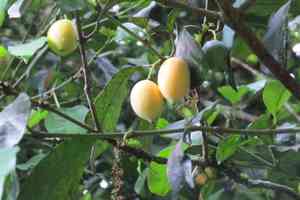
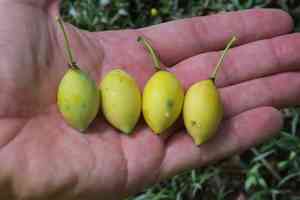
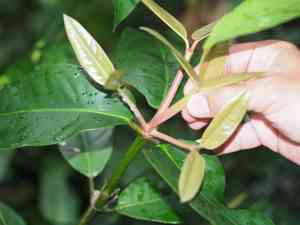
Quickly Identify Saptrees (Garcinia)
1
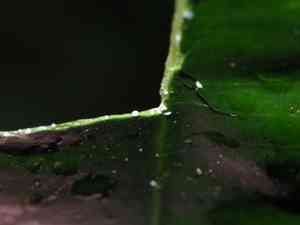
Garcinia plants can be identified by their thick, leathery leaves, and bright yellow latex. The fruit typically has a thick, reddish-purple rind, and the inner flesh is white and juicy. Flowers are generally unisexual and can be solitary or arranged in small clusters.
Scientific Classification of Saptrees (Garcinia)
Phylum
Magnoliophyta
Class
Magnoliopsida
Order
Malpighiales
Family
Clusiaceae
Genus
Garcinia
Planting and Growing of Saptrees (Garcinia)
Care Difficulty
Moderate
Watering Schedule
Every 2 days
Sunlight Requirements
Partial sun
Sunshine Duration
4-8 hours
Ideal Temperature
68-77℉
Soil Type
Potting Mix, Peat Mix
Soil pH
5-7.5
Fertilizer Type
Balanced
Pruning Season
Spring, Summer
Pruning Area
Branches, Leaves
Pruning Frequency
2 times a year
Repotting Season
Spring
Pot Type
Plastic, Ceramic
 How to Water Saptrees (Garcinia)?
The Garcinia plant thrives when its soil remains moderately moist. Aim to provide approximately 250 milliliters of water during each session. Ensure the water penetrates the soil thoroughly, reaching the root zone, but avoid waterlogging. The principle to follow is slow and deep watering, encouraging roots to extend and strengthen.
What are the symptoms of an underwatered Saptrees (Garcinia)?
›
What should I do if my Saptrees (Garcinia) is not getting enough water?
›
What are the symptoms of an overwatered Saptrees (Garcinia)?
›
How to save an overwatered Saptrees (Garcinia)?
›
 What Are the Sunlight Requirements for Saptrees (Garcinia)?
Garcinia thrives in partial sun, which means around 4-6 hours of moderate sunlight. Maintaining this light balance helps it grow healthily, promoting energy-efficient photosynthesis and vibrant foliage.
What is the ideal light condition for Garcinia?
›
How can I achieve these lighting conditions?
›
What are the benefits of providing ideal light to Garcinia?
›
 What Is the Ideal Temperature Range for Saptrees (Garcinia)?
Garcinia plants thrive in a warm climate, ideally between 68°F and 77°F. Maintaining this temperature range can promote optimal growth and health. This warm environment supports its tropical nature, facilitating effective photosynthesis and nutrient uptake. It is crucial to keep the plants in this range to ensure healthy foliage and fruit development.
 What Soil is Best for Saptrees (Garcinia)?
Garcinia plants thrive best in soils rich in nutrients, which support their growth and fruit production. Amending the soil with organic matter increases its fertility, ensuring vital nutrients are available to the plant. Proper drainage is essential to prevent waterlogging, which can lead to root rot. Ensuring the soil allows excess water to pass through easily protects the plant's roots and promotes healthy growth. While drainage is important, the soil should also have adequate moisture retention properties. This balance ensures the plant receives a steady supply of water even in drier conditions, promoting consistent growth.
 How to Fertilize Saptrees (Garcinia)?
For Garcinia, use liquid fertilizer at a dose of 1/2 tablespoon per gallon of water. For slow-release, apply according to package instructions, usually about 1 pound per 100 square feet. Ensure even distribution around the root zone for optimal uptake.
 How to Prune Saptrees (Garcinia)?
Begin by removing any dead or diseased branches. These can be identified by discolored or brittle wood. Cut back to healthy tissue to prevent further spread of decay. Trim back branches that are overcrowded, crossing, or rubbing against each other. This opens up the canopy for better air circulation and sunlight penetration, vital for fruit production. Prune the Garcinia plant to maintain a shape that allows easy access to the fruits and prevents it from growing into other plants or structures. This also keeps the plant manageable in size.
 How to Propagate Saptrees (Garcinia) plant?
1
Start by selecting healthy, disease-free branches from the Garcinia plant. Cuttings should be approximately 10-15 cm in length. Remove leaves from the lower section and dip the cut end into rooting hormone.
2
To propagate via seeds, collect ripe Garcinia fruits and extract the seeds. Plant seeds in a seed-starting mix and cover lightly with soil. Ensure they remain moist and at a warm temperature to facilitate germination.
3
For grafting, choose a healthy rootstock and a compatible scion. Make a clean cut on both and secure them together with grafting tape. Place the grafted plant in a warm and humid environment to encourage successful fusion.
 How to Repot Saptrees (Garcinia) plant?
1
The Garcinia plant needs to be repotted when you notice its roots emerging from the drainage holes or becoming visibly tangled. Additionally, if the plant growth rate slows significantly or the soil doesn't retain moisture as before, it's high time for repotting.
2
Select a pot that is 1-2 inches larger in diameter than the previous one, with ample drainage holes. This ensures enough space for root expansion and prevents water logging, which is crucial to avoid root rot in Garcinia plants.
3
Opt for a well-draining acidic soil mix with components like peat, sand, and organic matter. This blend promotes excellent drainage while maintaining the slight acidity that Garcinia thrives in, ensuring robust growth and healthy roots.

