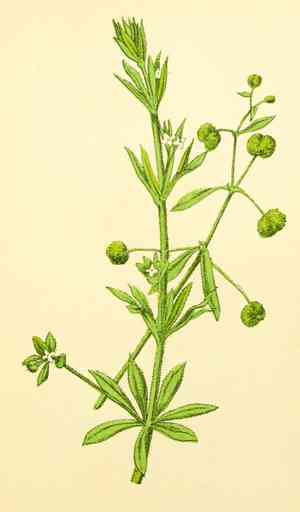
Bolander's bedstraw (Galium bolanderi)
Also known as: Bolander's Bedstraw
Bolander's bedstraw (Galium bolanderi) is a perennial herb distinguished by its whorled leaves and tiny, star-like white flowers that often appear in clusters. It thrives in the shaded understories of forests, particularly favoring moist, well-drained soils. This plant typically uses its slender, square stems to climb among taller vegetation in search of sunlight, allowing it to adapt well as ground cover. Native to western regions of the United States, Bolander's bedstraw is known for its versatility and resilience in these environments.
In This Article
Attributes of Bolander's bedstraw
Lifespan
Perennial
Plant Type
Herb
Plant Height
6 to 24 inches
Spread
N/A
Leaf Color
Green
Flower Size
Less than 0.5 inches
Flower Color
White to greenish
Images of Bolander's bedstraw
Quickly Identify Bolander's bedstraw
1
To identify Galium bolanderi, look for its slender, square stems and whorls of four narrow leaves. The small, white to greenish flowers typically appear in loose clusters.
Scientific Classification of Bolander's bedstraw
Phylum
Vascular plants
Class
Dicotyledons
Order
Gentianales
Family
Madder
Genus
Bedstraws
Species
Bolander's bedstraw
Planting and Growing of Bolander's bedstraw
Care Difficulty
Moderate
Watering Schedule
Every 2 days
Sunlight Requirements
Partial sun
Sunshine Duration
4-8 hours
Ideal Temperature
68-77℉
Soil Type
Potting Mix, Peat Mix
Soil pH
6-7.5
Fertilizer Type
Balanced
Pruning Season
Spring, Summer
Pruning Area
Branches, Leaves
Pruning Frequency
2 times a year
Repotting Season
Spring
Pot Type
Plastic, Ceramic
 How to Water Bolander's bedstraw?
When watering Galium bolanderi, it is essential to ensure the soil is thoroughly moist, without being waterlogged. Aim for about 250ml of water per session, enough to reach the deeper roots but not pool on the surface. Check that any excess water has drained away to prevent root rot.
What are the symptoms of an underwatered Bolander's bedstraw?
›
What should I do if my Bolander's bedstraw is not getting enough water?
›
What are the symptoms of an overwatered Bolander's bedstraw?
›
How to save an overwatered Bolander's bedstraw?
›
 What Are the Sunlight Requirements for Bolander's bedstraw?
Galium bolanderi achieves optimal growth with partial sun conditions, receiving four to six hours of sunlight daily. This ensures balanced energy intake for robust growth and healthy foliage.
What type of sunlight does Galium bolanderi prefer?
›
How can I ensure optimal lighting for Galium bolanderi indoors?
›
Why is ideal lighting important for Galium bolanderi?
›
 What Is the Ideal Temperature Range for Bolander's bedstraw?
Galium bolanderi thrives best in temperatures ranging from 68°F to 77°F. This range allows for optimal enzymatic activity and physiological processes, improving photosynthesis rates and overall plant health. Keeping the plant within this temperature range ensures vigorous growth and robust foliage.
 What Soil is Best for Bolander's bedstraw?
Galium bolanderi thrives in well-drained soil, which prevents waterlogging and root rot. Ensuring the soil is well-drained promotes healthy root development and nutrient uptake, fostering vigorous growth. This plant prefers soil with moderate nutrient levels. Excessive nutrients can lead to lush foliage at the expense of flowering. A balanced soil encourages both foliage and flowers, maintaining the plant's aesthetic appeal. While Galium bolanderi favors well-drained soil, it also benefits from soil that retains essential moisture. This balance ensures that the plant receives adequate water without the risk of disease from overwatering.
 How to Fertilize Bolander's bedstraw?
For Galium bolanderi, start with a balanced 10-10-10 fertilizer. Use approximately 1 teaspoon for every 6-inch pot, adjusting slightly depending on pot size and the plant's growth stage. Be cautious not to over-apply to prevent nutrient burn.
 How to Prune Bolander's bedstraw?
Begin by removing any visible dead or damaged stems. This not only tidies the plant but also prevents any potential disease from spreading. Then, assess the plant for its natural shape and start pruning to maintain this. Cut just above the node or at the leaf junction to encourage new growth. Ensure you do not cut too far from the node to avoid die-back. Regular inspections help in deciding which areas need thinning.
More About Pruning Techniques→
 How to Propagate Bolander's bedstraw plant?
1
Begin by preparing a well-draining soil mix, incorporating equal parts of perlite, peat, and sand. This mixture provides a balanced environment for seedling roots and ensures moderate moisture retention.
2
Sow seeds on the soil surface and lightly cover them with a thin layer of soil. Ensure seeds are spaced appropriately to avoid overcrowding, allowing each seedling ample space for growth.
3
Select healthy, non-flowering stems and cut a 4-6 inch section below a node. Remove leaves from the lower half and plant in pre-moistened soil to encourage root development.
 How to Repot Bolander's bedstraw plant?
1
Observe for signals such as roots growing out of the drainage holes or soil losing its structure. Spring and Autumn are ideal as these seasons provide optimal conditions for root recovery and growth.
2
Select a pot that is one size larger than the current one, with good drainage holes. This allows for adequate root expansion without overwhelming the plant with excessive unused soil, which can lead to poor water drainage.
3
Opt for a well-draining soil mix containing perlite or sand. This ensures that water flows through the soil efficiently, preventing root rot—a common issue when plant roots sit in soggy conditions.



