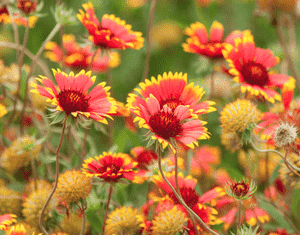
Indian blanket (Gaillardia pulchella)
Also known as: Rosering gaillardia, Beach blanket-flower
The Blanket Flower, also known as Gaillardia, is a meadow and prairie wildflower that sports daisy-like blossoms with a russet central disk surrounded by red petals tipped with yellow. This plant is known for attracting pollinators like bees and butterflies due to its rich nectar. When planted in large groups, it creates a stunning display of vivid reds and yellows, enhancing any landscape.
In This Article
Attributes of Indian blanket
Lifespan
Annual, Biennial
Plant Type
Herb
Plant Height
20 cm to 60 cm
Spread
15 cm to 30 cm
Leaf Color
Green Silver Gray
Flower Size
4 cm to 6 cm
Flower Color
Yellow Purple Red Orange Pink Blue Brown
Images of Indian blanket
Quickly Identify Indian blanket
1
Flower heads with red and yellow concentric pattern, 1.5-2 inches (4-5 cm) in diameter.
2
Achene fruit, brown to reddish-brown, 0.08 inches (2 mm) long, wind-dispersed.
3
Oblong, hirsute leaves, 1.5-6 inches (3.8-15.2 cm) in length, coarsely toothed.
4
Slender, hairy stem, 0.1-0.2 inches (2.5-5 mm) thick, reaching heights up to 2 feet (60 cm).
5
Showy ray flowers with red and yellow tips, purple-brown disk flowers, blooming spring to frost.
Scientific Classification of Indian blanket
Phylum
Vascular plants
Class
Dicotyledons
Order
Asters bellflowers fanflowers and allies
Family
Daisy
Genus
Blanket flowers
Species
Indian blanket
Planting and Growing of Indian blanket
Care Difficulty
Easy
Watering Schedule
Every 4 days
Sunlight Requirements
Full sun
Sunshine Duration
4-8 hours
Ideal Temperature
70-75℉
Soil Type
Potting Mix, Peat Mix
Soil pH
6.5-7.5
Fertilizer Type
Balanced
Pruning Season
Spring, Summer
Pruning Area
Branches, Leaves
Pruning Frequency
2 times a year
Repotting Season
Spring
Pot Type
Plastic, Ceramic
 How to Water Indian blanket?
For Gaillardia pulchella, ensure the soil is moistened deeply but not waterlogged. A good rule of thumb is to provide approximately 100 milliliters of water per session, allowing the soil to dry somewhat between waterings. This plant prefers a well-draining substrate, as it thrives in environments where its roots do not sit in standing water.
More About Watering Techniques→
What are the symptoms of an underwatered Indian blanket?
›
What should I do if my Indian blanket is not getting enough water?
›
What are the symptoms of an overwatered Indian blanket?
›
How to save an overwatered Indian blanket?
›
 What Are the Sunlight Requirements for Indian blanket?
Full sun exposure is best for Gaillardia pulchella, helping achieve abundant flowering and robust plant structure. Ideal light conditions promote vivid flower colors and improved plant vitality.
More About Sunlight Requirements Techniques→
How much sunlight does it need?
›
What are the solutions for ideal lighting?
›
What are the benefits of ideal lighting?
›
 What Is the Ideal Temperature Range for Indian blanket?
The ideal temperature range for growing Gaillardia pulchella typically falls between 70°F and 75°F. These conditions are optimal for plant metabolism, photosynthesis, and overall growth. Maintaining these temperatures supports vibrant blooms and healthy foliage.
 What Soil is Best for Indian blanket?
Gaillardia pulchella thrives in well-drained soil that prevents root rot. Adequate drainage ensures that the roots get enough oxygen, crucial for the plant's vibrant growth and prolonged blooming season. A nutrient-rich substrate provides the necessary minerals and nutrients, enhancing the overall health of Gaillardia pulchella. This promotes robust growth, resulting in more extensive foliage and bolder flower coloration. While this plant is drought tolerant, moderate soil moisture is essential for its initial growth phase. Consistent moisture during this period helps establish a stronger root system, supporting future drought resilience.
More About Soil→
 How to Fertilize Indian blanket?
When fertilizing Gaillardia pulchella, it’s important to use a balanced fertilizer with an N-P-K ratio of around 10-10-10. For liquid fertilizers, dilute it to half-strength to avoid over-fertilization. Apply approximately 1/2 gallon per plant.
More About Fertilizing Techniques→
 How to Prune Indian blanket?
Start by identifying spent flowers, also known as deadheads. Removing these regularly encourages the plant to produce more blooms rather than putting energy into seed production. Cut back the stems by about one-third to encourage bushier growth. When cutting, make your cuts just above a leaf node or a side stem to promote new branch growth. This will help maintain the plant’s compact shape. Remove any damaged or diseased parts of the plant promptly. This helps prevent the spread of potential diseases and maintains the overall health and vigor of your Gaillardia pulchella.
More About Pruning Techniques→
 How to Propagate Indian blanket plant?
1
Fill seed trays with a well-draining potting mix and place the seeds on the surface. Keep them lightly covered with soil and maintain moisture by misting with water regularly. Place trays in a warm location with indirect sunlight for germination.
2
Choose a healthy, mature plant and use sharp secateurs to take a cutting below a node. Remove the lower leaves and dip the cut end in a rooting hormone, then plant it in a moist medium.
3
Once seedlings have developed a few true leaves, they can be transplanted into individual pots or garden beds. Ensure the soil is fertile and well-draining, and keep the seedlings protected from direct sunlight initially to prevent shock.
 How to Repot Indian blanket plant?
1
Repot Gaillardia pulchella when you notice it's outgrowing its current container or if the soil no longer drains well. Look for roots starting to grow out of drainage holes as a clear signal. Spring and autumn offer optimal conditions due to moderate temperatures, allowing the plant to establish in new soil before the summer heat or winter chill.
2
Select a pot that's slightly more prominent than the current one. It should have adequate drainage holes to prevent waterlogging, which can lead to root rot. A breathable material like terracotta is ideal, as it aids in evaporating excess moisture, thus nurturing healthy root systems.
3
Opt for a well-draining sandy mix, which is ideal for Gaillardia pulchella. This type of soil prevents excessive water retention, thus minimizing the risk of root rot. A mix of equal parts of sand, loam, and peat ensures that roots have access to nutrients while maintaining perfect aeration.
Learn More About Indian blanket Diseases
Anthracnose
Bacterial Leaf Spot
Bacterial Wilt
Chemical Injury
Damping-off
Downy Mildew
Drought Stress
Fusarium Wilt
Gray Mold
Leaf Curl
Leaf Spot
Mosaic
Nutrient Deficiency
Nutrient Toxicity
Powdery Mildew
Root Rot
Root-knot Nematode
Rusts
Sooty Mold
Spider Mites
Temperature Stress
Thrips Damage
White Mold



