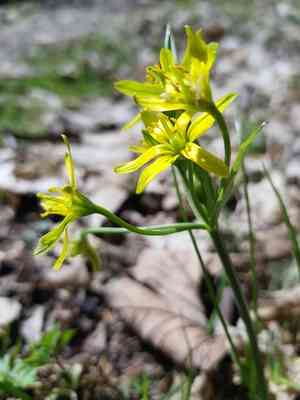
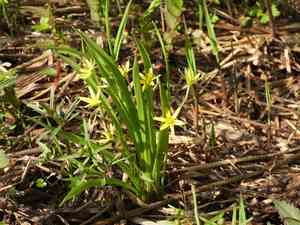
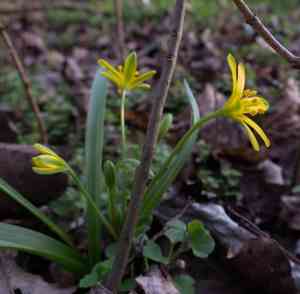
Yellow star-of-bethlehem(Gagea lutea)

Yellow star-of-bethlehem (Gagea lutea)

Also known as: Yellow Star-of-Bethlehem, Yellow Gagea

Yellow star-of-bethlehem (Gagea lutea) is a modest, lily family flower that thrives in moist and damp environments within woodlands and forests. This perennial bulb is commonly seen across Europe and Asia, preferring calcareous soils and partially shaded areas.

Attributes of Yellow star-of-bethlehem

Lifespan
Perennial
Plant Type
Herb
Plant Height
25 cm
Spread
30 cm
Leaf Color
Green Blue
Flower Size
1-2 cm (0.4-0.8 inches)
Flower Color
Yellow

ForwardPlant - Identify plants with a snap

Identify and diagnose plants, get toxicity alerts, and explore safety guides for all types of fungi.

Try for Free

Images of Yellow star-of-bethlehem

Yellow star-of-bethlehem(Gagea lutea)

Quickly Identify Yellow star-of-bethlehem

1
Identify Gagea lutea by its bright yellow, star-shaped flowers with six petals. The plant typically has two or three narrow basal leaves and a single flower stem.

Scientific Classification of Yellow star-of-bethlehem

Phylum
Vascular plants
Class
Monocotyledons
Order
Lilies, supplejacks and allies
Family
Lily
Genus
Gagea
Species
Yellow star-of-bethlehem

Planting and Growing of Yellow star-of-bethlehem

Care Difficulty
Easy
Watering Schedule
Every 2 days
Sunlight Requirements
Partial sun
Sunshine Duration
6-10 hours
Ideal Temperature
50-68℉
Soil Type
Potting Mix, Peat Mix
Soil pH
6.5-7.5
Fertilizer Type
Balanced
Pruning Season
Spring, Summer
Pruning Area
Branches, Leaves
Pruning Frequency
2 times a year
Repotting Season
Spring
Pot Type
Plastic, Ceramic

water icon How to Water Yellow star-of-bethlehem?

For Gagea lutea, it is important to water approximately 100 milliliters per session. The soil should be moist but not waterlogged, adhering to the principle of 'little and often.' Water until you start to see a small trickle from the drainage holes, which ensures the water has reached deeper roots without causing oversaturation.
What are the symptoms of an underwatered Yellow star-of-bethlehem?
What should I do if my Yellow star-of-bethlehem is not getting enough water?
What are the symptoms of an overwatered Yellow star-of-bethlehem?
How to save an overwatered Yellow star-of-bethlehem?

sunlight icon What Are the Sunlight Requirements for Yellow star-of-bethlehem?

Sunlight Requirements: Partial sun, Full shade
Duration of light: 3 to 6 hours
Partial sun or full shade provides the best conditions for Gagea lutea, ensuring its natural woodland environment is emulated. This promotes optimal growth and blooming without stressing the plant.
Where should Gagea lutea be planted?
What steps ensure optimal light for Gagea lutea?
What benefits does ideal lighting bring?
More About Sunlight Requirements Techniques

temperature icon What Is the Ideal Temperature Range for Yellow star-of-bethlehem?

Ideal Temperature: 50 ~ 68℉
Gagea lutea thrives best in temperatures ranging from 50 to 68 degrees Fahrenheit. In this temperature range, the plant's metabolic processes and physiological activities, such as photosynthesis and respiration, function efficiently, promoting healthy growth and vibrant blooms.

soil icon What Soil is Best for Yellow star-of-bethlehem?

Soil type: Loam, Sandy loam
Soil PH: 6.5 ~ 7.5
Gagea lutea thrives in well-drained soils, which prevent waterlogging and root rot. Ensuring that your soil has good drainage will help in maintaining a healthy root system, thereby supporting lush growth and vibrant flowers. This plant prefers soils with moderate fertility. While it doesn’t demand nutrient-rich soil, having a moderate level of organic material can promote better growth and a more robust flowering season. Keeping the soil consistently moist but not waterlogged is crucial for Gagea lutea. Adequate moisture levels help in supporting the plant during its active growth phase, ensuring it doesn't dry out and cease flowering.

fertilize icon How to Fertilize Yellow star-of-bethlehem?

Fertilizer type: Balanced
Gagea lutea, commonly known as the yellow star-of-Bethlehem, does not require heavy fertilization. Typically, it benefits from a light application of balanced fertilizer, such as a 10-10-10 NPK formulation. Apply approximately half the recommended dose for garden plants, as Gagea lutea is adapted to low-nutrient environments. This typically equates to 1 teaspoon of granules per square foot for solid fertilizers and less for liquid versions when diluted appropriately.

prune icon How to Prune Yellow star-of-bethlehem?

Pruning Time: Spring, Summer
Before beginning the pruning process, ensure you have sterilized your tools to prevent any disease transmission. Gather sharp pruners or scissors, ensuring they are capable of making clean cuts without causing damage to the plant tissues. Start the process by carefully inspecting the plant for any wilted or dead flowers after the blooming period. Use sharp scissors or pruners to snip away these parts to encourage new, healthier growth. Focus on the older or damaged leaves and stems. Avoid cutting into the bulbous part of Gagea lutea, as this is crucial for its nutrients and energy storage. More About Pruning Techniques

propagate icon How to Propagate Yellow star-of-bethlehem plant?

Propagate Time: Early spring, Spring
1
Seeds of Gagea lutea should be collected once the flowers fade and seed pods are formed. It is crucial to gather seeds just as they turn brown, indicating readiness for propagation.
2
Prepare a well-draining soil mixture suitable for alpine plants. Mix standard potting soil with coarse sand to ensure good drainage, a common requirement for the successful cultivation of Gagea lutea.
3
Plant the seeds or divide bulbs by placing them at a shallow depth in the prepared soil. Ensure regular but moderate watering as overwatering can cause bulb rot, a common issue in bulb propagation.

repot icon How to Repot Yellow star-of-bethlehem plant?

Repotting frequency: Every 2-3 years
1
Repotting Gagea lutea is best done in spring when new growth is evident. Look for signs like roots emerging from drainage holes as indicators that the plant needs more space. This is the perfect time to upgrade its living quarters to ensure a thriving blooming season.
2
Select a pot that is about 1-2 inches larger in diameter than the current one. Ensure it has ample drainage holes to prevent waterlogging, which can be detrimental. The increase allows for root expansion but isn't too large to avoid excess soil that can retain too much moisture.
3
Opt for a well-draining loamy soil mix to provide a balanced environment for nutrients and moisture. This soil type prevents the roots from sitting in water, reducing the risk of root rot, thus promoting healthy root growth and plant vigor.

ForwardPlant - Identify plants with a snap

Find the best spots for them to optimize their health, simply using your phone.

Try for Free

Toxicity of Yellow star-of-bethlehem

Is Yellow star-of-bethlehem toxic to humans?

The yellow star-of-bethlehem is classified as having a mild toxicity level for humans, and ingesting any part of the plant can lead to poisoning. Individuals who consume portions of this plant may suffer from a variety of symptoms that reflect mild poisoning. These symptoms can manifest as gastrointestinal issues including nausea, vomiting, and diarrhea, alongside possible irritation in the mouth and throat. Despite its mild toxicity, it is crucial to avoid accidental ingestion of yellow star-of-bethlehem, particularly in settings where it could be confused with edible plants. Foragers and gardeners must be able to identify yellow star-of-bethlehem and be aware of the associated risks of its consumption to avert potential poisoning.

Is Yellow star-of-bethlehem toxic to cat?

The yellow star-of-bethlehem presents a mild toxicity risk to cats. Should a cat accidentally consume any part of this plant, which is entirely toxic, it may show symptoms of physical unease. Although the exact toxic substances found in yellow star-of-bethlehem are not specified, cat owners must stay alert for any signs of illness after consumption. If there is a suspicion that a cat has ingested yellow star-of-bethlehem, seeking immediate veterinary attention is essential to ensure rapid treatment and to reduce negative consequences.

Is Yellow star-of-bethlehem toxic to dog?

The yellow star-of-bethlehem is categorized as possessing mild toxicity for dogs. These canines might accidentally ingest portions of the yellow star-of-bethlehem plant, exposing them to a potential poisoning hazard. The entire plant is toxic, and consumption can result in a variety of symptoms commonly associated with poisoning. Dog owners should be attentive to indicators such as gastrointestinal disturbances, lethargy, or any unusual behaviors that may imply their pet has consumed yellow star-of-bethlehem. If poisoning is suspected, it is crucial to seek prompt veterinary assistance to safeguard the health and welfare of the affected dog.

Identify toxic plants for your safety

Learn which plants are harmful to you and your pets, and make informed choices for a safer home!

Try for Free
WARNING
The judgment on toxicity and danger is for reference only. We DO NOT GUARANTEE any accuracy of such judgment. Therefore, you SHALL NOT rely on such judgment. It is IMPORTANT TO SEEK PROFESSIONAL ADVICE in advance when necessary.
More About Toxic Techniques