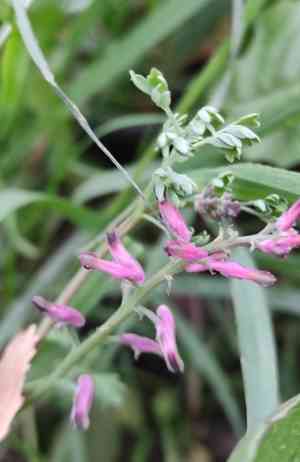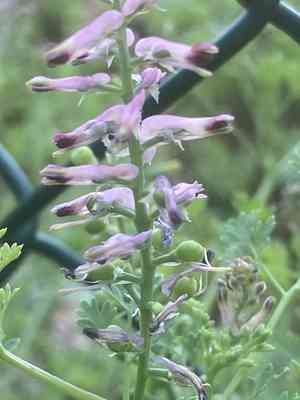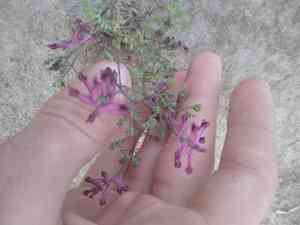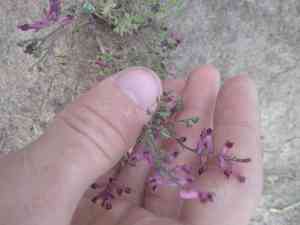
Common fumitory(Fumaria officinalis)

Common fumitory (Fumaria officinalis)

Also known as: Common Fumitory, Earth Smoke, Fumaria

The Foxglove (Digitalis purpurea) is a garden plant that blooms from early spring to late fall. While it was once used in traditional folk medicine, it is now recognized as highly toxic. Due to its dangerous cardiac glycosides, it should never be used in home remedies.

Attributes of Common fumitory

Lifespan
Annual, Biennial
Plant Type
Herb
Plant Height
10 cm to 50 cm
Spread
30 cm
Leaf Color
Green
Flower Size
7 mm to 9 mm
Flower Color
Purple Pink

ForwardPlant - Identify plants with a snap

Identify and diagnose plants, get toxicity alerts, and explore safety guides for all types of fungi.

Try for Free

Images of Common fumitory

Common fumitory(Fumaria officinalis)

Quickly Identify Common fumitory

1
Fumaria officinalis can be identified by its finely divided, grey-green leaves and its small, tubular, pink to purple flowers with a dark tip. The plant typically has a sprawling growth habit.

Scientific Classification of Common fumitory

Phylum
Vascular plants
Class
Dicotyledons
Order
Ranunculales
Family
Poppy
Genus
Fumitory
Species
Common fumitory

Planting and Growing of Common fumitory

Care Difficulty
Easy
Watering Schedule
Every 2 days
Sunlight Requirements
Partial sun
Sunshine Duration
6-10 hours
Ideal Temperature
59-68℉
Soil Type
Potting Mix, Peat Mix
Soil pH
6.5-7.5
Fertilizer Type
Balanced
Pruning Season
Spring, Summer
Pruning Area
Branches, Leaves
Pruning Frequency
2 times a year
Repotting Season
Spring
Pot Type
Plastic, Ceramic

water icon How to Water Common fumitory?

The Common Fumitory thrives best when watered with approximately 150 milliliters each time. It's crucial to ensure the soil is moist but not soggy, maintaining a balance that mimics its natural environment. Make sure that the top inch of soil is dry before the next watering session, to avoid roots sitting in water.
What are the symptoms of an underwatered Common fumitory?
What should I do if my Common fumitory is not getting enough water?
What are the symptoms of an overwatered Common fumitory?
How to save an overwatered Common fumitory?

sunlight icon What Are the Sunlight Requirements for Common fumitory?

Sunlight Requirements: Partial sun, Full sun
Duration of light: 4 to 6 hours
Fumaria officinalis ideally requires partial sun to light shade conditions. It benefits from such lighting by maintaining healthy foliage density and a balanced growth pattern, leading to a vibrant display.
What is the ideal lighting condition for Fumaria officinalis?
How can you ensure Fumaria officinalis gets ideal lighting?
What benefits arise from ideal lighting for Fumaria officinalis?

temperature icon What Is the Ideal Temperature Range for Common fumitory?

Ideal Temperature: 59 ~ 68℉
The ideal temperature range for Fumaria officinalis is between 59°F and 68°F. This range provides the optimal growing conditions that replicate its natural habitat in temperate regions, ensuring healthy growth and development. Adequate sunlight and well-drained soil also complement these temperature conditions to facilitate the best outcomes.

soil icon What Soil is Best for Common fumitory?

Soil type: Loam, Sandy loam, Calcareous soil
Soil PH: 6.5 ~ 7.5
Fumaria officinalis thrives in well-drained soil as it prevents waterlogging, which can cause root rot. Ensuring proper drainage allows roots to breathe and access nutrients without being suffocated by excess moisture. This plant prefers soil of moderate fertility levels where it can obtain necessary nutrients without the risk of nutrient burn, which can occur in highly fertile soils. Adequate nutrition is vital for healthy growth and flowering. A loamy texture is ideal as it provides a balanced mixture of sand, silt, and clay, supporting root expansion and moisture retention. This medium also enhances nutrient availability and supports micro-organism life beneficial to plant health.

fertilize icon How to Fertilize Common fumitory?

Fertilizer type: Balanced
Fumaria officinalis prefers a balanced nutrient intake without overwhelming its delicate root systems. When using liquid fertilizer, apply a dilute solution at half the recommended strength for houseplants. Too concentrated a solution can damage the roots and upset the plant's overall health.

prune icon How to Prune Common fumitory?

Pruning Time: Spring, Summer
When pruning Fumaria officinalis, it is important to consider the regrowth of the plant. Avoid aggressive cutting which can harm the plant's future blooms and natural structure. Gentle shaping is key to maintaining its airy appearance. Since Fumaria officinalis is often found in wild, open environments, consider the surrounding ecosystem. Excessive pruning might affect any symbiotic relationships the plant has developed with local wildlife, such as pollinators.

propagate icon How to Propagate Common fumitory plant?

Propagate Time: Spring, Early spring
1
Fill the seed tray with a soil-less propagation medium, ensuring it's evenly distributed. Lightly dampen the medium to provide a moist environment for the seeds without waterlogging, which can lead to rot.
2
Scatter Fumaria officinalis seeds over the surface of the medium, lightly pressing them into the surface. Do not cover with too much medium as they need light for germination.
3
Place the seed tray in a location with indirect sunlight and maintain constant moisture. Monitor daily for signs of germination, which can be expected within 2-3 weeks depending on conditions.

repot icon How to Repot Common fumitory plant?

Repotting frequency: Annually or biannually
1
Repot Fumaria officinalis when you notice inhibited growth or the plant becoming root-bound. Another sign is when water drains too quickly, indicating compacted roots. Spring or early summer are ideal as plants are naturally experiencing growth spurts, minimizing transplant shock.
2
Select a pot slightly larger than the current one, ensuring it has drainage holes to prevent waterlogging. An ideal choice is unglazed clay, which improves aeration. Slightly larger pots encourage root growth and provide space for soil nutrients, promoting plant health.
3
Use a well-draining soil mix with perlite or sand, ensuring good aeration for roots. This mix prevents water retention, which can cause root rot. The light texture promotes healthy root expansion and nutrient access, crucial for vigorous growth.

ForwardPlant - Identify plants with a snap

Find the best spots for them to optimize their health, simply using your phone.

Try for Free

Toxicity of Common fumitory

Is Common fumitory toxic to humans?

The common fumitory is a toxic plant that can induce mild to severe illness when consumed. Every part of this plant is deemed poisonous, but its sap contains the highest levels of harmful substances. The toxins present in the common fumitory include multiple isoquinoline alkaloids that can adversely affect human health if ingested in substantial quantities. The most frequent symptoms associated with poisoning from the common fumitory include gastrointestinal disturbances such as nausea, vomiting, diarrhea, and abdominal cramps, along with sweating and elevated blood pressure. Prolonged consumption of this plant can result in more critical medical issues, including respiratory failure.

Is Common fumitory toxic to cat?

Common fumitory presents a moderate toxicity threat to cats. If cats inadvertently consume any portion of this plant, they may suffer from poisoning, as the entire plant is toxic. Pet owners should be alert for any signs of physical distress or illness that may suggest poisoning. Should a cat ingest common fumitory, it is vital to obtain immediate veterinary assistance to facilitate prompt treatment and optimize the pet's health outcomes.

Is Common fumitory toxic to dog?

The common fumitory plant species is recognized as having a moderate toxicity level to dogs. If dogs inadvertently consume any portion of the plant, they can become poisoned since every part of the plant is toxic. Following the ingestion of common fumitory, dogs may display a range of symptoms that signal poisoning. It is vital for dog owners to keep a close watch on their pets and restrict their access to this plant. Should a dog consume common fumitory, seeking prompt veterinary attention is essential to achieve the best outcome for the affected animal.

Identify toxic plants for your safety

Learn which plants are harmful to you and your pets, and make informed choices for a safer home!

Try for Free
WARNING
The judgment on toxicity and danger is for reference only. We DO NOT GUARANTEE any accuracy of such judgment. Therefore, you SHALL NOT rely on such judgment. It is IMPORTANT TO SEEK PROFESSIONAL ADVICE in advance when necessary.
More About Toxic Techniques