Fuchsias (Fuchsia) (Fuchsia)
Also known as: Fuchsia, Lady's Eardrop
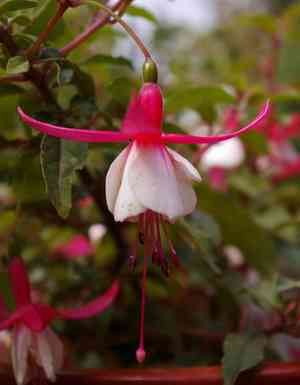
Fuchsias are a collection of flowering shrubs and small trees belonging to the evening primrose family. They are highly favored as ornamental plants due to their unique, pendulous flowers that come in striking colors. The term "fuchsia" for a vivid purplish-red color originates from these plants.
In This Article
Attributes of Fuchsias (Fuchsia)
Lifespan
Perennial
Plant Height
1 m
Spread
90 cm
Leaf Color
Green, sometimes with a reddish tinge
Flower Size
2 to 8 cm (0.7-3 inches)
Flower Color
Red, pink, purple, white, bicolor
Images of Fuchsias (Fuchsia)
Quickly Identify Fuchsias (Fuchsia)
1
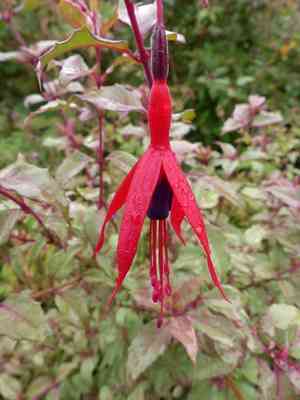
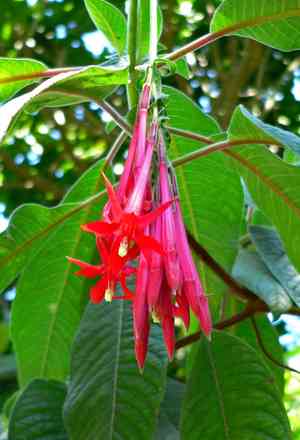
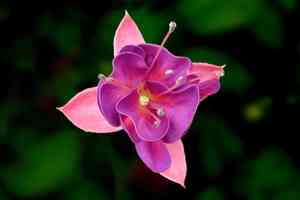
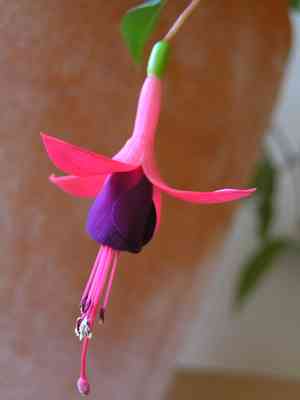
Fuchsias can be identified by their unique, pendulous flowers with a tubular shape and a colorful array of petals. The leaves are typically small, oval-shaped, and arranged opposite each other along the stem.
Scientific Classification of Fuchsias (Fuchsia)
Phylum
Magnoliophyta
Class
Magnoliopsida
Order
Myrtales
Family
Onagraceae
Genus
Fuchsia
Planting and Growing of Fuchsias (Fuchsia)
Care Difficulty
Moderate
Watering Schedule
Every 8 days
Sunlight Requirements
Partial sun
Sunshine Duration
6-10 hours
Ideal Temperature
60-70℉
Soil Type
Potting Mix, Peat Mix
Soil pH
6-7.5
Fertilizer Type
Balanced
Pruning Season
Spring, Summer
Pruning Area
Branches, Leaves
Pruning Frequency
2 times a year
Repotting Season
Spring
Pot Type
Plastic, Ceramic
 How to Water Fuchsias (Fuchsia)?
When watering Fuchsia, ensure that the soil is thoroughly moist but not waterlogged. The rule of thumb is to provide around 250 milliliters of water per session, striving for consistently damp soil without drowning the roots. This mirrors their natural rainforest habitat, where moisture is abundant but well-drained.
What are the symptoms of an underwatered Fuchsias (Fuchsia)?
›
What should I do if my Fuchsias (Fuchsia) is not getting enough water?
›
What are the symptoms of an overwatered Fuchsias (Fuchsia)?
›
How to save an overwatered Fuchsias (Fuchsia)?
›
 What Are the Sunlight Requirements for Fuchsias (Fuchsia)?
Fuchsia ideally grows in partial sun to full shade environments. Ideal lighting encourages healthier, more robust growth, with vibrant flowers and foliage, while minimizing the stress from excessive light exposure.
What is the best lighting condition for Fuchsia?
›
How to achieve ideal lighting for Fuchsia?
›
What are the benefits of ideal lighting for Fuchsia?
›
 What Is the Ideal Temperature Range for Fuchsias (Fuchsia)?
Fuchsias thrive in temperatures ranging from 60 to 70°F. This temperature range supports the plant's photosynthesis and respiration processes, promoting optimal growth and flowering. If temperatures are kept within this bracket, the plant is less likely to experience stress or developmental issues.
 What Soil is Best for Fuchsias (Fuchsia)?
Fuchsia thrives in soil that retains moisture without becoming waterlogged. This helps ensure consistent hydration, which supports healthy root growth and vibrant blooms. A nutrient-rich soil supports the lush foliage and vibrant blooms of Fuchsia, providing essential nutrients for growth and flowering. Well-draining soil prevents root rot by allowing excess water to flow away from the roots, which helps maintain root health and plant stability.
 How to Fertilize Fuchsias (Fuchsia)?
Fuchsia thrives best when given a balanced fertilizer that is rich in phosphorus and potassium but moderate in nitrogen. Apply a liquid fertilizer at a dilution of 1/4 strength every two weeks during the growing season, ensuring not to over-fertilize, as this can lead to salt build-up in the soil.
 How to Prune Fuchsias (Fuchsia)?
After pruning, water the Fuchsia thoroughly and apply a balanced fertilizer to support its recovery and new growth. Ensure the plant is in a location with filtered sunlight to avoid stress from intense heat. Prune your Fuchsia in the morning when the plant is still cool and avoid pruning during extreme heat conditions. This minimizes stress on the plant and ensures a stronger recovery.
 How to Propagate Fuchsias (Fuchsia) plant?
1
Fill the seed starter tray with a light, well-draining potting mix. Water it lightly to ensure it is moist but not soggy. This provides the ideal conditions for Fuchsia seed germination.
2
Sprinkle the Fuchsia seeds evenly over the surface of the moist potting mix. Do not cover them as they require light to germinate. This exposure to light is critical for their successful emergence.
3
Select a healthy Fuchsia plant and cut a 4-6 inch stem below a node. Remove the lower leaves and dip the cut end in rooting hormone to encourage root development.
 How to Repot Fuchsias (Fuchsia) plant?
1
Fuchsia should be repotted when roots begin to circle the pot, indicating limited space for growth. Yellowing leaves and poor water absorption are also signals. It's best to repot in spring or early summer when growth momentum is high, allowing the plant to quickly establish itself in new soil.
2
Choose a pot that's one size larger than the current one, with ample drainage holes. This prevents waterlogging, which Fuchsia are sensitive to. A slightly larger pot encourages root growth without overwhelming the plant, offering a balanced environment for developing roots while ensuring proper aeration.
3
Opt for a well-draining, loamy soil rich in organic matter. This type of soil retains enough moisture to keep roots hydrated while preventing root rot, which Fuchsia are susceptible to. The organic matter also supplies nutrients essential for vigorous growth, maintaining soil fertility over time.
Learn More About Fuchsias (Fuchsia) Diseases
Anthracnose
Bacterial Leaf Spot
Bacterial Soft Rot
Bacterial Wilt
Black Spot
Chemical Injury
Crown Gall
Damping-off
Downy Mildew
Drought Stress
Fusarium Wilt
Gray Mold
Leaf Curl
Leaf Spot
Mosaic
Nutrient Deficiency
Nutrient Toxicity
Powdery Mildew
Root Rot
Root-knot Nematode
Rusts
Sooty Mold
Spider Mites
Temperature Stress
Thrips Damage
White Mold

