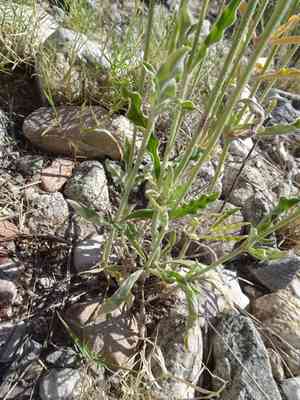
Arizona snakecotton (Froelichia arizonica)
Also known as: None
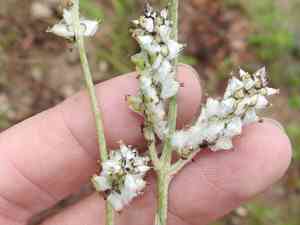
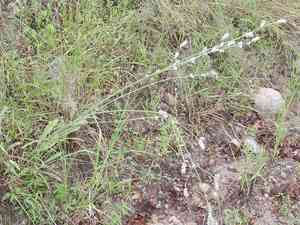
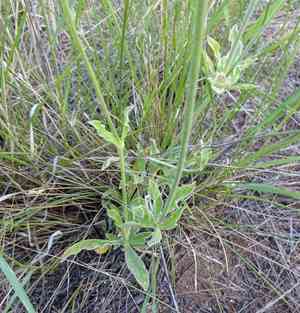
The plant in question is likely Arizona snakecotton. This plant features soft, green leaves and distinctive, whitish, woolly flowers that give it a unique texture. It is well-suited to arid environments, displaying remarkable resilience to heat. Its root system is highly efficient at locating water in the sparse desert soil. Though it has a modest size, its cotton-like flowers stand out, showcasing its adaptation to the harsh conditions of the Arizona desert.
In This Article
Attributes of Arizona snakecotton
Lifespan
Annual
Plant Type
Herb
Plant Height
91 cm to 1.8 m
Spread
0.2 to 0.5 meters
Leaf Color
Gray-green
Flower Size
0.5 to 1 cm
Flower Color
White to pale pink
Images of Arizona snakecotton
Quickly Identify Arizona snakecotton
1
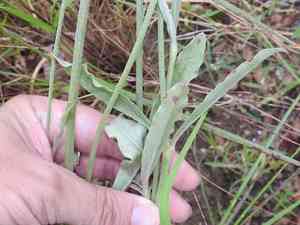
Froelichia arizonica can be identified by its upright, branching stem that is covered in dense, woolly, silver-gray hairs. The leaves are linear to lanceolate and also covered in fine hairs. The flowers are small and dense, forming cylindrical clusters that are woolly in appearance, giving them a cotton-like look.
Scientific Classification of Arizona snakecotton
Phylum
Vascular plants
Class
Dicotyledons
Order
Caryophyllales
Family
Amaranth
Genus
Snakecottons
Species
Arizona snakecotton
Planting and Growing of Arizona snakecotton
Care Difficulty
Easy
Watering Schedule
Every 2 days
Sunlight Requirements
Full sun
Sunshine Duration
6-10 hours
Ideal Temperature
65-75℉
Soil Type
Potting Mix, Peat Mix
Soil pH
6.5-7.5
Fertilizer Type
Balanced
Pruning Season
Spring, Summer
Pruning Area
Branches, Leaves
Pruning Frequency
2 times a year
Repotting Season
Spring
Pot Type
Plastic, Ceramic
 How to Water Arizona snakecotton?
Froelichia arizonica thrives with a measured hydration approach. Ensure to pour around 150 ml of water, making sure the soil remains slightly moist yet well-drained. The key is to avoid waterlogging, as it can harm the roots.
What are the symptoms of an underwatered Arizona snakecotton?
›
What should I do if my Arizona snakecotton is not getting enough water?
›
What are the symptoms of an overwatered Arizona snakecotton?
›
How to save an overwatered Arizona snakecotton?
›
 What Are the Sunlight Requirements for Arizona snakecotton?
Froelichia arizonica thrives best in full sun for 6 to 8 hours daily. Adequate sunlight enhances the plant's growth, leading to a strong, healthy structure and optimal blooming.
What is the best lighting condition for Froelichia arizonica?
›
How can I ensure Froelichia arizonica receives the optimal amount of light?
›
What are the benefits of providing ideal lighting for Froelichia arizonica?
›
 What Is the Ideal Temperature Range for Arizona snakecotton?
Froelichia arizonica thrives best in a temperature range between 65°F and 75°F. This range provides an optimal environment for photosynthesis and nutrient absorption. Maintaining this temperature range will ensure robust growth and healthy development of the plant.
 What Soil is Best for Arizona snakecotton?
Froelichia arizonica thrives in well-draining soils, which prevent water from pooling around the roots, avoiding root rot and promoting healthier growth. This plant excels in nutrient-poor environments, as excessive nutrients can lead to lush growth that is less drought tolerant. A loose soil texture allows roots to penetrate easily and access air, enhancing nutrient uptake and overall vigor of the plant.
 How to Fertilize Arizona snakecotton?
Froelichia arizonica, a resilient plant native to arid regions, does not demand frequent fertilization. Use a dilute liquid fertilizer at a strength of 1/4 the label's recommendation monthly during the growing season. For granular fertilizers, apply roughly one tablespoon annually per square foot around the root zone.
 How to Prune Arizona snakecotton?
Start by removing any dead or damaged stems. This should be done as close to their base as possible. Clearing away dead wood promotes healthy new growth. Trim the outer stems to shape your plant, ensuring equilibrium and symmetry in its overall appearance. Aim to create a natural, aesthetically pleasing form. To encourage bushier growth, prune back the taller stems. Cut just above a node where you want to see new branching occur. This will result in a fuller plant.
More About Pruning Techniques→
 How to Propagate Arizona snakecotton plant?
1
Choose a well-draining potting mix, often a blend of peat, perlite, and sand. Fill the seed trays with this mixture and moisten slightly before planting.
2
Distribute the Froelichia arizonica seeds evenly across the surface of the soil. Lightly press them into the soil but do not bury them, as they need light to germinate.
3
Place the seed tray in a warm location with indirect sunlight. Aim to maintain a temperature around 70°F for optimal germination rates.
 How to Repot Arizona snakecotton plant?
1
Froelichia arizonica needs repotting when its roots start coming out from the drainage holes or when the growth noticeably slows down, indicating that it might be pot-bound. It's best to choose active growing seasons like spring or summer to minimize stress on the plant.
2
Select a pot that is only slightly larger than the current one. This prevents excessive moisture retention, which could lead to root rot. Choose a pot with adequate drainage holes to ensure proper water flow and avoid waterlogging.
3
Opt for a well-draining sandy soil mix to mimic its natural habitat. The sand helps in water drainage and aeration, reducing the risk of root rot. A cactus or succulent mix with added perlite can also suit its needs.


