
Fragaria moupinensis (Fragaria moupinensis)
Also known as: Himalayan Strawberry
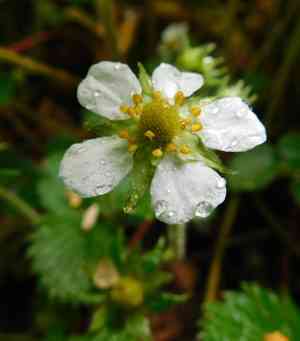
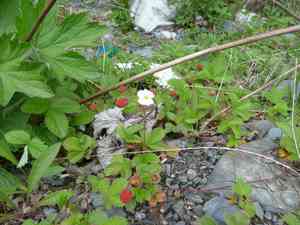
Fragaria moupinensis is a low-growing perennial herb that forms a rosette shape. It features trifoliate green leaves and small white flowers, which eventually produce sweet red berries. This wild strawberry species thrives in cooler, temperate climates, often found in mountainous regions where its berry size can vary, showcasing its untamed heritage distinct from domesticated varieties.
In This Article
Attributes of Fragaria moupinensis
Lifespan
Perennial
Plant Type
Herb
Plant Height
5-15 cm
Spread
10-20 cm
Leaf Color
Green
Flower Size
1-2 cm
Flower Color
White
Images of Fragaria moupinensis
Quickly Identify Fragaria moupinensis
1
To identify Fragaria moupinensis, look for a low-growing plant with trifoliate leaves, white flowers with five petals, and small red fruits. The fruits are often smaller than typical garden strawberries and have a stronger flavor.
Scientific Classification of Fragaria moupinensis
Phylum
Vascular plants
Class
Dicotyledons
Order
Roses, elms, figs, and allies
Family
Rose
Genus
Strawberries
Species
Fragaria moupinensis
Planting and Growing of Fragaria moupinensis
Care Difficulty
Moderate
Watering Schedule
Every 4 days
Sunlight Requirements
Partial sun
Sunshine Duration
4-8 hours
Ideal Temperature
55-75℉
Soil Type
Potting Mix, Peat Mix
Soil pH
6.5-7.5
Fertilizer Type
Balanced
Pruning Season
Spring, Summer
Pruning Area
Branches, Leaves
Pruning Frequency
2 times a year
Repotting Season
Spring
Pot Type
Plastic, Ceramic
 How to Water Fragaria moupinensis?
For Fragaria moupinensis, watering should follow the principle of keeping the soil moderately moist, but not waterlogged. Each time you water, aim for about 200 milliliters, enough to saturate the soil without leaving it soggy. Ensure that excess water drains away to prevent root issues.
What are the symptoms of an underwatered Fragaria moupinensis?
›
What should I do if my Fragaria moupinensis is not getting enough water?
›
What are the symptoms of an overwatered Fragaria moupinensis?
›
How to save an overwatered Fragaria moupinensis?
›
 What Are the Sunlight Requirements for Fragaria moupinensis?
Fragaria moupinensis benefits from partial to full sun, ideally around 4-6 hours daily. This range supports optimal growth, healthy leaves, and abundant flowering, contributing to better fruit production.
How much sunlight does it need?
›
Where should I place it?
›
What are the ideal seasonal adjustments?
›
 What Is the Ideal Temperature Range for Fragaria moupinensis?
The ideal temperature range for Fragaria moupinensis to thrive is between 55°F and 75°F. Within this range, the plant can efficiently photosynthesize and metabolize nutrients, promoting robust growth and fruit production. Maintaining this temperature range ensures that the plant's physiological processes operate efficiently, while also minimizing stress that can hinder development.
 What Soil is Best for Fragaria moupinensis?
Fragaria moupinensis thrives in well-drained soil as it prevents root rot and suffocation. Proper drainage maintains the right balance of oxygen and moisture, essential for healthy root development and robust growth. A nutrient-rich soil is crucial for this plant, enhancing its growth and fruit production. Fertile soil supplies the necessary nutrients and trace elements required for vibrant foliage and a plentiful yield. Incorporating organic matter, like compost, improves soil structure and fertility. Organic matter increases microbial activity, benefiting nutrient availability and ensuring healthier plant development.
 How to Fertilize Fragaria moupinensis?
For Fragaria moupinensis, apply liquid fertilizer at half the standard strength for houseplants, making sure not to over-concentrate. Use around 500 ml per plant per application. Solid organic fertilizers should be lightly scattered over the soil, roughly one handful per plant per year.
 How to Prune Fragaria moupinensis?
Before you begin pruning Fragaria moupinensis, take a moment to understand its growth structure. Identify the main runners and any offshoots that may have grown extensively. This step ensures that you can trim effectively without damaging the plant's primary growth. Use sharp and sanitized pruning shears to avoid the spread of disease. Dull blades can injure the plant, and unclean tools can introduce pathogens. A good cut helps to facilitate quick healing for the plant. Trim back any excessively long runners, as they divert energy from fruit production. Focus on removing runners that have outpaced their allocated space or are tangled with other plants, to encourage more controlled growth. Carefully eliminate any dead or diseased leaves to promote the overall health of the plant. This not only helps in disease prevention but also encourages healthy new growth.
More About Pruning Techniques→
 How to Propagate Fragaria moupinensis plant?
1
Before sowing, soak the seeds in warm water for a few hours to soften the seed coat. This aids in faster germination. Fill seed trays with a soil mix suitable for strawberries, ensuring it's well-draining.
2
Select a healthy, non-flowering runner from the parent plant. Cut it about 4 inches long with a clean cut just below a node. Remove leaves from the lower half of the cutting and dip it in rooting hormone.
3
When dividing the plant, ensure it is healthy and mature. Dig up the entire plant and carefully divide the roots and crowns into several parts, ensuring each section has a viable crown and root system.
 How to Repot Fragaria moupinensis plant?
1
Look for signs that your Fragaria moupinensis is becoming cramped within its current container, such as roots growing through drainage holes or soil that dries out too rapidly after watering. Spring is an excellent time, as the plant naturally enters a growth phase.
2
Select a pot that's one size larger than the current one and has good drainage holes. This will provide enough space for root expansion without risking overwatering, which can lead to root rot.
3
Opt for a loamy, well-draining soil mix to promote healthy root development. This type of soil ensures adequate aeration and moisture levels, reducing the risk of fungal infections and root diseases.
Learn More About Fragaria moupinensis Diseases
Anthracnose
Bacterial Leaf Spot
Bacterial Wilt
Crown Gall
Cyst Nematode
Damping-off
Downy Mildew
Drought Stress
Fusarium Wilt
Gray Mold
Leaf Curl
Leaf Spot
Mosaic
Nutrient Deficiency
Nutrient Toxicity
Powdery Mildew
Root Rot
Root-knot Nematode
Rusts
Sooty Mold
Spider Mites
Temperature Stress
Thrips Damage
White Mold



