Sweet fennel(Foeniculum vulgare)

Sweet fennel (Foeniculum vulgare)

Also known as: Florence fennel, Fresh fennel

Sweet fennel (Foeniculum vulgare) is a perennial herb related to the carrot family. Originating from the Mediterranean, it is now widely used globally as a flavoring herb. Known for its sweet, aromatic, and anise-like flavor, sweet fennel features prominently in various culinary applications, including salads, soups, and seafood dishes. Additionally, it is a key ingredient in the production of absinthe. In natural settings, sweet fennel can become invasive, often classified as a noxious weed due to its ability to spread rapidly and outcompete native vegetation.

Attributes of Sweet fennel

Lifespan
Perennial, Biennial, Annual
Plant Type
Herb
Plant Height
40 cm to 2 m
Spread
1 m
Leaf Color
Green Blue
Flower Size
5 cm to 9 cm
Flower Color
Yellow

PlantJoy - Identify plants with a snap

Identify and diagnose plants, get toxicity alerts, and explore safety guides for all types of fungi.

Try for Free

Images of Sweet fennel

Sweet fennel(Foeniculum vulgare)

Quickly Identify Sweet fennel

1
Feathery, yellow-green compound leaves with aromatic scent, 1-2 feet (30-60 cm) long.
2
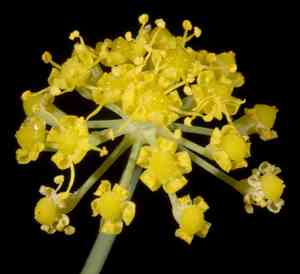
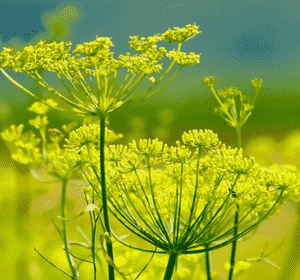
Tiny star-shaped yellow flowers in large umbels, attractive to butterflies and bees.
3
Small dry schizocarps, 4-10 mm, greenish-brown transitioning to grayish-brown with aromatic properties.
4
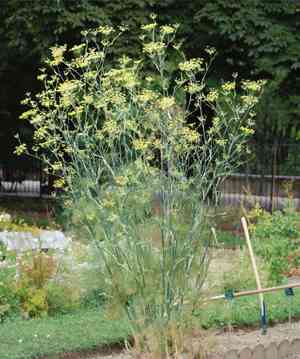
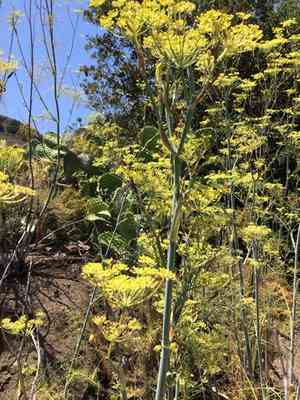
Erect, branching habit reaching 3-5 feet (0.9-1.5 meters), delicate appearance despite considerable height.
5
Slender stems and airy foliage creating an overall delicate visual impression despite significant height.

Scientific Classification of Sweet fennel

Phylum
Vascular plants
Class
Dicotyledons
Order
Carrots, ivies and allies
Family
Umbellifers
Genus
Fennels
Species
Sweet fennel

Planting and Growing of Sweet fennel

Care Difficulty
Easy
Watering Schedule
Every 3 days
Sunlight Requirements
Full sun
Sunshine Duration
4-8 hours
Ideal Temperature
60-70℉
Soil Type
Potting Mix, Peat Mix
Soil pH
6.5-7.5
Fertilizer Type
Balanced
Pruning Season
Spring, Summer
Pruning Area
Branches, Leaves
Pruning Frequency
2 times a year
Repotting Season
Spring
Pot Type
Plastic, Terracotta

water icon How to Water Sweet fennel?

Foeniculum vulgare, commonly known as fennel, requires watering that keeps the soil consistently moist without being waterlogged. Ideally, water should be deep enough to reach the roots, around 500 ml per session, depending on the plant's size and conditions. The goal is to avoid flooding while ensuring the roots are hydrated.
What are the symptoms of an underwatered Sweet fennel?
What should I do if my Sweet fennel is not getting enough water?
What are the symptoms of an overwatered Sweet fennel?
How to save an overwatered Sweet fennel?
More About Watering Techniques

sunlight icon What Are the Sunlight Requirements for Sweet fennel?

Sunlight Requirements: Full sun
Duration of light: 6 to 8 hours
Foeniculum vulgare benefits from full sun, ideally 6 to 8 hours a day. This range promotes healthy growth and intense flavor in its leaves and seeds, essential for both culinary and medicinal purposes.
What amount of sunlight does Foeniculum vulgare prefer?
Why is full sun crucial for Foeniculum vulgare?
How can you provide ideal sunlight conditions for Foeniculum vulgare?
More About Sunlight Requirements Techniques

temperature icon What Is the Ideal Temperature Range for Sweet fennel?

Ideal Temperature: 60 ~ 70℉
The ideal temperature range for growing Foeniculum vulgare, commonly known as fennel, is between 60°F and 70°F. This range provides optimal conditions for the plant to thrive, ensuring proper growth, leaf development, and essential oil production. Fennel prefers a mild climate and might not perform well outside this temperature bracket.

soil icon What Soil is Best for Sweet fennel?

Soil type: Loam, Sandy loam
Soil PH: 6.5 ~ 7.5
Foeniculum vulgare thrives in soils that provide excellent drainage, preventing root rot and ensuring healthy plant growth. Well-drained soils help keep the roots from sitting in water, which can lead to fungal problems. Rich in nutrients, loamy soils support robust growth by supplying essential elements the plant needs. An abundance of essential nutrients translates into flourishing foliage and a bountiful herbal yield. This plant can handle slightly alkaline soil conditions, allowing flexibility in planting locations where the pH may slightly exceed neutral. Such tolerance aids in wider cultivation opportunities. More About Soil

fertilize icon How to Fertilize Sweet fennel?

Fertilizer type: Balanced
When fertilizing Foeniculum vulgare, use a balanced fertilizer with a ratio such as 10-10-10. Apply liquid fertilizer at a rate of 1 to 2 tablespoons per gallon of water. For slow-release fertilizers, incorporate about 1 to 2 pounds per 100 square feet of garden space. More About Fertilizing Techniques

prune icon How to Prune Sweet fennel?

Pruning Time: Spring, Summer, Autumn, Winter
Begin by identifying the older, woody stems that need to be removed. These stems may have fewer leaves or appear discolored compared to healthy ones. Use sharp pruning shears to make clean cuts at a 45-degree angle. This will minimize damage and promote quicker healing of the plant tissue. Carefully prune away any sections of the plant that appear diseased or damaged to prevent further spread. Dispose of these parts properly to avoid contamination. More About Pruning Techniques

propagate icon How to Propagate Sweet fennel plant?

Propagate Time: Spring, Early spring, Late spring
1
Begin by selecting a well-drained soil mix. If propagating via seeds, using a sterile seed-starting mix can help prevent diseases. For division, amend the soil with organic matter to support root growth.
2
When sowing fennel seeds, scatter them on the surface and lightly cover with soil. Ensure they are spaced adequately apart to prevent overcrowding and allow for ample light exposure.
3
To propagate by division, carefully dig up a mature Fennel plant. Use a knife to separate root clumps, ensuring each segment has a healthy root system and foliage for better regrowth chances.
More About Propagating Techniques

repot icon How to Repot Sweet fennel plant?

Repotting frequency: Every 1-2 years
1
Foeniculum vulgare, commonly known as fennel, should be repotted when you notice its roots growing out of the drainage holes or the plant becomes root-bound. If the plant's growth appears sluggish, it's likely time for a new pot. Ideally, repot in spring or early summer to allow the plant to recover and grow in the active seasons.
2
Opt for a pot that is 1-2 inches larger in diameter than the current one to encourage healthy growth without overwhelming the plant. A pot with adequate drainage holes is essential to prevent waterlogging, which can lead to root rot. Consider a terracotta pot to help with moisture regulation.
3
Select a well-draining soil mix that is rich in organic matter to support fennel's nutritional needs. A combination of potting soil, sand, and compost can create an ideal environment. This ensures that the plant receives adequate nutrients while preventing water retention that can damage the roots.

PlantJoy - Identify plants with a snap

Find the best spots for them to optimize their health, simply using your phone.

Try for Free

Toxicity of Sweet fennel

Is Sweet fennel toxic to cat?

Sweet fennel is acknowledged as a toxic species for cats. Felines might accidentally consume this plant, often attracted by its sap or juice, which contain the harmful components. Contact with the plant can result in non-specific symptoms of illness and unease; hence, it is crucial to remain watchful and restrict access to sweet fennel. If a cat shows signs of distress potentially linked to sweet fennel consumption, prompt veterinary intervention is essential to manage the poisoning and deliver suitable treatment.

Is Sweet fennel toxic to dog?

Sweet fennel is recognized as toxic for dogs. When dogs consume this plant, especially its sap or juice, they risk poisoning. This usually happens when a dog inadvertently eats parts of sweet fennel, confusing it with something safe to eat. After consumption, a dog may show a variety of symptoms that indicate poisoning. These symptoms can include vomiting, diarrhea, lethargy, or more serious reactions depending on the quantity ingested and the dog's individual sensitivity. It is essential for dog owners to keep a close watch on their pets and restrict access to sweet fennel. If there is any suspicion that a dog has ingested any portion of sweet fennel, it is vital to seek immediate veterinary assistance to ensure proper treatment and management of the poisoning.

Identify toxic plants for your safety

Learn which plants are harmful to you and your pets, and make informed choices for a safer home!

Try for Free
WARNING
The judgment on toxicity and danger is for reference only. We DO NOT GUARANTEE any accuracy of such judgment. Therefore, you SHALL NOT rely on such judgment. It is IMPORTANT TO SEEK PROFESSIONAL ADVICE in advance when necessary.
More About Toxic Techniques