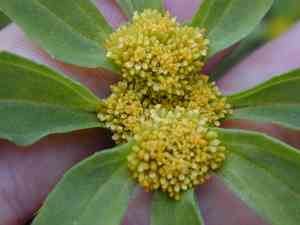
Introduced species (Flaveria trinervia)
Also known as: Three-nerved Flaveria, Clustered Yellowtops, Yellowtop
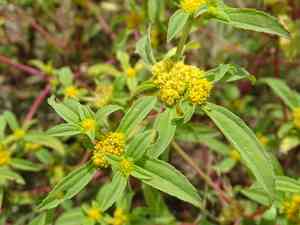
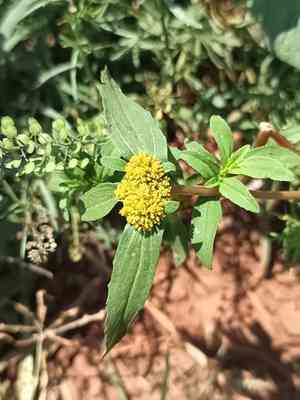
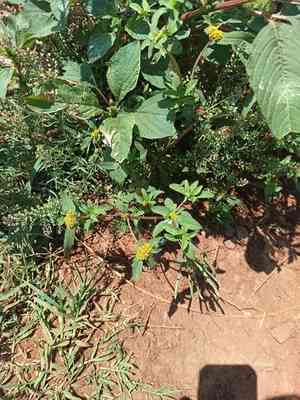
This annual herb grows upright and can surpass 2 meters in height. The leaves are lanceolate to oval, reaching lengths of up to 20 cm. They are typically arranged in opposite pairs along the stem, occasionally with bases that merge. The plant features a sizable, dense inflorescence composed of numerous tiny flower heads, sometimes forming clusters over 8 cm wide. Each flower head generally contains 0-1 yellow or white ray florets and 0-2 yellow disc florets.
In This Article
Attributes of Introduced species
Lifespan
Annual
Plant Type
Herb
Plant Height
2 m
Spread
Not typically measured since it is a herbaceous plant.
Leaf Color
Green
Flower Size
1.5 mm
Flower Color
Yellow White
Images of Introduced species
Quickly Identify Introduced species
1
The plant can be identified by its yellow flowers, which are clustered together, and its three-veined leaves. The leaves are usually lance-shaped and have a distinctive three-veined pattern.
Scientific Classification of Introduced species
Phylum
Vascular plants
Class
Dicotyledons
Order
Asterales
Family
Daisy
Genus
Flaveria
Species
Introduced species
Planting and Growing of Introduced species
Care Difficulty
Moderate
Watering Schedule
Every 4 days
Sunlight Requirements
Full sun
Sunshine Duration
4-8 hours
Ideal Temperature
68-77℉
Soil Type
Potting Mix, Peat Mix
Soil pH
6.5-7.5
Fertilizer Type
Balanced
Pruning Season
Spring, Summer
Pruning Area
Branches, Leaves
Pruning Frequency
2 times a year
Repotting Season
Spring
Pot Type
Plastic, Ceramic
 How to Water Introduced species?
For Flaveria trinervia, water until the top 5-7 cm of soil feels nicely soaked; that typically amounts to about 150 ml per session depending on soil drainage. It loves to stay mildly moist, so ensure it never sits in soggy conditions, which could lead to root rot.
What are the symptoms of an underwatered Introduced species?
›
What should I do if my Introduced species is not getting enough water?
›
What are the symptoms of an overwatered Introduced species?
›
How to save an overwatered Introduced species?
›
 What Are the Sunlight Requirements for Introduced species?
Flaveria trinervia thrives in full sun conditions for at least 8-10 hours a day. This exposure enhances photosynthesis, promoting robust growth, vibrant foliage, and overall plant health.
More About Sunlight Requirements Techniques→
Optimal Sun Exposure
›
Consider Adjustable Shading
›
Monitor Seasonal Changes
›
 What Is the Ideal Temperature Range for Introduced species?
The optimal temperature range for Flaveria trinervia growth is between 68°F and 77°F. Maintaining the temperature within this range ensures healthy development, robust growth, and efficient photosynthesis for the plant, providing it with the best conditions to thrive.
 What Soil is Best for Introduced species?
Flaveria trinervia thrives in well-drained soils that prevent waterlogging. Adequate drainage helps in avoiding root rot, promoting healthy root development and nutrient absorption. Providing nutrient-rich soil enhances the growth of Flaveria trinervia. It supports robust foliage and better flowering. Amend the soil with organic matter for optimum results. The plant requires moderate soil fertility. Excessive nutrients may lead to lush foliage with fewer flowers. Balanced nutrition ensures steady growth and flowering cycles.
 How to Fertilize Introduced species?
Flaveria trinervia generally requires a moderate amount of fertilizer. When applying liquid fertilizer, use a solution that is diluted to half the strength recommended for general houseplants. For slow-release fertilizers, use a balanced formula with equivalent ratios of nitrogen, phosphorus, and potassium.
 How to Prune Introduced species?
When Flaveria trinervia is young, prune it to encourage a bushier growth. Cut back the tips and any errant stems to shape the plant. This will help promote more vigorous branching and a fuller appearance. For more mature plants, focus on maintaining their shape by cutting back longer stems to an outward-facing bud. This helps support robust structure and fosters a lush display. Be sure to use sharp, clean pruning shears to get a clean cut.
More About Pruning Techniques→
 How to Propagate Introduced species plant?
1
Begin by preparing a soil mixture that combines peat moss, perlite, and standard potting soil to ensure good drainage and aeration, essential for seedling health.
2
Carefully scatter the Flaveria trinervia seeds across the surface of the prepared soil in the seed tray. Ensure they are spaced evenly and gently press them into the soil without burying them too deeply.
3
Lightly water the seeds using a fine mist spray bottle to avoid displacing them. Position the seed tray in a location with bright, indirect sunlight to promote healthy germination.
 How to Repot Introduced species plant?
1
Flaveria trinervia signals the need for repotting when growth appears stunted or roots emerge from the drainage holes. Typically, the best time is during the growing months of Spring or early Summer when the plant is naturally expanding its root system.
2
Select a pot that is slightly larger than the current one, ideally 1 to 2 inches in diameter larger. This size allows roots to spread comfortably without excess soil that could lead to waterlogging. A pot with adequate drainage holes is crucial to prevent water retention issues.
3
Opt for a well-draining sandy soil mix to replicate the plant's natural environment, accommodating its need for good aeration and drainage. This helps in preventing root rot and promotes healthy root development, ensuring the plant thrives in its new container.
Learn More About Introduced species Diseases
Anthracnose
Bacterial Leaf Spot
Bacterial Soft Rot
Bacterial Wilt
Black Spot
Chemical Injury
Crown Gall
Cyst Nematode
Damping-off
Downy Mildew
Drought Stress
Fusarium Wilt
Gray Mold
Leaf Curl
Leaf Spot
Mosaic
Nutrient Deficiency
Nutrient Toxicity
Powdery Mildew
Root Rot
Root-knot Nematode
Rusts
Sooty Mold
Spider Mites
Temperature Stress
Thrips Damage
White Mold



