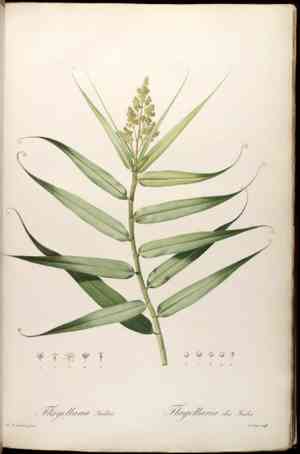
Flagellaria (Flagellaria) (Flagellaria)
Also known as: Flagellaria, Rattan-cane, Supplejack, Vine Bamboo
Flagellaria comprises five recognized species, which are native to tropical and subtropical areas across Asia, Africa, Australia, and various islands in the Pacific and Indian Oceans.
In This Article
Attributes of Flagellaria (Flagellaria)
Lifespan
Perennial
Plant Height
Up to 15 meters
Spread
Varies widely, often sprawling
Leaf Color
Green
Flower Size
Small, typically less than 1 cm
Flower Color
White or cream
Images of Flagellaria (Flagellaria)
Quickly Identify Flagellaria (Flagellaria)
1
Flagellaria can be identified by their climbing or sprawling nature, long and wiry stems that can twine around other plants or structures, and their elongated, lance-shaped leaves. They often produce small, clustered flowers which can develop into small, round berries.
Scientific Classification of Flagellaria (Flagellaria)
Phylum
Angiosperms
Class
Liliopsida (Monocots)
Order
Poales
Family
Flagellariaceae
Genus
Flagellaria
Planting and Growing of Flagellaria (Flagellaria)
Care Difficulty
Moderate
Watering Schedule
Every 3 days
Sunlight Requirements
Partial sun
Sunshine Duration
4-6 hours
Ideal Temperature
68-77℉
Soil Type
Potting Mix, Peat Mix
Soil pH
6.5-7.5
Fertilizer Type
Balanced
Pruning Season
Spring, Summer
Pruning Area
Branches, Leaves
Pruning Frequency
2 times a year
Repotting Season
Spring
Pot Type
Plastic, Ceramic
 How to Water Flagellaria (Flagellaria)?
For Flagellaria, it's ideal to water them with about 250 milliliters per session. The watering should be thorough enough to moisten the soil evenly, ensuring that excess water drains away to prevent root rot. Watering too aggressively can be detrimental, so it's essential to strike a balance and not let the plant sit in standing water.
What are the symptoms of an underwatered Flagellaria (Flagellaria)?
›
What should I do if my Flagellaria (Flagellaria) is not getting enough water?
›
What are the symptoms of an overwatered Flagellaria (Flagellaria)?
›
How to save an overwatered Flagellaria (Flagellaria)?
›
 What Are the Sunlight Requirements for Flagellaria (Flagellaria)?
Flagellaria thrives ideally in partial sunlight conditions where it received balanced exposure of sun and shade. This promotes vigorous growth, lush foliage, and disease resistance.
What is Flagellaria's optimal light requirement?
›
How to achieve ideal lighting conditions for Flagellaria?
›
What benefits does Flagellaria get from ideal lighting?
›
 What Is the Ideal Temperature Range for Flagellaria (Flagellaria)?
Flagellaria thrives best in warm environments ranging from 68°F to 77°F. This temperature range allows optimal metabolic processes, ensuring healthy growth and vibrant foliage. Maintaining consistent warmth is crucial for the plant to flourish and develop new shoots effectively.
 What Soil is Best for Flagellaria (Flagellaria)?
Flagellaria thrives in nutrient-rich soils, where essential nutrients support robust growth and vibrant foliage. Ensuring the presence of organic matter enhances the soil's fertility, promoting long-term plant health. Proper drainage is crucial for Flagellaria, as waterlogged conditions can lead to root rot. Well-drained soils prevent water accumulation, thereby maintaining healthy root systems and preventing potential fungal infections. While well-drained, the soil should retain adequate moisture to support Flagellaria's hydration needs. This balance ensures sustained plant vitality, reducing the frequency of supplemental watering.
 How to Fertilize Flagellaria (Flagellaria)?
Flagellaria plants require a balanced approach to fertilization. Use about half the recommended dose on the fertilizer label for liquid feeding. This allows you to accommodate the plant's needs without overloading its root system with nutrients.
 How to Prune Flagellaria (Flagellaria)?
Start by cutting away any dead or diseased stems back to healthy tissue or the plant's base. This prevents further spread of any infection and encourages healthy new growth. Prune the outer branches lightly to encourage a preferred shape. Take a step back frequently to observe the plant's form and make adjustments as necessary. In dense regions, thin out branches to improve air circulation and light penetration, which can reduce the risk of fungal diseases and promote more vigorous flowering.
 How to Propagate Flagellaria (Flagellaria) plant?
1
Collect mature seeds from the Flagellaria plant, choosing seeds that are firm and free of damage to increase the likelihood of successful germination.
2
Select a healthy stem from the parent plant and use a sharp cutting tool to take a 4-6 inch piece just below a node, ensuring the cutting is free from disease or pest damage.
3
After treating the cut ends with rooting hormone, plant the cuttings in a well-draining soil mix to promote root development and maintain soil moisture levels.
 How to Repot Flagellaria (Flagellaria) plant?
1
Flagellaria needs repotting when roots become visible at drainage holes or when the plant's growth visibly slows. Early spring and summer are ideal due to active growth, providing ample time for root establishment and adaptation.
2
Choose a pot that is 1-2 inches larger in diameter than the current one, ensuring it has ample drainage holes. A slightly bigger pot allows room for root expansion, helping Flagellaria to flourish without becoming root-bound, which encourages healthier growth.
3
Opt for a well-draining potting mix rich in organic matter. This soil provides the necessary aeration and moisture retention, preventing waterlogging and root rot, thereby offering a nurturing environment for Flagellaria's roots.
Toxicity
Ingestion, skin contact
WARNING
The judgment on toxicity and danger is for reference only. We DO NOT GUARANTEE any accuracy of such judgment. Therefore, you SHALL NOT rely on such judgment. It is IMPORTANT TO SEEK PROFESSIONAL ADVICE in advance when necessary.

