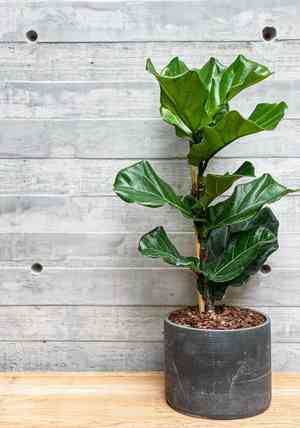
Fiddle-leaf fig (Ficus pandurata)
Also known as: Fiddle Leaf Fig, Banjo Fig
The fiddle-leaf fig tree, native to tropical rainforests, features leaves that resemble the shape of a fiddle or violin. Indoors, it generally reaches up to 1.8 meters in height, making it an excellent choice for a potted plant. To thrive, it requires ample indirect light, consistent watering, and moderate humidity levels.
In This Article
Attributes of Fiddle-leaf fig
Lifespan
Perennial
Plant Type
Tree
Plant Height
3 m to 12 m
Spread
9 m
Leaf Color
Green
Flower Size
N/A (rarely flowers indoors)
Flower Color
N/A (rarely flowers indoors)
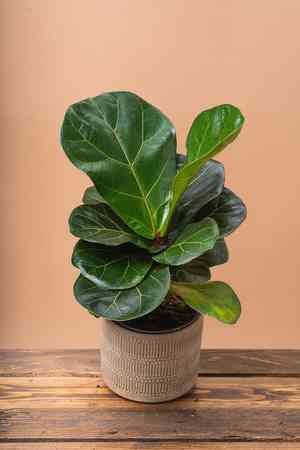
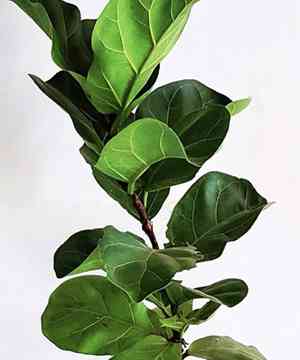
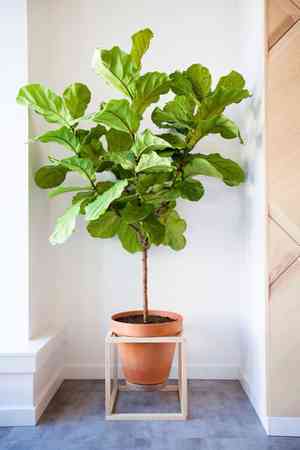
Images of Fiddle-leaf fig
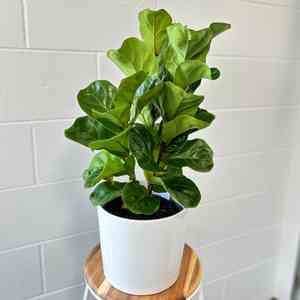
Quickly Identify Fiddle-leaf fig
1
Look for large, leathery, and glossy leaves shaped like a fiddle or violin. The plant typically has a single trunk and can grow quite tall indoors if given proper care.
Scientific Classification of Fiddle-leaf fig
Phylum
Vascular plants
Class
Dicotyledons
Order
Roses, elms, figs, and allies
Family
Mulberry
Genus
Fig trees
Species
Fiddle-leaf fig
Planting and Growing of Fiddle-leaf fig
Care Difficulty
Hard
Watering Schedule
Every 2 days
Sunlight Requirements
Partial sun
Sunshine Duration
4-8 hours
Ideal Temperature
60-75℉
Soil Type
Potting Mix
Soil pH
6-7.5
Fertilizer Type
Balanced
Pruning Season
Spring, Summer
Pruning Area
Leaves, Branches
Pruning Frequency
2 times a year
Repotting Season
Spring
Pot Type
Ceramic, Plastic
 How to Water Fiddle-leaf fig?
Ficus pandurata, commonly known as the fiddle leaf fig, requires careful watering. The soil should be thoroughly moistened, but never waterlogged. Typically, a plant of medium size requires around 300 ml of water, ensuring the top two inches of soil dry out before the next watering.
What are the symptoms of an underwatered Fiddle-leaf fig?
›
What should I do if my Fiddle-leaf fig is not getting enough water?
›
What are the symptoms of an overwatered Fiddle-leaf fig?
›
How to save an overwatered Fiddle-leaf fig?
›
 What Are the Sunlight Requirements for Fiddle-leaf fig?
Partial sun or filtered light is optimum for Ficus pandurata. This helps maintain vibrant leaf color, promotes steady growth, and prevents the plant from becoming leggy or struggling to develop.
More About Sunlight Requirements Techniques→
What type of light does Ficus pandurata need?
›
How can you ensure optimal lighting conditions?
›
What are the benefits of ideal lighting for Ficus pandurata?
›
 What Is the Ideal Temperature Range for Fiddle-leaf fig?
The ideal temperature range for Ficus pandurata, commonly known as the fiddle-leaf fig, is between 60°F and 75°F. Maintaining these temperatures ensures that the plant can thrive, with optimal leaf growth and structural integrity. Cooler temperatures within this range provide a good balance to avoid stress on the plant's system, while the warmth encourages upward growth and healthy foliage.
 What Soil is Best for Fiddle-leaf fig?
Fiddle Leaf Fig thrives in nutrient-rich soil, which provides essential minerals for growth. The abundance of organic matter supports healthy root development and vibrant foliage, facilitating optimal health and robustness against pests. The plant benefits from well-draining soil that prevents root rot by allowing excess water to escape efficiently. Ensuring the soil doesn't retain too much moisture keeps roots aerobic and prevents fungal infections. While good drainage is crucial, the soil should also retain adequate moisture to nourish the plant between waterings. A balance between drainage and moisture retention ensures the plant receives a consistent supply of water without waterlogging.
 How to Fertilize Fiddle-leaf fig?
For Ficus pandurata, it's essential to use a balanced fertilizer such as a 10-10-10 or 20-20-20 formulation. When using liquid fertilizer, dissolve it at half the recommended strength to avoid over-fertilizing the plant. Typically, 200 ml of diluted solution per plant is optimal.
 How to Prune Fiddle-leaf fig?
Begin by assessing the overall shape of your Ficus pandurata, also known as the fiddle-leaf fig. Identify any branches that disrupt the ideal structure you wish to maintain. Using sharp, clean pruning shears, remove these branches at their base to encourage a healthier shape. Aim to open up the canopy to allow more light and air to penetrate the inner sections, which promotes vigorous growth and reduces the chances of disease. To encourage new, denser growth, prune the top of your Ficus pandurata. Cut just above a node, where a leaf attaches to the stem. This will signal the plant to grow outward rather than upward, becoming bushier over time. Pay attention to the symmetry, ensuring the plant remains balanced and aesthetically pleasing. Remove any yellowing or diseased leaves to maintain the plant's health. Prune the affected leaves or limbs back to healthy tissue, ensuring not to spread any disease by disinfecting your tools between cuts. This proactive pruning helps the plant focus its energy on new, healthy growth, thus revitalizing its overall appearance.
More About Pruning Techniques→
 How to Propagate Fiddle-leaf fig plant?
1
Choose a healthy stem with several leaves and approximately 4-6 inches long. Avoid stems with signs of disease or damage, as these are unlikely to root successfully.
2
Cut the selected stem just below a node using sterilized pruning shears to prevent infections. Carefully remove the lower leaves, leaving a few at the top.
3
Dip the cut end of the stem into rooting hormone. Plant it into a small pot filled with a suitable propagation mix, making sure the node is covered with soil.
 How to Repot Fiddle-leaf fig plant?
1
Ficus pandurata shows signs of needing a repot when roots start circling inside the pot or growing out of the drainage holes. Another sign is when the plant becomes top-heavy, meaning that its roots no longer have room to expand. Often, these signs are accompanied by an overall decrease in health and slower growth rate, which means it’s time for a new home.
2
Choose a pot that is 2 to 4 inches larger in diameter than the current one. This size increase gives roots ample space to grow, preventing root-bound symptoms. Ensure the pot has drainage holes to avoid waterlogging. This ensures that roots remain healthy and have adequate oxygenation, promoting robust growth.
3
A well-draining potting mix is key for Ficus pandurata. Consider a blend of peat, pine bark, and perlite, which provides structure and aeration while retaining essential moisture without waterlogging. This combination supports root health, providing essential nutrients and encouraging vigorous plant growth.
Toxicity
ingested, physical contact with sap
WARNING
The judgment on toxicity and danger is for reference only. We DO NOT GUARANTEE any accuracy of such judgment. Therefore, you SHALL NOT rely on such judgment. It is IMPORTANT TO SEEK PROFESSIONAL ADVICE in advance when necessary.



