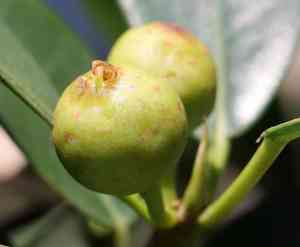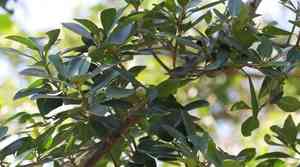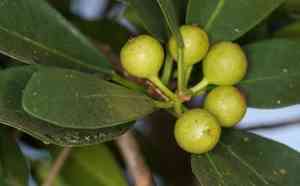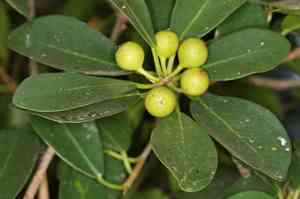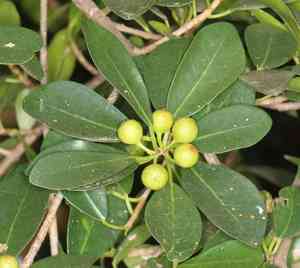
Ficus natalensis(Ficus natalensis)

Ficus natalensis (Ficus natalensis)

Also known as: Natal Fig

The Ficus natalensis, part of the Moraceae family, is a tree usually referred to as the natal fig in its native South Africa. This tree has significant cultural importance in central and western Uganda, where it is referred to as omutuba by the Baganda people and omutoma by the Banyakitara. Some people call it the barkcloth fig in English. The tree is often incorrectly identified as its relative, the Ficus thonningii, which is called mugumo among the Agikuyu. These species are found from northeastern South Africa all the way to Kenya and Uganda. The Ficus natalensis is often grown as a bonsai tree due to its rapid growth and robustness. Its bark is sustainably harvested and fashioned into barkcloth, a renewable, environmentally friendly material. Skilled craftspeople utilize barkcloth in a variety of contemporary applications, such as fashion, home goods, interior decor, and art. It is envisioned that worldwide demand for barkcloth will lead to a sustainable job creation in East Africa. Fascinatingly, individual Mutuba trees can be harvested every year for about 40 years, providing up to 200 m of cloth each time.

Attributes of Ficus natalensis

Lifespan
Evergreen tree
Plant Height
15-20 meters
Spread
Variable
Leaf Color
Green
Flower Size
Not applicable
Flower Color
Not applicable

ForwardPlant - Identify plants with a snap

Identify and diagnose plants, get toxicity alerts, and explore safety guides for all types of fungi.

Try for Free

Images of Ficus natalensis

Ficus natalensis(Ficus natalensis)

Quickly Identify Ficus natalensis

1
Look for the characteristic large, shiny leaves and milky sap typical of fig species. It can also be identified by its growth habit, often forming a densely packed canopy.

Scientific Classification of Ficus natalensis

Phylum
Angiosperms
Class
Magnoliopsida
Order
Rosales
Family
Moraceae
Genus
Ficus
Species
F. natalensis

Planting and Growing of Ficus natalensis

Care Difficulty
Easy
Watering Schedule
Every 2 days
Sunlight Requirements
Partial sun
Sunshine Duration
6-10 hours
Ideal Temperature
70-85℉
Soil Type
Potting Mix, Peat Mix
Soil pH
6-7.5
Fertilizer Type
Balanced
Pruning Season
Spring, Summer
Pruning Area
Branches, Leaves
Pruning Frequency
2 times a year
Repotting Season
Spring
Pot Type
Plastic, Ceramic

water icon How to Water Ficus natalensis?

For Ficus natalensis, a profligate waterer is not what it needs. Instead, a moderate watering of 500 ml of water every fortnight during the growth season is recommended. The purpose is to keep the soil relatively moist but not soaking. Any surplus water should be drained off, as this species doesn't like its roots sitting in water.
What are the symptoms of an underwatered Ficus natalensis? ›
What should I do if my Ficus natalensis is not getting enough water? ›
What are the symptoms of an overwatered Ficus natalensis? ›
How to save an overwatered Ficus natalensis? ›

sunlight icon What Are the Sunlight Requirements for Ficus natalensis?

Sunlight Requirements: Partial sun
Duration of light: 4-6 hours
The ideal lighting range for Ficus natalensis is indirect bright light. It not only aids in the plant's photosynthesis process but also prevents leaf scorch, promoting overall plant growth and health.

temperature icon What Is the Ideal Temperature Range for Ficus natalensis?

Ideal Temperature: 70 ~ 85℉
Ficus natalensis, commonly referred to as the Natal Fig, prefers a temperature range of 70-85ºF. The fig tree is native to tropical and subtropical areas, hence, it thrives best in warm, humid conditions. At this ideal temperature range, the plant will exhibit vibrant growth and development.

soil icon What Soil is Best for Ficus natalensis?

Soil type: Loam, Clay soil, Sandy loam
Soil PH: 6 ~ 7.5
Ficus natalensis thrives in well-drained soil. The plant's roots should never be left in standing water as this can lead to root rot, a potentially fatal condition for the plant. This plant is not overly picky about soil, but it does prefer soil that is rich in organic matter. Providing it with nutrient-filled soil will ensure it grows healthily and produces lush, green foliage. A soil pH between 6.0 and 7.5 is ideal for Ficus natalensis. It can thrive in slightly acidic to slightly alkaline soil. Use a pH meter to accurately determine your soil's pH level.

fertilize icon How to Fertilize Ficus natalensis?

Fertilizer type: Balanced
Ficus natalensis, commonly known as the Natal Fig, requires moderate fertilization. When using liquid fertilizer, distribute it evenly around the root zone. Dose: 1/2 teaspoon of a 24-8-16 water soluble fertilizer mixed in 1 gallon of water. For slow-release fertilizer, a tablespoon per small plant per year is sufficient.

prune icon How to Prune Ficus natalensis?

Pruning Time: Spring, Summer
Start pruning in the early spring or summer when the plant is actively growing. This will ensure that the plant recovers quickly from the pruning wounds. Before you start shaping the plant, always begin by removing any dead, dying or diseased branches. This allows the plant to focus its resources on the healthy parts. Choose a shape that you desire for your Ficus natalensis and prune accordingly. Keep in mind that you should not remove more than one-third of the plant’s total foliage during a single pruning session. After pruning, ensure that your plant gets the right amount of sunlight and water. Remember that your plant’s growth and repair are dependent on these essential elements.

propagate icon How to Propagate Ficus natalensis plant?

Propagate Time: Spring, Summer
1
Choose a healthy mother tree and take cuttings around 10-15 cm long. Make sure to include several leaves on each cutting for photosynthesis.
2
Remove the lower leaves from the cuttings and dip the cut ends into a rooting hormone. This will stimulate faster root development.
3
Create a few holes in the potting mix and place the cuttings into them. Ensure to maintain humidity by covering the pot with a plastic bag.

repot icon How to Repot Ficus natalensis plant?

Repotting frequency: Every two to three years
1
Repot your Ficus natalensis when its roots emerge from the drainage holes of the pot or the growth seems stunted. Spring or summer is the ideal time as the plant will have ample warmth and light to establish itself in the new pot.
2
Choose a pot 1-2 inches larger than the current one. This gives roots room to grow but isn't so large that water doesn't drain properly. A pot with large drainage holes will also help avoid waterlogging.
3
Choose a well-draining potting mix. This will help keep the roots aerated and healthy and reduce the risk of root rot. You can also mix in some peat moss for better water retention.

ForwardPlant - Identify plants with a snap

Find the best spots for them to optimize their health, simply using your phone.

Try for Free

Toxicity

Ingestion of the plant's sap or fruit

Identify toxic plants for your safety

Learn which plants are harmful to you and your pets, and make informed choices for a safer home!

Try for Free
WARNING
The judgment on toxicity and danger is for reference only. We DO NOT GUARANTEE any accuracy of such judgment. Therefore, you SHALL NOT rely on such judgment. It is IMPORTANT TO SEEK PROFESSIONAL ADVICE in advance when necessary.