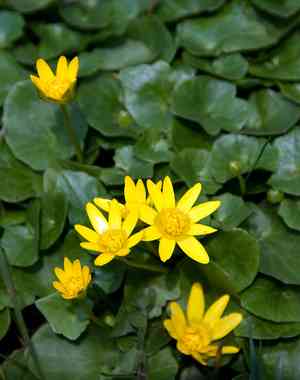
Lesser celandine(Ficaria verna)

Lesser celandine (Ficaria verna)

Also known as: Fig-crowfoot

Ficaria verna, commonly known as lesser celandine, originates from Europe and Western Asia. It has been introduced to North America, where it is now seen as an invasive species. The plant can be harmful to grazers if consumed, especially during its blooming period.

Attributes of Lesser celandine

Lifespan
Perennial
Plant Type
Herb
Plant Height
10 cm to 20 cm
Spread
20 cm
Leaf Color
Green
Flower Size
1.5 cm to 6 cm
Flower Color
Yellow

ForwardPlant - Identify plants with a snap

Identify and diagnose plants, get toxicity alerts, and explore safety guides for all types of fungi.

Try for Free

Images of Lesser celandine

Lesser celandine(Ficaria verna)

Quickly Identify Lesser celandine

1
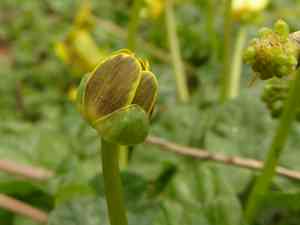
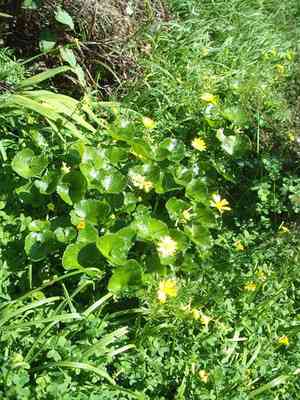
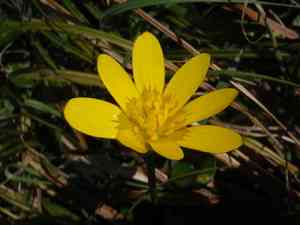
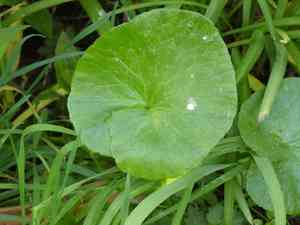
Identify Ficaria verna by its glossy, heart-shaped leaves and bright yellow, buttercup-like flowers with 8-12 petals. It blooms early in the spring, often carpeting the ground in shaded areas.

Scientific Classification of Lesser celandine

Phylum
Vascular plants
Class
Dicotyledons
Order
Buttercups, poppies and allies
Family
Buttercup
Genus
Ficaria
Species
Lesser celandine

Planting and Growing of Lesser celandine

Care Difficulty
Easy
Watering Schedule
Every 4 days
Sunlight Requirements
Partial sun
Sunshine Duration
6-10 hours
Ideal Temperature
50-68℉
Soil Type
Potting Mix, Peat Mix
Soil pH
6.5-7.5
Fertilizer Type
Balanced
Pruning Season
Spring, Summer
Pruning Area
Branches, Leaves
Pruning Frequency
2 times a year
Repotting Season
Spring
Pot Type
Terracotta, Plastic

water icon How to Water Lesser celandine?

When watering Ficaria verna, ensure the soil is moistened but not waterlogged. Aim for adding about 500ml of water each time, ensuring water penetrates the roots. The soil should feel moist to the touch, without any pooling on the surface.
What are the symptoms of an underwatered Lesser celandine?
What should I do if my Lesser celandine is not getting enough water?
What are the symptoms of an overwatered Lesser celandine?
How to save an overwatered Lesser celandine?

sunlight icon What Are the Sunlight Requirements for Lesser celandine?

Sunlight Requirements: Partial sun, Full sun
Duration of light: 4 to 6 hours
Ficaria verna thrives in partial sun to full sun, promoting optimal flowering and foliage health. Adequate light ensures energy for growth, producing lush leaves and vibrant blooms while maintaining plant robustness.
What is the best location for Ficaria verna?
How to ensure enough sunlight for Ficaria verna?
Benefits of ideal lighting for Ficaria verna

temperature icon What Is the Ideal Temperature Range for Lesser celandine?

Ideal Temperature: 50 ~ 68℉
For optimal growth, Ficaria verna flourishes best within a temperature range of 50°F to 68°F. This range is conducive to maintaining the metabolic processes essential for the plant's growth and reproduction. At these temperatures, Ficaria verna experiences sufficient warmth to support photosynthesis without the risk of thermal stress, ensuring robust foliage and blossom development.

soil icon What Soil is Best for Lesser celandine?

Soil type: Loam, Sandy loam
Soil PH: 6.5 ~ 7.5
Ficaria verna thrives in soil with good drainage, which prevents waterlogging and root rot. This condition allows the plant to absorb nutrients efficiently, promoting healthy growth. While drainage is essential, the soil should also retain some moisture. Consistent moisture levels support Ficaria verna’s lush foliage and vibrant blooms, making it an eye-catching addition to any garden. Soil enriched with organic matter, such as compost or well-rotted manure, provides essential nutrients. This supports robust growth and enhances the flowering potential of Ficaria verna.

fertilize icon How to Fertilize Lesser celandine?

Fertilizer type: Balanced
For Ficaria verna, apply a balanced liquid fertilizer at half strength. This plant doesn't require heavy fertilization, so a diluted solution is ideal to provide essential nutrients without overwhelming it.

prune icon How to Prune Lesser celandine?

Pruning Time: Spring
Ficaria verna has a natural dormancy period; avoid pruning during late summer and early autumn as the plant stores energy for the next growth season. Pruning during dormancy may impede its growth cycle, leading to weaker blossoms or fewer flowers in the following spring. After pruning, ensure all clippings and leaves are properly disposed of to avoid fungal diseases that can arise from decaying plant material. Consider composting pruned material away from the main garden area to prevent the spread of any diseases, keeping the garden environment healthy and vibrant.

propagate icon How to Propagate Lesser celandine plant?

Propagate Time: Spring, Early spring
1
Collect seeds from mature Ficaria verna plants in the late spring when seed heads start to dry. Ensure seeds are fully mature for optimal germination. Clean and store them in a dry place until planting.
2
Sow seeds in seed trays filled with a suitable potting mix. Cover the seeds lightly with soil and water gently. Keep the soil consistently moist until germination, which may take several weeks.
3
During early spring, use a spade to dig up the mature plant. Separate the root clumps with care, ensuring each section has roots and buds. Replant divisions immediately at desired locations.

repot icon How to Repot Lesser celandine plant?

Repotting frequency: Every 2-3 years
1
Keep an eye on Ficaria verna when you notice it's outgrowing its current pot. If the roots start peeking out from drainage holes, or the plant seems cramped and growth has slowed, it’s signaling a need for more space. Spring is the ideal time as growth resumes.
2
Select a pot that's 1-2 inches larger in diameter than the current one. Ensure it has ample drainage holes to prevent waterlogging. A pot slightly larger in size gives roots room to expand, promoting healthier growth without overwhelming the plant with excess soil.
3
Opt for a well-draining, loamy soil mix, which supports drainage and aeration. This type of soil helps prevent root rot by allowing excess moisture to escape while retaining necessary nutrients and moisture for growth.

ForwardPlant - Identify plants with a snap

Find the best spots for them to optimize their health, simply using your phone.

Try for Free

Toxicity of Lesser celandine

Is Lesser celandine toxic to humans?

Lesser celandine poses a risk to humans when consumed uncooked or when the sap from injured leaves comes into contact with the skin or oral cavity. Exposure to the sap may result in an itchy rash or blisters at the site of contact. Consuming the raw leaves can result in mild to severe reactions such as nausea, vomiting, dizziness, muscle spasms, and even paralysis. While lesser celandine can be treated to eliminate its toxic properties for certain applications, there remains a risk of poisoning if it is not properly prepared.

Identify toxic plants for your safety

Learn which plants are harmful to you and your pets, and make informed choices for a safer home!

Try for Free
WARNING
The judgment on toxicity and danger is for reference only. We DO NOT GUARANTEE any accuracy of such judgment. Therefore, you SHALL NOT rely on such judgment. It is IMPORTANT TO SEEK PROFESSIONAL ADVICE in advance when necessary.
More About Toxic Techniques