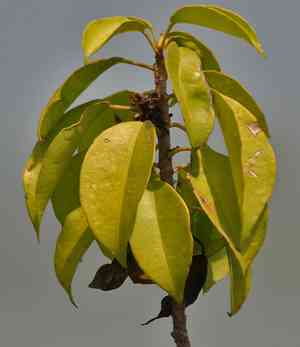
Excoecaria (Excoecaria) (Excoecaria)
Also known as: Blinding Tree, Milk Hedge
Excoecaria are mangroves that grow in the form of glabrous trees, shrubs, or subshrubs. They are found in tropical Africa, Asia, and Oceania where they participate in forming mangrove swamps and forests. Excoecaria are also characteristic and well-known for their highly toxic milky latex that can cause skin irritation and temporary blindness upon contact. It maintains its toxic properties even when dried.
In This Article
Attributes of Excoecaria (Excoecaria)
Lifespan
Perennial
Plant Height
Typically 1 to 20 meters depending on the species
Spread
Varies, but can spread several meters wide in mature specimens
Leaf Color
Bright green, often variegated in some species
Flower Size
Small, generally less than 1 cm
Flower Color
Yellowish-green
Images of Excoecaria (Excoecaria)
Quickly Identify Excoecaria (Excoecaria)
1
Excoecaria can be identified by its milky latex, which is toxic and can cause blisters or temporary blindness on contact. The leaves are usually glossy with a bright green color, and many species exhibit attractive, often variegated foliage.
Scientific Classification of Excoecaria (Excoecaria)
Phylum
Magnoliophyta
Class
Magnoliopsida
Order
Malpighiales
Family
Euphorbiaceae
Genus
Excoecaria
Planting and Growing of Excoecaria (Excoecaria)
Care Difficulty
Moderate
Watering Schedule
Every 2 days
Sunlight Requirements
Partial sun
Sunshine Duration
4-8 hours
Ideal Temperature
65-77℉
Soil Type
Potting Mix, Peat Mix
Soil pH
6-7.5
Fertilizer Type
Balanced
Pruning Season
Spring, Summer
Pruning Area
Branches, Leaves
Pruning Frequency
2 times a year
Repotting Season
Spring
Pot Type
Plastic, Ceramic
 How to Water Excoecaria (Excoecaria)?
When watering Excoecaria, it is essential to ensure the soil is evenly moist but not soggy. A good rule of thumb is to water until you see a bit of excess seeping out of the drainage holes of the pot, which generally amounts to about 200ml for a medium-sized plant.
What are the symptoms of an underwatered Excoecaria (Excoecaria)?
›
What should I do if my Excoecaria (Excoecaria) is not getting enough water?
›
What are the symptoms of an overwatered Excoecaria (Excoecaria)?
›
How to save an overwatered Excoecaria (Excoecaria)?
›
 What Are the Sunlight Requirements for Excoecaria (Excoecaria)?
Partial sunlight between two to four hours per day is ideal for Excoecaria. This range supports balanced photosynthesis, enabling the plant to produce lush, vibrant foliage while conserving moisture and preventing stress.
What type of light ensures healthy growth?
›
How can we provide the ideal lighting solution?
›
What are the benefits of maintaining ideal lighting?
›
 What Is the Ideal Temperature Range for Excoecaria (Excoecaria)?
The ideal temperature range for Excoecaria to thrive is between 65°F to 77°F. At this range, the plant can effectively photosynthesize, maintain its metabolism, and support optimal growth. It is crucial to keep the ambient temperature within this range for sustained plant health and vigor.
 What Soil is Best for Excoecaria (Excoecaria)?
Excoecaria thrives in well-drained soil that prevents root rot by ensuring excess water doesn't linger. This condition also enhances aeration, promoting healthy root growth. A soil mix abundant in organic matter enriches Excoecaria and ensures steady growth. It provides essential nutrients for the plant and sustains its vibrant foliage. Balancing moisture retention ensures Excoecaria avoids drought stress while not exposing it to over-saturation, which could hinder its growth and health.
 How to Fertilize Excoecaria (Excoecaria)?
Excoecaria plants generally require a moderate level of fertilization. During the growing season, apply a balanced liquid fertilizer diluted to half strength, approximately 15-20 milliliters per liter of water. This ensures that the plant receives essential nutrients without the risk of over-fertilization.
 How to Prune Excoecaria (Excoecaria)?
Start by removing any dead or diseased branches using a clean angle cut just above the growth node. Move on to thinning out the dense areas of the plant, allowing more light and air to reach the inner branches. Remember to step back occasionally to assess your work and maintain a symmetrical shape. In spring, focus on removing winter damage and enhancing the plant's shape. Summer pruning concentrates on controlling growth and maintaining size, whilst autumn pruning removes any surplus to prepare for dormancy. Adapting your approach seasonally ensures robust, continuous growth for Excoecaria.
 How to Propagate Excoecaria (Excoecaria) plant?
1
Harvest the seeds from mature plants once they are ripe. Make sure the seeds are fully matured to enhance the chances of successful germination. They should be cleaned and dried before sowing.
2
Select healthy stems with several leaves and cut them below a node. Remove the lower leaves, and consider applying rooting hormone to enhance root development. Proper preparation is key for successful rooting.
3
For seeds, sow them in a well-draining seed mix and lightly cover them with soil. For cuttings, plant them into a suitable potting mix, ensuring ample support and moisture. Keep the soil consistently moist but not waterlogged.
 How to Repot Excoecaria (Excoecaria) plant?
1
Excoecaria plants need repotting when roots are poking through the drainage holes or when growth slows significantly, signaling their pot is becoming restrictive. Spring or early summer, during active growth, is ideal for repotting to minimize stress.
2
Pick a pot one size larger than the current container, with adequate drainage holes. A slightly larger pot prevents water from accumulating at the base, which can cause root rot and allows for expansion space as the plant grows healthily.
3
Use a well-draining soil mix tailored for tropical plants. This mix, often containing peat, perlite, and organic matter, ensures the roots receive necessary moisture without becoming waterlogged, thus fostering optimum plant health and vibrancy.
Toxicity
Ingestion, Skin contact, Eye contact
WARNING
The judgment on toxicity and danger is for reference only. We DO NOT GUARANTEE any accuracy of such judgment. Therefore, you SHALL NOT rely on such judgment. It is IMPORTANT TO SEEK PROFESSIONAL ADVICE in advance when necessary.

