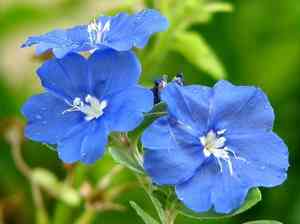
Blue daze (Evolvulus glomeratus)
Also known as: Brazillian dwarf morning-glory, Dwarf morning-glory
The plant in question is likely Blue Daze (Evolvulus glomeratus). This low-growing shrub features stems that can become woody as they mature. It boasts brilliant dark blue to purplish funnel-shaped flowers that emerge among its oval leaves. Blue Daze is an excellent choice for ground cover and works well in flower beds and borders.
In This Article
Attributes of Blue daze
Lifespan
Annual
Plant Type
Shrub
Plant Height
15 cm to 46 cm
Spread
60 cm to 90 cm
Leaf Color
Gray-green
Flower Size
2.5 cm
Flower Color
Blue
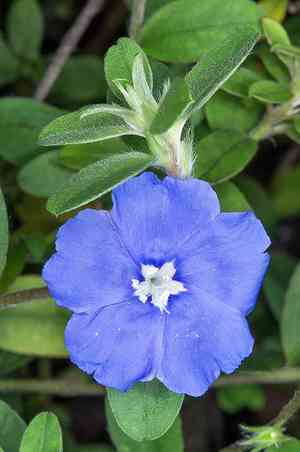
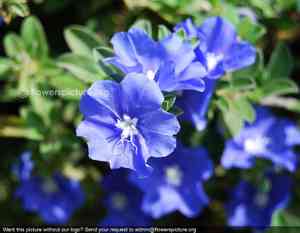
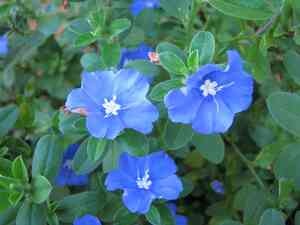
Images of Blue daze
Quickly Identify Blue daze
1
Vibrant blue flowers with white throats, half-inch wide, diurnal and closing at night.
2
Oval leaves, 1 inch long, hairy texture, medium to dark green color, with embossed vein pattern.
3
Low, spreading mounds reaching 9 to 18 inches in height, with trailing stems in containers.
4
Slender, flexible stem with light green to reddish-brown color, 0.1-0.2 inches in diameter.
5
Densely branched stem covered in fine hairs for easy propagation and moisture retention.
Scientific Classification of Blue daze
Phylum
Vascular plants
Class
Dicotyledons
Order
Solanales
Family
Morning-glory
Genus
Dwarf morning glories
Species
Blue daze
Planting and Growing of Blue daze
Care Difficulty
Easy
Watering Schedule
Every 4 days
Sunlight Requirements
Full sun
Sunshine Duration
6-10 hours
Ideal Temperature
65-75℉
Soil Type
Potting Mix, Peat Mix
Soil pH
6.5-7.5
Fertilizer Type
Balanced
Pruning Season
Spring, Summer
Pruning Area
Branches, Leaves
Pruning Frequency
2 times a year
Repotting Season
Spring
Pot Type
Terracotta, Plastic
 How to Water Blue daze?
Evolvulus glomeratus thrives best when watered with approximately 250 milliliters per session. The key is to ensure the soil remains moist but not soggy. You should aim to water until you see a slight drainage from the bottom of the pot, indicating the roots have had enough water.
What are the symptoms of an underwatered Blue daze?
›
What should I do if my Blue daze is not getting enough water?
›
What are the symptoms of an overwatered Blue daze?
›
How to save an overwatered Blue daze?
›
 What Are the Sunlight Requirements for Blue daze?
Evolvulus glomeratus thrives in full sun to partial sun conditions. Adequate sunlight promotes lush growth and vibrant blooms, enhancing the plant's overall health and resilience.
Optimal Sun Exposure
›
Avoid Overexposure
›
Tracking Sun Movement
›
 What Is the Ideal Temperature Range for Blue daze?
The optimal temperature range for Evolvulus glomeratus is between 65°F to 75°F. This range provides the best conditions for its growth and flowering, maintaining healthy foliage and vibrant blooms. Ensuring consistent temperatures within this range can significantly enhance the plant's stress tolerance and overall vitality.
 What Soil is Best for Blue daze?
Evolvulus glomeratus thrives in well-draining soils which prevent waterlogging that can lead to root rot. Ensuring good drainage helps maintain healthy roots and promotes vibrant blooms. This plant benefits from soils with moderate nutrients for sustained growth. Too rich a soil may lead to excessive foliage at the expense of flowering, striking a balance ensures optimal health. While it appreciates consistent moisture, Evolvulus glomeratus is surprisingly drought-tolerant once established, making it easy to maintain.
 How to Fertilize Blue daze?
For Evolvulus glomeratus, the best practice for fertilization is to apply a balanced, water-soluble fertilizer at a quarter strength to avoid nutrient overload. Using too much fertilizer can lead to scorching or root damage, while too little may stunt growth and result in poor flowering. This is usually around one teaspoon per gallon of water, given its sensitivity to excess nutrients.
 How to Prune Blue daze?
Start by pruning dead or diseased stems to encourage new growth and maintain plant health. Trim back any overgrown branches to maintain a bushy, compact form. Regular shaping throughout the growing seasons helps the plant maintain its lively appearance. Prune back the tips of the branches to promote lateral growth for a fuller appearance. This is especially effective during the spring when the plant is actively growing, ensuring your Evolvulus glomeratus stays dense and vibrant.
 How to Propagate Blue daze plant?
1
Collect healthy seeds from mature Evolvulus glomeratus plants. Clean the seeds and allow them to dry completely before planting. Prepare seed trays with a light potting mix before sowing.
2
Select a healthy stem from the parent plant. Trim a 4-6 inch cutting just below a node. Strip the lower leaves and dip the end in rooting hormone before planting it in a potting mix.
3
For seed propagation, sow seeds at a depth of 1/4 inch in a sterile medium. For cuttings, place them in a pot filled with a well-draining mix. Keep both seeds and cuttings moist but not waterlogged, and ensure they receive indirect sunlight.
 How to Repot Blue daze plant?
1
Evolvulus glomeratus may need repotting when you notice roots emerging from drainage holes, soil compaction, or slow growth. These signals indicate the plant has outgrown its pot, restricting its growth and nutrient uptake.
2
Choose a pot slightly larger than the current one, ensuring it has adequate drainage holes. A slightly bigger pot gives roots room to expand without overwhelming the plant, preventing waterlogging and promoting healthy root growth.
3
Use a well-draining potting mix composed of peat, perlite, and coarse sand. This composition ensures adequate aeration and prevents moisture retention, reducing the risk of root rot and encouraging vibrant plant health.
Learn More About Blue daze Diseases
Anthracnose
Bacterial Leaf Spot
Bacterial Wilt
Chemical Injury
Damping-off
Downy Mildew
Drought Stress
Fusarium Wilt
Gray Mold
Leaf Curl
Leaf Spot
Mosaic
Nutrient Deficiency
Nutrient Toxicity
Powdery Mildew
Root Rot
Root-knot Nematode
Rusts
Sooty Mold
Spider Mites
Temperature Stress
Thrips Damage
White Mold



