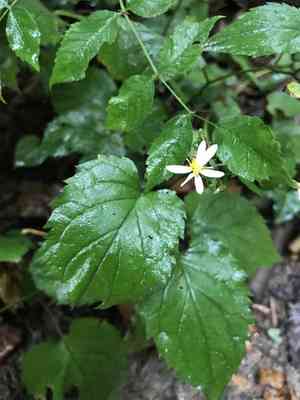
White wood aster (Eurybia divaricata)
Also known as: White wood-aster, White star aster
White Wood Aster (Eurybia divaricata) is a perennial that features small, white daisy-like flowers blooming from late summer into early fall. Ideal for naturalistic gardens, it attracts butterflies and is resistant to deer. This plant reaches a height of 61 to 91 cm and flourishes in partial to full shade, tolerating average to dry soil conditions.
In This Article
Attributes of White wood aster
Lifespan
Perennial
Plant Type
Herb
Plant Height
30 cm to 1.2 m
Spread
45 cm to 75 cm
Leaf Color
Green
Flower Size
2.5 cm
Flower Color
White Yellow
Images of White wood aster
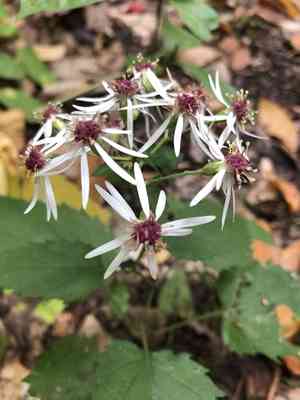
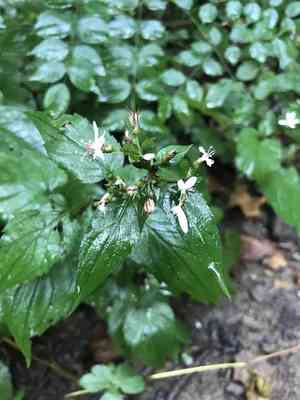
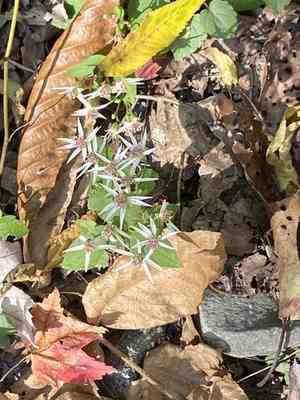
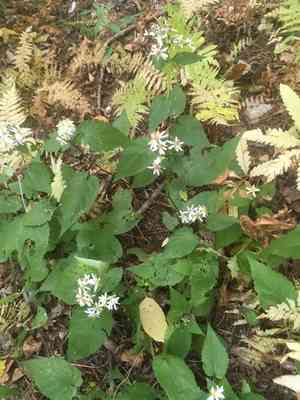
Quickly Identify White wood aster
1
Heart-shaped leaves with toothed margins in dark green.
2
Daisy-like flowers with yellow disk florets and white to pale purple ray florets.
3
Hairy stems with purplish hue, reaching 1-4 feet (30-120 cm).
4
Oval-shaped achenes with brown color and bristle-like hairs for texture.
5
Zigzag stem pattern, up to 2.5 feet (76 cm) in height, with sparse branching.
Scientific Classification of White wood aster
Phylum
Vascular plants
Class
Dicotyledons
Order
Asterales
Family
Daisy
Genus
Eurybia
Species
White wood aster
Planting and Growing of White wood aster
Care Difficulty
Easy
Watering Schedule
Every 4 days
Sunlight Requirements
Partial sun
Sunshine Duration
6-10 hours
Ideal Temperature
60-75℉
Soil Type
Potting Mix, Peat Mix
Soil pH
6-7.5
Fertilizer Type
Balanced
Pruning Season
Spring, Summer
Pruning Area
Branches, Leaves
Pruning Frequency
2 times a year
Repotting Season
Spring
Pot Type
Plastic, Ceramic
 How to Water White wood aster?
For Eurybia divaricata, water thoroughly until the soil is evenly moist but not waterlogged. This plant enjoys consistent moisture, yet it doesn't tolerate soggy roots. Aim for around 250 ml per watering session, ensuring that excess water can drain away quickly.
What are the symptoms of an underwatered White wood aster?
›
What should I do if my White wood aster is not getting enough water?
›
What are the symptoms of an overwatered White wood aster?
›
How to save an overwatered White wood aster?
›
 What Are the Sunlight Requirements for White wood aster?
Eurybia divaricata flourishes best with partial sun to full shade, ideally receiving moderate morning light and shade during the peak midday sun. This light spectrum supports its natural growth patterns, enabling vibrant flowering and robust foliage development.
More About Sunlight Requirements Techniques→
Optimal Location
›
Balancing Light
›
Seasonal Adjustments
›
 What Is the Ideal Temperature Range for White wood aster?
Eurybia divaricata thrives best at temperatures ranging from 60°F to 75°F. This range provides a comfortable environment that supports optimal metabolic functions essential for healthy plant growth. When the temperature is maintained within this range, photosynthesis and other physiological processes occur efficiently, assuring robust development and foliage production.
 What Soil is Best for White wood aster?
Eurybia divaricata thrives in well-drained soil, which helps prevent root rot and other waterborne diseases. The soil should allow excess water to drain easily while retaining enough moisture for the plant's needs. A nutrient-rich soil is essential for the vibrant growth of Eurybia divaricata. This plant benefits from organic matter like compost, which provides necessary nutrients and improves soil texture. Eurybia divaricata prefers soil that retains moderate moisture. The soil should not be waterlogged, as overly wet conditions can suffocate the roots and lead to poor health or death of the plant.
More About Soil→
 How to Fertilize White wood aster?
For Eurybia divaricata, the recommended amount of liquid fertilizer is a diluted solution, typically one-third of the recommended strength on the label. For slow-release fertilizers, use approximately 1/4 cup per plant per application. Be careful not to over-fertilize, as this can harm the plant.
More About Fertilizing Techniques→
 How to Prune White wood aster?
Start by observing the plant's growth habit. Use clean, sharp shears to cut back any excessively long or leggy stems to maintain a balanced shape. When cutting, make clean, angled cuts just above a bud to promote healthy regrowth. Be sure to remove any stems crossing each other to avoid crowding and potential damage. While Eurybia divaricata can be pruned in any season, it's best to avoid pruning during extremely cold or hot weather to minimize stress on the plant. Pruning regularly in spring can help control the plant's size before new growth begins, while summer and autumn pruning can help maintain its aesthetic and health.
More About Pruning Techniques→
 How to Propagate White wood aster plant?
1
Fill the seed tray with a well-draining seed-starting mix. Moisten the soil lightly before planting the seeds, ensuring that it is damp but not waterlogged. This provides the seeds with a suitable environment for germination.
2
Distribute the Eurybia divaricata seeds evenly across the surface of the prepared seed tray. Lightly cover them with the seed-starting mix, ensuring they are not buried too deeply, which could hinder their germination.
3
Carefully dig up the plant during early spring or late spring using a garden fork. Separate the clumps into smaller sections, ensuring each section has roots attached. Replant these divisions in well-prepared soil immediately.
 How to Repot White wood aster plant?
1
Eurybia divaricata signals repotting readiness when its roots visibly outgrow the pot bottom or begin circling inside. Additionally, notable slow growth despite optimal care indicates a need for fresh nutrients and space. Ideally, choose early Spring or late Autumn, when the plant's growth rate decreases, minimizing stress and shock during transition.
2
Select a pot with a diameter 2-3 inches larger than the current one to ensure Eurybia divaricata has ample space to expand while preventing waterlogging issues. Opt for a pot with drainage holes to efficiently manage excess moisture, protecting the roots from rot and providing a robust foundation for healthy foliage development.
3
Choose a well-draining potting mix, enriched with organic matter to supply Eurybia divaricata with proper aeration and nutrition. Such soil prevents water stagnation, reduces risk of root rot and compaction, while facilitating essential nutrient access, promoting steady growth and vitality in diverse growing conditions.



