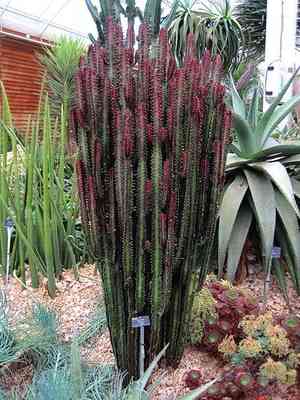
African milk tree (Euphorbia trigona)
Also known as: Abyssinian euphorbia
The African milk tree (Euphorbia trigona), native to Central Africa, prefers soil that offers excellent drainage, such as a succulent or cactus mix. Enhancing the soil with perlite or sand can further improve its drainage capabilities. Be cautious of the plant's latex, which can irritate the skin. Commonly grown as a houseplant, it also holds cultural significance in Gabon.
Attributes of African milk tree
Images of African milk tree
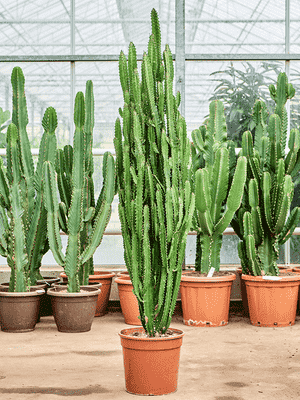
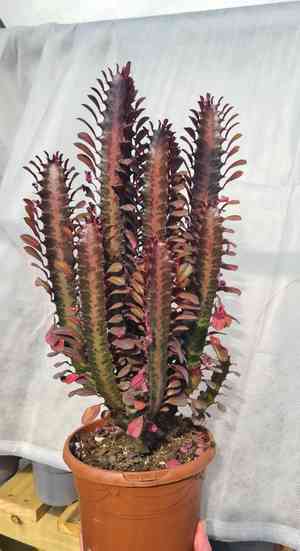
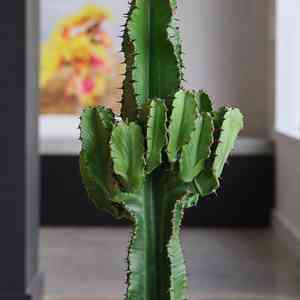
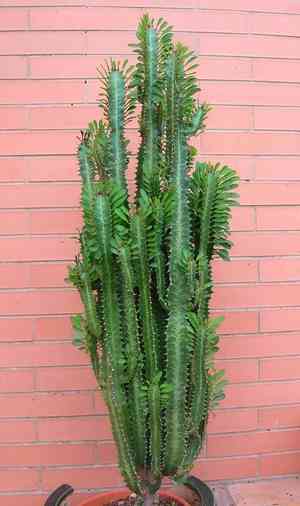
Quickly Identify African milk tree
Scientific Classification of African milk tree
Planting and Growing of African milk tree
 How to Water African milk tree?
 What Are the Sunlight Requirements for African milk tree?
 What Is the Ideal Temperature Range for African milk tree?
 What Soil is Best for African milk tree?
 How to Fertilize African milk tree?
 How to Prune African milk tree?
 How to Propagate African milk tree plant?
 How to Repot African milk tree plant?
Toxicity of African milk tree
Is African milk tree toxic to humans?
Every part of the African milk tree is poisonous when ingested, and the repercussions of consumption are deemed serious. The sap of the African milk tree has evolved toxic characteristics to deter herbivores. Direct exposure to the sap leads to severe skin irritation, which encompasses inflammation of both the skin and eyes. In extreme cases, when the sap comes into contact with the eye, it can result in conjunctivitis or even vision loss. Initial symptoms may include bloodshot eyes, a gritty sensation or discharge in the eyes, itching, or tears. It is crucial that the African milk tree is handled with caution, and protective gear such as gloves, long-sleeved clothing, and safety goggles must be utilized.
Is African milk tree toxic to cat?
The African milk tree, often referred to as the African milk tree, poses a moderate poisoning risk to cats when ingested. Cats may experience toxicity from consuming any parts of the plant, especially the sap or juice. Coming into contact with these elements can result in physical distress or illness in felines. Given the possible health hazards linked to ingestion, it is essential for cat owners to closely observe their pets and prevent them from chewing or consuming any portion of the African milk tree. In the event that a cat is poisoned, swift medical intervention at a veterinary clinic is vital for the care and recovery of the animal.
Is African milk tree toxic to dog?
The African milk tree is regarded as possessing a moderate level of toxicity towards dogs. Poisoning generally happens when a dog consumes parts of the plant, especially the sap or juice. Following ingestion, a dog may display symptoms such as vomiting, diarrhea, lethargy, or mouth irritation. It is vital for dog owners to remain vigilant and deter their pets from chewing on or consuming any part of the African milk tree. If poisoning is suspected, seeking prompt veterinary assistance is essential to secure the best possible outcome for the affected animal.



