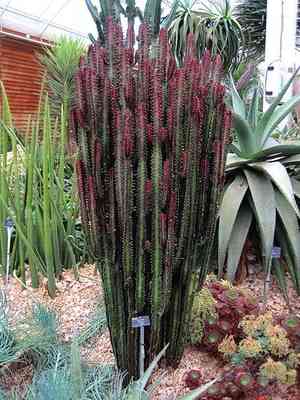
African milk tree(Euphorbia trigona)

African milk tree (Euphorbia trigona)

Also known as: Abyssinian euphorbia

The African milk tree (Euphorbia trigona), native to Central Africa, prefers soil that offers excellent drainage, such as a succulent or cactus mix. Enhancing the soil with perlite or sand can further improve its drainage capabilities. Be cautious of the plant's latex, which can irritate the skin. Commonly grown as a houseplant, it also holds cultural significance in Gabon.

Attributes of African milk tree

Lifespan
Perennial
Plant Type
Succulent, Shrub
Plant Height
91 cm to 1.8 m
Spread
20 cm
Leaf Color
Green
Flower Size
Small, typically less than 0.5 cm
Flower Color
White Yellow Green

ForwardPlant - Identify plants with a snap

Identify and diagnose plants, get toxicity alerts, and explore safety guides for all types of fungi.

Try for Free

Images of African milk tree

African milk tree(Euphorbia trigona)

Quickly Identify African milk tree

1
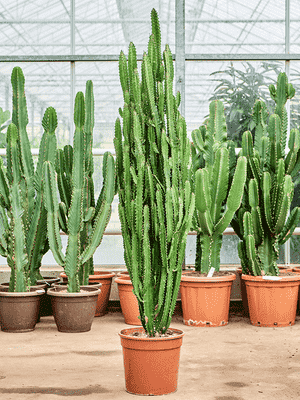
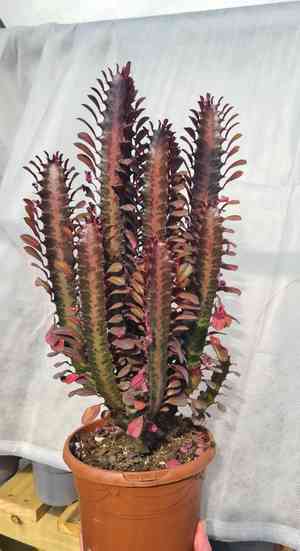
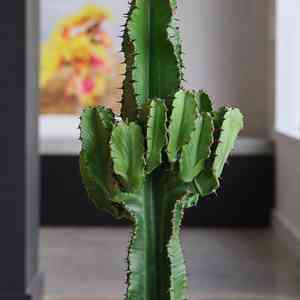
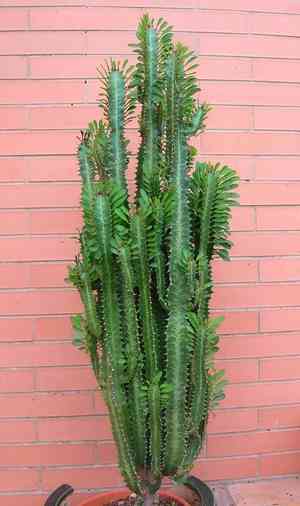
Euphorbia trigona can be identified by its tall, columnar growth habit and three-sided, ribbed stems. Look for sharp thorns along the ribs and small leaves that grow directly from the ridges of the stems.

Scientific Classification of African milk tree

Phylum
Vascular plants
Class
Dicotyledons
Order
Nances, spurges, willows and allies
Family
Spurge
Genus
Spurges
Species
African milk tree

Planting and Growing of African milk tree

Care Difficulty
Easy
Watering Schedule
Every 2 days
Sunlight Requirements
Partial sun
Sunshine Duration
6-10 hours
Ideal Temperature
65-75℉
Soil Type
Potting Mix, Peat Mix
Soil pH
6.5-7.5
Fertilizer Type
Balanced
Pruning Season
Spring, Summer
Pruning Area
Branches, Leaves
Pruning Frequency
2 times a year
Repotting Season
Spring
Pot Type
Plastic, Ceramic

water icon How to Water African milk tree?

Euphorbia trigona should be watered sparingly. Aim for about 200 ml each time, ensuring the soil is moist but not waterlogged. It is essential to let the soil dry out completely between waterings to mimic its natural arid environment. Overwatering can be detrimental as the plant is highly susceptible to root rot.
What are the symptoms of an underwatered African milk tree?
What should I do if my African milk tree is not getting enough water?
What are the symptoms of an overwatered African milk tree?
How to save an overwatered African milk tree?
More About Watering Techniques

sunlight icon What Are the Sunlight Requirements for African milk tree?

Sunlight Requirements: Partial sun
Duration of light: 4-6 hours daily
Euphorbia trigona prefers partial sun, with 4-6 hours of well-filtered sunlight daily. This balance helps maintain its shape, vitality, and coloration, supporting healthy growth without stress.
What are the best light conditions?
How can I ensure its ideal light?
What are the benefits of optimal lighting?
More About Sunlight Requirements Techniques

temperature icon What Is the Ideal Temperature Range for African milk tree?

Ideal Temperature: 65 ~ 75℉
The ideal temperature range for Euphorbia trigona is between 65°F and 75°F. This range ensures optimal growth by providing warmth without excess heat stress. Maintaining temperatures within this range helps the plant engage in effective photosynthesis and metabolic processes necessary for its health and vitality.

soil icon What Soil is Best for African milk tree?

Soil type: Sandy soil, Loam, Sandy loam
Soil PH: 6.5 ~ 7.5
Euphorbia trigona thrives in well-drained soil that prevents water from pooling around the roots. This condition is essential to avoid root rot, a common issue with succulents. A mixture of sandy and loamy soil ensures excess water drains away swiftly, maintaining ideal moisture levels for healthy plant growth. The plant requires a soil mixture with moderate nutrient content, as an excessively rich soil can cause rapid, weak growth and increase susceptibility to pests. A balanced nutrient profile supports strong, steady growth and a robust defense against common succulent ailments. Euphorbia trigona prefers soil pH levels ranging from 6.5 to 7.5. This pH range optimizes nutrient uptake, supporting vibrant growth and maintaining overall plant health. Maintaining this pH balance prevents nutrient lockout and encourages metabolic efficiency. More About Soil

fertilize icon How to Fertilize African milk tree?

Fertilizer type: Balanced
Euphorbia trigona thrives with minimal nutrient input. For liquid fertilizers, a diluted solution of 1/4 strength is sufficient, ensuring not to overburden the plant's natural resilience.

prune icon How to Prune African milk tree?

Pruning Time: Spring, Summer
Look for stems that are too tall, uneven, or growing in undesirable directions. You may also want to remove any stems that appear damaged or unhealthy. Pruning such stems will help maintain the shape of the plant. Cut the selected stems at a leaf node to encourage new growth from that point. Ensure you make clean cuts at a slight angle to help water run off and prevent rot. Aim for a neat finish for faster recovery of the plant.

propagate icon How to Propagate African milk tree plant?

Propagate Time: Spring, Summer, Early autumn
1
Choose a healthy and mature stem from the plant. It's crucial to select a plump, green, and disease-free stem. The stem should ideally be at least a few inches long for optimal growth potential.
2
Use sharp and sterilized pruning shears to make a clean cut, ideally at a node or junction. This provides a larger surface area for rooting and increases the chances of successful propagation.
3
Before planting, let the cut end dry for a few days until it develops a callous. This helps in preventing rotting when it is placed in soil or water for rooting.
More About Propagating Techniques

repot icon How to Repot African milk tree plant?

Repotting frequency: Every 2-3 years
1
Signs that your Euphorbia trigona needs repotting include roots growing out of the drainage holes or the plant becoming top-heavy and unstable. Additionally, if you notice water not draining effectively, it might be time for a larger pot. The best time to repot is during active growth periods in spring and summer, which allows the plant to recover and establish well in its new home.
2
Select a pot that is just one size larger than the current one, with adequate drainage holes. A slightly larger pot encourages healthy root growth without overwhelming the plant. Ceramic or terracotta pots are ideal as they allow excess moisture to escape, reducing the risk of root rot. The pot's material and size play a crucial role in maintaining the right moisture levels and providing stability for this rather top-heavy plant.
3
Choose a well-draining cactus mix for your Euphorbia trigona. Such soil mimics its natural environment, preventing waterlogging and promoting healthier root growth. A mix containing coarse sand and perlite ensures quick drainage, reducing the risk of fungal infections. Ensuring proper soil aeration is vital, as it facilitates nutrient and water uptake, fostering stronger growth.
More About Repotting Techniques

ForwardPlant - Identify plants with a snap

Find the best spots for them to optimize their health, simply using your phone.

Try for Free

Toxicity of African milk tree

Is African milk tree toxic to humans?

Every part of the African milk tree is poisonous when ingested, and the repercussions of consumption are deemed serious. The sap of the African milk tree has evolved toxic characteristics to deter herbivores. Direct exposure to the sap leads to severe skin irritation, which encompasses inflammation of both the skin and eyes. In extreme cases, when the sap comes into contact with the eye, it can result in conjunctivitis or even vision loss. Initial symptoms may include bloodshot eyes, a gritty sensation or discharge in the eyes, itching, or tears. It is crucial that the African milk tree is handled with caution, and protective gear such as gloves, long-sleeved clothing, and safety goggles must be utilized.

Is African milk tree toxic to cat?

The African milk tree, often referred to as the African milk tree, poses a moderate poisoning risk to cats when ingested. Cats may experience toxicity from consuming any parts of the plant, especially the sap or juice. Coming into contact with these elements can result in physical distress or illness in felines. Given the possible health hazards linked to ingestion, it is essential for cat owners to closely observe their pets and prevent them from chewing or consuming any portion of the African milk tree. In the event that a cat is poisoned, swift medical intervention at a veterinary clinic is vital for the care and recovery of the animal.

Is African milk tree toxic to dog?

The African milk tree is regarded as possessing a moderate level of toxicity towards dogs. Poisoning generally happens when a dog consumes parts of the plant, especially the sap or juice. Following ingestion, a dog may display symptoms such as vomiting, diarrhea, lethargy, or mouth irritation. It is vital for dog owners to remain vigilant and deter their pets from chewing on or consuming any part of the African milk tree. If poisoning is suspected, seeking prompt veterinary assistance is essential to secure the best possible outcome for the affected animal.

Identify toxic plants for your safety

Learn which plants are harmful to you and your pets, and make informed choices for a safer home!

Try for Free
WARNING
The judgment on toxicity and danger is for reference only. We DO NOT GUARANTEE any accuracy of such judgment. Therefore, you SHALL NOT rely on such judgment. It is IMPORTANT TO SEEK PROFESSIONAL ADVICE in advance when necessary.
More About Toxic Techniques