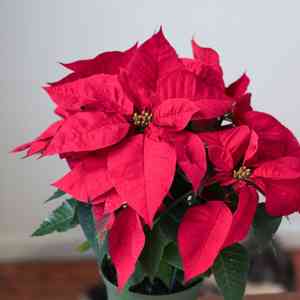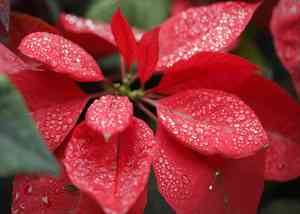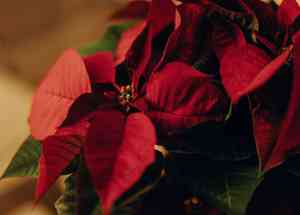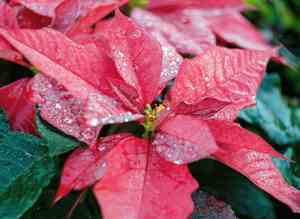
Euphorbia pulcherrima(Euphorbia pulcherrima)

Euphorbia pulcherrima (Euphorbia pulcherrima)

Also known as: Poinsettia, Christmas Flower, Lobster Flower, Flame Leaf Flower

The poinsettia, known scientifically as Euphorbia pulcherrima, is a significant flowering plant from the diverse Euphorbiaceae or spurge family. Originating from Mexico and Central America, the plant was first identified by Europeans in 1834. Its prominence is owed to its striking red and green leaves that make it a popular choice in Christmas decorations. It got its English name from Joel Roberts Poinsett, a United States minister to Mexico, who introduced it to the US in the 1820s. Poinsettias can grow as shrubs or small trees reaching from 0.6 to 4 m tall. Contrary to the belief that they are highly poisonous, they pose no severe risk to pets or children although eating the plant can sometimes cause stomach upsets. Poinsettias are naturally found from Mexico to Southern Guatemala living in Pacific-facing hills in mid-altitude areas. The ancestor of most cultivated populations is believed to be a group found inland in the Mexican state of Guerrero. However, their habitats suffer from rampant deforestation causing fragmented wild populations. These plants were previously grown by the Aztecs for medical uses and now, associated with the Christmas season, they make popular festive decorations. The US sees an average sale of around 70 million poinsettias across various cultivars in a six-week period annually, with Paul Ecke Ranch, a prominent supplier for half of the global demand and 70% of the US market.

Attributes of Euphorbia pulcherrima

Lifespan
Perennial
Plant Height
0.6-4 meters
Spread
0.6-4 meters
Leaf Color
Dark Green
Flower Size
12-15 mm
Flower Color
Red

PlantJoy - Identify plants with a snap

Identify and diagnose plants, get toxicity alerts, and explore safety guides for all types of fungi.

Try for Free

Images of Euphorbia pulcherrima

Euphorbia pulcherrima(Euphorbia pulcherrima)

Quickly Identify Euphorbia pulcherrima

1
It’s easy to recognize Euphorbia pulcherrima, due to its distinctive and colorful bracts that are usually bright red.

Scientific Classification of Euphorbia pulcherrima

Phylum
Tracheophyta
Class
Magnoliopsida
Order
Malpighiales
Family
Euphorbiaceae
Genus
Euphorbia
Species
E. pulcherrima

Planting and Growing of Euphorbia pulcherrima

Care Difficulty
Easy
Watering Schedule
Every 3 days
Sunlight Requirements
Partial sun
Sunshine Duration
4-6 hours
Ideal Temperature
60-70℉
Soil Type
Potting Mix, Peat Mix
Soil pH
6.5-7.5
Fertilizer Type
Balanced
Pruning Season
Spring, Summer
Pruning Area
Branches, Leaves
Pruning Frequency
2 times a year
Repotting Season
Spring
Pot Type
Plastic, Ceramic

water icon How to Water Euphorbia pulcherrima?

When watering Euphorbia pulcherrima, aim to wet the soil until water drains from the bottom of the pot. This generally requires around 500 milliliters per session, ensuring the plant receives adequate moisture without being waterlogged.
What are the symptoms of an underwatered Euphorbia pulcherrima?
What should I do if my Euphorbia pulcherrima is not getting enough water?
What are the symptoms of an overwatered Euphorbia pulcherrima?
How to save an overwatered Euphorbia pulcherrima?
More About Watering Techniques

sunlight icon What Are the Sunlight Requirements for Euphorbia pulcherrima?

Sunlight Requirements: Partial sun
Duration of light: Four to six hours
Euphorbia pulcherrima performs best with partial sun, ideally receiving four to six hours of indirect light. This range maintains its vivid color and supports robust growth.
Optimal Light Duration
Balancing Light and Shade
Seasonal Adjustments
More About Sunlight Requirements Techniques

temperature icon What Is the Ideal Temperature Range for Euphorbia pulcherrima?

Ideal Temperature: 60 ~ 70℉
Euphorbia pulcherrima thrives best in temperatures ranging from 60°F to 70°F. This range ensures that the plant maintains its vibrant coloration and optimal growth rate. Temperatures within this range support photosynthesis and healthy metabolism, allowing the plant to flourish and produce vivid leaves and flowers.

soil icon What Soil is Best for Euphorbia pulcherrima?

Soil type: Sandy loam, Loam
Soil PH: 6.5 ~ 7.5
Euphorbia pulcherrima thrives best in well-drained soil, preventing waterlogging that can lead to root rot. This characteristic ensures the roots receive appropriate oxygen levels, promoting healthy plant growth. A soil with moderate fertility provides essential nutrients without overwhelming the plant. Balanced nutrient availability supports robust growth and vibrant foliage, which is key for the plant's ornamental appeal. While the soil should drain well, maintaining consistent moisture is vital. It prevents stress due to dehydration, ensuring the Euphorbia pulcherrima remains lush and healthy, especially during its blooming period. More About Soil

fertilize icon How to Fertilize Euphorbia pulcherrima?

Fertilizer type: Balanced
When fertilizing Euphorbia pulcherrima, commonly known as the Poinsettia, it's crucial to apply fertilizers in moderation. Use a balanced water-soluble fertilizer diluted to half strength, typically around 10-10-10 or 20-20-20. This ensures the plant receives adequate nutrients without the risk of over-fertilizing. More About Fertilizing Techniques

prune icon How to Prune Euphorbia pulcherrima?

Pruning Time: Spring, Summer, Autumn
Start by identifying older, less vibrant parts of the plant. These are typically at the bottom and are either discolored or damaged. Focus on removing these branches to allow the newer, healthier stems to flourish. When pruning the stems, make cuts at a 45-degree angle just above a node (where leaves and stems emerge). This angle helps promote quick healing and avoids water accumulation on the cut surface. To encourage bushier growth, pinch off the growing tips of the branches. This stimulates the plant to produce more shoots and creates a fuller, lusher appearance. More About Pruning Techniques

propagate icon How to Propagate Euphorbia pulcherrima plant?

Propagate Time: Early summer,Summer
1
Choose a healthy Euphorbia pulcherrima with no signs of disease or pest damage. This ensures that the cuttings taken will be viable and have a higher chance of successful propagation.
2
Using sharp pruning shears, cut about 4-6 inches of the stem from the parent plant. Ensure each cutting has several healthy leaves to support growth.
3
Dip the cut end of the stem in rooting hormone powder. This step helps encourage faster root formation and increases the probability of the cuttings taking root.
More About Propagating Techniques

repot icon How to Repot Euphorbia pulcherrima plant?

Repotting frequency: Every 2-3 years
1
Euphorbia pulcherrima should be repotted when its roots begin to grow out of the drainage holes or when growth becomes stagnant. Another sign is when the potting soil degrades or the water doesn't drain as efficiently, indicating a need for fresh soil and more space.
2
Choose a pot that is one size larger than the current one, with sufficient drainage holes to prevent waterlogging. Using a pot that is too large can lead to excessive moisture retention, which may harm the roots. A well-sized pot encourages healthy root development and growth.
3
Select a well-draining potting mix, ideally one designed for succulents or cacti. Such soil prevents water from lingering, which can cause root rot. This type of mix ensures the right balance of nutrients and moisture, facilitating healthy growth for Euphorbia pulcherrima.
More About Repotting Techniques

PlantJoy - Identify plants with a snap

Find the best spots for them to optimize their health, simply using your phone.

Try for Free

Toxicity of Euphorbia pulcherrima

Is Euphorbia pulcherrima toxic to humans?

Poinsettia can cause irritation if its milky sap comes into contact with the skin, mouth, or eyes. This particular species harbors toxic compounds similar to those found in most Euphorbias, but in significantly lower concentrations, which makes its detrimental effects relatively minor when compared to other members of its genus. As a favored houseplant, cases of poisoning from poinsettia generally arise in children and are often due to direct skin exposure. Be vigilant for symptoms such as vomiting or diarrhea following contact with this plant, as these are typical indicators of poinsettia poisoning.

Is Euphorbia pulcherrima toxic to cat?

The well-known vibrant red foliage of the poinsettia (Euphorbia pulcherrima) exudes a milky sap that can irritate the mouths of cats who lick or attempt to eat it. Although nausea or vomiting may occur, the likelihood of more severe reactions is low as most cats are typically reluctant to consume more than a small amount. Contact with the sap on the skin or eyes may lead to irritation. Any severe symptoms should prompt a visit to a qualified veterinarian.

Is Euphorbia pulcherrima toxic to dog?

In spite of their negative reputation, poinsettia plants possess only a mild level of toxicity to dogs. The milky sap present in every part of the poinsettia contains harmful substances known as diterpenoid euphorbol esters. While severe reactions are uncommon, ingestion can lead to symptoms such as vomiting, excessive drooling, or diarrhea.

Identify toxic plants for your safety

Learn which plants are harmful to you and your pets, and make informed choices for a safer home!

Try for Free
WARNING
The judgment on toxicity and danger is for reference only. We DO NOT GUARANTEE any accuracy of such judgment. Therefore, you SHALL NOT rely on such judgment. It is IMPORTANT TO SEEK PROFESSIONAL ADVICE in advance when necessary.
More About Toxic Techniques