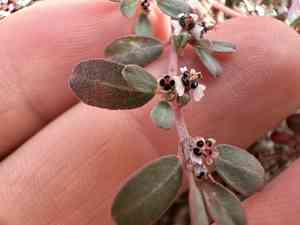
Carrizo mountain sandmat (Euphorbia pediculifera)
Also known as: Not specified
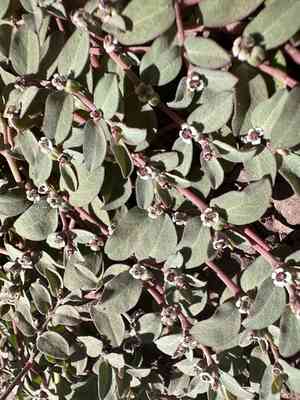
The Carrizo mountain sandmat (Chamaesyce carrizalensis) is well-adapted to rocky and arid landscapes. This hardy perennial features small, rounded leaves that cling closely to its stem, making it efficient in conserving water. It also produces dense clusters of tiny, greenish-yellow flowers. Its survival in such tough conditions is aided by its compact growth habit, which minimizes water loss and maximizes its ability to thrive under intense sunlight. Additionally, its adaptability to the harsh environment ensures its resilience in challenging terrains.
In This Article
Attributes of Carrizo mountain sandmat
Lifespan
Perennial
Plant Type
Herb, Succulent
Plant Height
Varies, often small
Spread
Not specified
Leaf Color
Green
Flower Size
Small, less than 1 cm
Flower Color
Varies, often greenish or yellowish
Images of Carrizo mountain sandmat
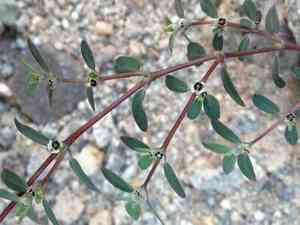
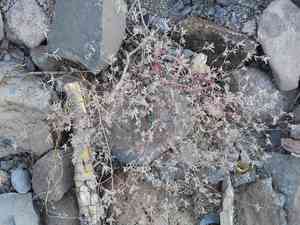
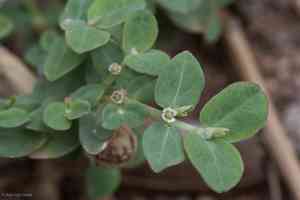
Quickly Identify Carrizo mountain sandmat
1
This plant can be identified by its unique floral structure common to the Euphorbia genus, which often features intricate, small flowers and a characteristic milky sap.
Scientific Classification of Carrizo mountain sandmat
Phylum
Vascular plants
Class
Dicotyledons
Order
Malpighiales
Family
Spurge
Genus
Spurges
Species
Carrizo mountain sandmat
Planting and Growing of Carrizo mountain sandmat
Care Difficulty
Hard
Watering Schedule
Every 2 days
Sunlight Requirements
Partial sun
Sunshine Duration
4-6 hours
Ideal Temperature
65-75℉
Soil Type
Potting Mix, Peat Mix
Soil pH
6.5-7.5
Fertilizer Type
Balanced
Pruning Season
Spring, Summer
Pruning Area
Branches, Leaves
Pruning Frequency
2 times a year
Repotting Season
Spring
Pot Type
Plastic, Ceramic
 How to Water Carrizo mountain sandmat?
Euphorbia pediculifera thrives in well-drained soil and requires moderate watering. Ensure the soil is thoroughly moistened with about 250 ml of water each time. The principle is to let the top inch of the soil dry out between waterings. Overwatering can lead to root rot, so it’s crucial to prevent water from standing at the base.
What are the symptoms of an underwatered Carrizo mountain sandmat?
›
What should I do if my Carrizo mountain sandmat is not getting enough water?
›
What are the symptoms of an overwatered Carrizo mountain sandmat?
›
How to save an overwatered Carrizo mountain sandmat?
›
 What Are the Sunlight Requirements for Carrizo mountain sandmat?
Euphorbia pediculifera ideally requires partial sun, thriving in environments that provide consistent and moderate light levels that support photosynthesis and reduced environmental stress.
What is the ideal light for Euphorbia pediculifera?
›
How to ensure Euphorbia pediculifera gets ideal lighting?
›
What benefits does ideal light provide for Euphorbia pediculifera?
›
 What Is the Ideal Temperature Range for Carrizo mountain sandmat?
For optimal growth, Euphorbia pediculifera prefers temperatures between 65°F and 75°F. This range ensures that the plant's physiological processes function efficiently, promoting robust growth and preventing stress.
 What Soil is Best for Carrizo mountain sandmat?
Euphorbia pediculifera thrives in well-draining soil, which prevents water from pooling around the roots. This is crucial as it prevents root rot, promoting a healthy and robust root system for the plant to flourish. A nutrient-rich soil composition supports the growth of Euphorbia pediculifera by providing essential minerals and nutrients. This ensures that the plant has access to everything it needs for optimal photosynthesis and growth. While drainage is important, the soil should also retain some moisture. This ensures that Euphorbia pediculifera has access to water between watering sessions without becoming waterlogged.
 How to Fertilize Carrizo mountain sandmat?
The recommended fertilizer amount for Euphorbia pediculifera is modest. Use a balanced fertilizer diluted to half the recommended strength. Applying too much can cause root burn, so precision is key. Aim for around 1/4 teaspoon of liquid fertilizer mixed with a gallon of water for potted plants.
 How to Prune Carrizo mountain sandmat?
Begin by carefully inspecting your Euphorbia pediculifera for any dead, diseased, or damaged parts. Identifying these areas early will guide your pruning and ensure the plant remains healthy. Start pruning by removing any brown or yellow leaves and any stems that appear lifeless. Removing diseased sections prevents infection from spreading and revives the plant's vigor. Trim the plant to your desired shape, aiming for symmetry and balance. This may include cutting back long stems to maintain a tidy appearance, which also encourages bushier growth. Be careful not to remove more than one-third of the plant at a time.
More About Pruning Techniques→
 How to Propagate Carrizo mountain sandmat plant?
1
Begin by soaking the seeds in warm water for 24 hours to soften their coats and encourage germination. Afterward, sow them evenly across a tray filled with a well-draining potting mix.
2
Select a healthy, non-flowering stem from the parent plant. Use sterilized tools to cut a 4-6 inch section. Remove the lower leaves and let the cut surface callous over for a few hours before planting.
3
For both seeds and cuttings, plant them into prepared soil, ensuring good contact. Water lightly to encourage rooting but avoid overwatering, which can lead to rot.
 How to Repot Carrizo mountain sandmat plant?
1
Euphorbia pediculifera needs repotting when you notice roots creeping out of the drainage holes or the plant appears to be root-bound. An annual check during spring or autumn will help identify these signals. Also, if growth seems stunted despite adequate care, it might require a bigger pot.
2
Select a pot that is slightly larger than the current one, with good drainage holes, to accommodate the expanding roots. A clay pot is ideal as it allows excess moisture to evaporate, preventing root rot. Ensure it has a sturdy base to support the upright growth of the plant.
3
Opt for a well-draining cactus mix to prevent waterlog. Such soil mimics the natural arid habitat of Euphorbia pediculifera, ensuring adequate aeration to the roots and reducing the risk of fungal diseases.
Toxicity
ingestion, skin contact
WARNING
The judgment on toxicity and danger is for reference only. We DO NOT GUARANTEE any accuracy of such judgment. Therefore, you SHALL NOT rely on such judgment. It is IMPORTANT TO SEEK PROFESSIONAL ADVICE in advance when necessary.
Learn More About Carrizo mountain sandmat Diseases
Anthracnose
Bacterial Leaf Spot
Bacterial Wilt
Crown Gall
Cyst Nematode
Damping-off
Downy Mildew
Drought Stress
Fusarium Wilt
Gray Mold
Leaf Curl
Leaf Spot
Mosaic
Nutrient Deficiency
Nutrient Toxicity
Powdery Mildew
Root Rot
Root-knot Nematode
Rusts
Sooty Mold
Spider Mites
Temperature Stress
Thrips Damage
White Mold


