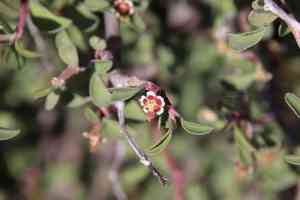
Cliff spurge (Euphorbia misera)
Also known as: Desert spurge
Cliff spurge (Euphorbia misera) is a perennial, deciduous shrub that flourishes in full sunlight and favors sandy or rocky soils. It is typically found on coastal cliffs in the southwestern United States. This plant produces small white flowers with distinctive red and yellow centers during the spring. It attracts bees and butterflies and is highly drought-tolerant once established.
In This Article
Attributes of Cliff spurge
Lifespan
Perennial
Plant Type
Shrub
Plant Height
50 cm to 1 m
Spread
30-60 cm
Leaf Color
Grey-green
Flower Size
2.5 cm
Flower Color
White Red
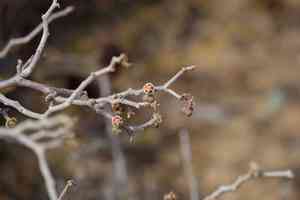
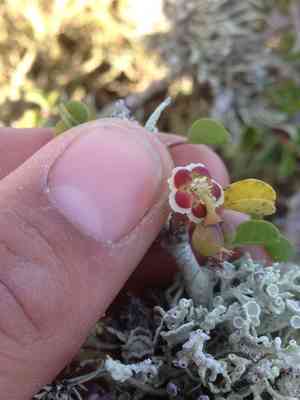
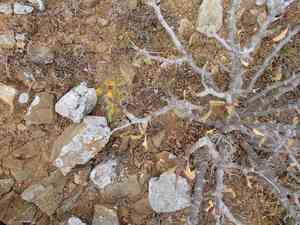
Images of Cliff spurge
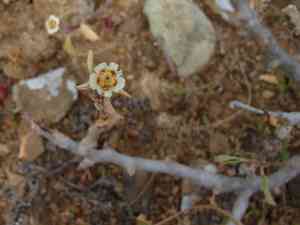
Quickly Identify Cliff spurge
1
Euphorbia misera can be identified by its small, grey-green leaves that have white hair on their undersides, and the unique \'cyathia\' flower structure typical of euphorbias.
Scientific Classification of Cliff spurge
Phylum
Vascular plants
Class
Dicotyledons
Order
Malpighiales
Family
Spurge
Genus
Spurges
Species
Cliff spurge
Planting and Growing of Cliff spurge
Care Difficulty
Easy
Watering Schedule
Every day
Sunlight Requirements
Partial sun
Sunshine Duration
6-10 hours
Ideal Temperature
65-80℉
Soil Type
Potting Mix, Peat Mix
Soil pH
6.5-7.5
Fertilizer Type
Balanced
Pruning Season
Spring, Summer
Pruning Area
Branches, Leaves
Pruning Frequency
2 times a year
Repotting Season
Spring
Pot Type
Plastic, Ceramic
 How to Water Cliff spurge?
Euphorbia misera prefers to be watered thoroughly but infrequently. The key is to make sure the soil is completely saturated with approximately 250 milliliters of water, and then allow it to dry out fully before watering again to mimic its natural arid environment.
What are the symptoms of an underwatered Cliff spurge?
›
What should I do if my Cliff spurge is not getting enough water?
›
What are the symptoms of an overwatered Cliff spurge?
›
How to save an overwatered Cliff spurge?
›
 What Are the Sunlight Requirements for Cliff spurge?
Euphorbia misera benefits from partial sun, ideally 4 to 6 hours daily. This light allows the plant to photosynthesize effectively while minimizing the risk of sunlight-induced stress.
More About Sunlight Requirements Techniques→
What is the best type of sunlight for Euphorbia misera?
›
How can I ensure my Euphorbia misera gets enough light indoors?
›
What benefits occur from Euphorbia misera receiving optimal light?
›
 What Is the Ideal Temperature Range for Cliff spurge?
The ideal temperature range for cultivating Euphorbia misera is between 65 and 80 degrees Fahrenheit. This range allows the plant to maintain optimal physiological functions and promotes healthy growth. Adequate temperatures help avoid stress and potential damage, ensuring vibrant and resilient foliage.
 What Soil is Best for Cliff spurge?
Euphorbia misera thrives in well-drained soils that prevent root rot and overwatering issues. Good drainage allows air spaces between soil particles, which facilitates root respiration and encourages healthy growth. This plant prefers soils with moderate levels of nutrients. Too much richness can lead to excessive foliage growth at the expense of flowers, while too little can result in stunted growth and poor health. Euphorbia misera often grows in rocky or gravelly soils, which help anchor its roots while allowing easy water runoff, enhancing its drought resistance and mimicking its natural habitat conditions.
 How to Fertilize Cliff spurge?
For Euphorbia misera, fertilize with a balanced, water-soluble fertilizer diluted to half the recommended strength. During active growth seasons, ensure the soil receives an appropriate nutrient boost without overwhelming the roots.
 How to Prune Cliff spurge?
Assess the plant and identify any dead, damaged, or crossing branches. Focus on improving the plant’s structure by removing these first, as they contribute little to its health and aesthetic. Make clean cuts at a slight angle just above a node or bud to encourage new growth and ensure water runoff. Avoid leaving stubs as these can become entry points for pathogens. Once deadwood is removed, carefully shape the plant by trimming back overgrown branches. Aim to maintain a balanced, open structure that allows sunlight and air to penetrate the canopy. After pruning, ensure the plant is well-watered and monitor its health closely for a few weeks to catch and address any adverse reactions promptly.
More About Pruning Techniques→
 How to Propagate Cliff spurge plant?
1
Choose healthy, disease-free stems from the parent plant. Cut a section around 4-6 inches long, ensuring it includes a few nodes for optimal rooting potential.
2
Remove the lower leaves from the cutting, which will prevent rot. Dip the cut end into rooting hormone to encourage root development.
3
Insert the treated end of the cutting into a well-draining potting mix. The soil should be kept slightly moist but not waterlogged for the roots to establish.
 How to Repot Cliff spurge plant?
1
Euphorbia misera should be repotted when you notice its roots growing out of the drainage holes or if the plant becomes root-bound. This often happens every one to two years, depending on growth rates and pot size. Watch for reduced growth and visibly tight roots as key indicators.
2
Select a pot with drainage holes to prevent root rot. Ideally, choose a ceramic or clay pot that allows the soil to dry more quickly. The new pot should be only slightly larger than the current rootball to prevent excess moisture retention and ensure Euphorbia misera's roots remain healthy.
3
Opt for a well-draining succulent mix composed of sandy soil with perlite or pumice. This soil combination ensures that water does not linger around the roots, thereby reducing the risk of rot and maintaining a healthy environment for your Euphorbia misera to thrive.
Toxicity
Ingestion, Skin contact
WARNING
The judgment on toxicity and danger is for reference only. We DO NOT GUARANTEE any accuracy of such judgment. Therefore, you SHALL NOT rely on such judgment. It is IMPORTANT TO SEEK PROFESSIONAL ADVICE in advance when necessary.
Learn More About Cliff spurge Diseases
Anthracnose
Bacterial Leaf Spot
Bacterial Soft Rot
Chemical Injury
Crown Gall
Damping-off
Downy Mildew
Drought Stress
Fusarium Wilt
Gray Mold
Leaf Spot
Mosaic
Nutrient Deficiency
Nutrient Toxicity
Powdery Mildew
Root Rot
Root-knot Nematode
Rusts
Sooty Mold
Spider Mites
Temperature Stress
Thrips Damage
White Mold



