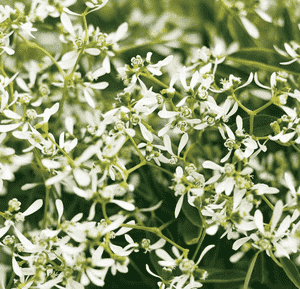
Graceful spurge(Euphorbia hypericifolia)

Graceful spurge (Euphorbia hypericifolia)

Also known as: Fluxweed, Graceful sandmat

Graceful spurge (Euphorbia hypericifolia) is a year-round blooming perennial that thrives in full sun or partial shade. It is commonly used as an ornamental plant in gardens, containers, and hanging baskets due to its attractive appearance. Its toxic sap deters rabbits and deer, making it a resilient choice for many landscapes. Gardeners should always wear gloves when handling this plant to prevent skin irritation from its sap.

Attributes of Graceful spurge

Lifespan
Perennial, Annual
Plant Type
Herb
Plant Height
30 cm to 61 cm
Spread
50 cm to 60 cm
Leaf Color
Green
Flower Size
2.5 cm
Flower Color
White

PlantJoy - Identify plants with a snap

Identify and diagnose plants, get toxicity alerts, and explore safety guides for all types of fungi.

Try for Free

Images of Graceful spurge

Graceful spurge(Euphorbia hypericifolia)

Quickly Identify Graceful spurge

1
White bracts surrounding flowers create a showy appearance
2
Cyathium inflorescence with compact heads and intricate flowers
3
Distinctive 3-lobed greyish-purple fruit capsules with wrinkled texture
4
Opposite leaves with elliptical-oblong shape and hairy margins
5
Tiny, 4-angled seeds with subtly wrinkled surface in greyish-purple color

Scientific Classification of Graceful spurge

Phylum
Vascular plants
Class
Dicotyledons
Order
Malpighiales
Family
Spurge
Genus
Spurges
Species
Graceful spurge

Planting and Growing of Graceful spurge

Care Difficulty
Easy
Watering Schedule
Every 2 days
Sunlight Requirements
Full sun
Sunshine Duration
6-10 hours
Ideal Temperature
60-75℉
Soil Type
Potting Mix, Peat Mix
Soil pH
6.5-7.5
Fertilizer Type
Balanced
Pruning Season
Spring, Summer
Pruning Area
Branches, Leaves
Pruning Frequency
2 times a year
Repotting Season
Spring
Pot Type
Plastic, Ceramic

water icon How to Water Graceful spurge?

Euphorbia hypericifolia prefers a moderate watering routine. It's crucial to water deeply until you see excess water draining out the bottom of the pot, which ensures that the root system gets evenly moist. However, avoid waterlogging by ensuring the soil is well-drained.
What are the symptoms of an underwatered Graceful spurge?
What should I do if my Graceful spurge is not getting enough water?
What are the symptoms of an overwatered Graceful spurge?
How to save an overwatered Graceful spurge?

sunlight icon What Are the Sunlight Requirements for Graceful spurge?

Sunlight Requirements: Full sun, Partial sun
Duration of light: 4 to 6 hours
The ideal light range for Euphorbia hypericifolia is partial to full sun, ensuring it receives sufficient light to support its blooming cycle and maintain its lush appearance. Consistent, adequate light fosters robust growth and vibrant flowering.
What is the best lighting condition for Euphorbia hypericifolia?
How can we achieve the ideal lighting for Euphorbia hypericifolia?
What are the benefits of providing ideal lighting conditions for this plant?

temperature icon What Is the Ideal Temperature Range for Graceful spurge?

Ideal Temperature: 60 ~ 75℉
The Euphorbia hypericifolia thrives best within a temperature range of 60°F to 75°F. Within this range, the plant can perform all its metabolic functions optimally, including photosynthesis and nutrient uptake, leading to robust growth and vibrant foliage.

soil icon What Soil is Best for Graceful spurge?

Soil type: Sandy soil, Sandy loam, Loam, Calcareous soil
Soil PH: 6.5 ~ 7.5
Euphorbia hypericifolia thrives in well-drained soil as it helps prevent root rot. A well-drained environment ensures the plant's roots receive adequate oxygen, promoting healthier growth and vibrant foliage. This plant prefers soil with moderate nutrient levels, avoiding extremes of fertility. A balanced nutrient profile supports steady growth without promoting excessive foliage at the expense of blooming. Euphorbia hypericifolia benefits from soil that retains some moisture but is not waterlogged. Consistent moisture aids in maintaining the plant's physiological processes and prevents stress caused by dehydration.

fertilize icon How to Fertilize Graceful spurge?

Fertilizer type: Balanced
For Euphorbia hypericifolia, the amount of fertilizer depends on the soil's nutrient content and the plant's growth stage. A general guideline is to use a balanced liquid fertilizer diluted to half strength. For solid fertilizers, apply a light sprinkle of slow-release granules, following the package instructions for a plant of its size. Always water thoroughly after fertilization to help disperse nutrients evenly.

prune icon How to Prune Graceful spurge?

Pruning Time: Spring, Summer, Autumn, Winter
While regular pruning is beneficial, be cautious not to remove more than one-third of the plant at a time. Over-pruning can stress the plant and inhibit growth. Regularly disinfect your pruning tools before and after use with a solution of one part bleach to nine parts water to prevent the spread of disease. Wear gloves and protective clothing while pruning Euphorbia hypericifolia, as its sap can cause skin irritation.

propagate icon How to Propagate Graceful spurge plant?

Propagate Time: Spring, Early spring, Late spring, Summer
1
Start by filling seed trays with a well-draining soil mix. Ensure the soil is moist but not waterlogged to provide a comfortable environment for the seeds to germinate.
2
Select a healthy, non-flowering stem from the parent plant. Use a sharp knife or cutters to take a 4-6 inch cutting just below a node. Remove the lower leaves to prevent rot when placed in the soil.
3
Insert the cuttings into the soil or plant the seeds just beneath the surface. Water lightly to ensure soil contact with the cuttings or seeds. Maintain consistent moisture without overwatering.

repot icon How to Repot Graceful spurge plant?

Repotting frequency: Every 1-2 years
1
Euphorbia hypericifolia benefits from repotting when you notice roots emerging from drainage holes or when its growth stalls. Ideally, this should occur in the growing seasons of spring or summer when the plant is most active and can recover quickly.
2
Select a pot just one size larger than the current container. This helps prevent over-watering by providing enough room for root growth without excessive space that retains moisture. Ensure the pot has proper drainage holes to avoid root rot.
3
Choose a well-draining potting mix, such as a cactus or succulent mix. This type of soil provides excellent aeration and prevents root rot by ensuring water drains quickly, which is crucial for the health of your Euphorbia hypericifolia.

PlantJoy - Identify plants with a snap

Find the best spots for them to optimize their health, simply using your phone.

Try for Free

Toxicity of Graceful spurge

Is Graceful spurge toxic to humans?

Graceful spurge is a plant with mild toxicity that may lead to skin irritations upon contact. Its leaves and stems secrete a white, milky sap that can cause skin discomfort, including redness, itching, and swelling. Typically, these symptoms are not severe and tend to fade within a few days. Should the milky substance accidentally enter the eyes, individuals may experience redness, blurred vision, and excessive tearing. While it is not commonly consumed, ingestion can lead to abdominal distress, presenting symptoms like nausea, vomiting, and diarrhea. Gardeners are particularly at risk due to the plant's invasive characteristics.

Is Graceful spurge toxic to cat?

Euphorbia hypericifolia, commonly referred to as Graceful spurge, exhibits a low level of toxicity for cats. Should felines ingest considerable amounts of this plant, particularly through exposure to its sap or juice, they may suffer from poisoning. Observable symptoms of distress in cats can manifest as general signs of physical discomfort. To ensure the safety of cats, it is essential to keep them from eating large quantities of graceful spurge and to promptly consult a veterinarian if poisoning is suspected.

Is Graceful spurge toxic to dog?

Graceful spurge is known to possess a mild toxicity level for dogs. This plant can cause poisoning in dogs, particularly when ingested in substantial quantities. The sap and juice of graceful spurge are the toxic components, and if consumed, they may induce negative health outcomes. Symptoms of poisoning in dogs could encompass gastrointestinal disturbances, including vomiting and diarrhea, and potentially more severe reactions based on the quantity ingested and the individual dog's sensitivity. Dog owners should take care to restrict their pets from areas where graceful spurge is present and carefully observe their interactions with such plants. Should a dog consume graceful spurge, it is vital to seek immediate veterinary attention to ensure the best possible care for the affected pet.

Identify toxic plants for your safety

Learn which plants are harmful to you and your pets, and make informed choices for a safer home!

Try for Free
WARNING
The judgment on toxicity and danger is for reference only. We DO NOT GUARANTEE any accuracy of such judgment. Therefore, you SHALL NOT rely on such judgment. It is IMPORTANT TO SEEK PROFESSIONAL ADVICE in advance when necessary.
More About Toxic Techniques

