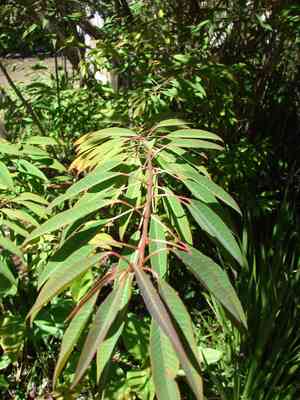
Scarlet plume (Euphorbia fulgens)
Also known as: Scarlet Plume, Navidad
The scarlet plume, a winter-blooming plant that thrives in warm climates, is often grown indoors or in heated greenhouses. It has been honored with the Award of Garden Merit by the Royal Horticultural Society.
In This Article
Attributes of Scarlet plume
Lifespan
Perennial
Plant Type
Shrub, Succulent
Plant Height
1-1.5 meters (3-5 feet)
Spread
1-1.5 meters (3-5 feet)
Leaf Color
Dark green
Flower Size
1-2 cm
Flower Color
Red
Images of Scarlet plume
Quickly Identify Scarlet plume
1
Euphorbia fulgens can be identified by its long, arching stems and narrow, lanceolate leaves. Its flowers are particularly distinctive, with small yellow cyathia surrounded by bright red to orange bracts.
Scientific Classification of Scarlet plume
Phylum
Vascular plants
Class
Dicotyledons
Order
Malpighiales
Family
Spurge
Genus
Spurges
Species
Scarlet plume
Planting and Growing of Scarlet plume
Care Difficulty
Moderate
Watering Schedule
Every 2 days
Sunlight Requirements
Partial sun
Sunshine Duration
4-6 hours
Ideal Temperature
65-75℉
Soil Type
Potting Mix, Peat Mix
Soil pH
6-7.5
Fertilizer Type
Balanced
Pruning Season
Spring, Summer
Pruning Area
Branches, Leaves
Pruning Frequency
2 times a year
Repotting Season
Spring
Pot Type
Plastic, Ceramic
 How to Water Scarlet plume?
Euphorbia fulgens prefers to be watered reasonably. The aim is to saturate the soil but avoid leaving it soggy. After watering, the soil should be moist to the touch without excess water pooling at the bottom.
What are the symptoms of an underwatered Scarlet plume?
›
What should I do if my Scarlet plume is not getting enough water?
›
What are the symptoms of an overwatered Scarlet plume?
›
How to save an overwatered Scarlet plume?
›
 What Are the Sunlight Requirements for Scarlet plume?
Euphorbia fulgens thrives in partial sun, needing about 4-6 hours of sunlight. This range maintains energy for photosynthesis without burning foliage, supporting balanced growth, vibrant blooms, and structural robustness.
What is the best type of sunlight for Euphorbia fulgens?
›
How to achieve ideal light conditions?
›
What benefits arise from ideal lighting?
›
 What Is the Ideal Temperature Range for Scarlet plume?
For optimal growth, Euphorbia fulgens thrives in a warm environment. Temperatures should ideally range between 65°F and 75°F. This temperature range supports healthy photosynthesis, respiration, and nutrient uptake, contributing to robust growth and vibrant foliage. Maintaining this range ensures that the plant remains free of stress, promoting overall health and flowering potential. These conditions mimic the plant's natural habitat, enabling it to exhibit its best ornamental qualities.
 What Soil is Best for Scarlet plume?
Euphorbia fulgens thrives in well-drained soil, which is essential for preventing root rot. The plant benefits from a soil structure that allows excess water to pass through while retaining adequate moisture. This plant prefers nutrient-rich soils that provide essential minerals for vibrant growth. Using compost or organic matter to enrich the soil can enhance its development and promote healthy flowering. Soil with moderate moisture retention ensures the plant receives consistent hydration without becoming waterlogged. This balance helps prevent stress on the plant and supports steady growth.
 How to Fertilize Scarlet plume?
When it comes to fertilizing Euphorbia fulgens, moderation is key. For liquid fertilizers, a balanced 10-10-10 solution should be diluted to half strength, applying approximately 1 tablespoon per gallon of water. For granular fertilizers, scattering about 1 tablespoon per square foot is appropriate. Avoid excessive application to prevent nutrient burn.
 How to Prune Scarlet plume?
Begin by assessing the plant's structure. Remove any dead or damaged branches first. Then, identify and trim older growth that no longer supports new blooms to encourage new shoots. Trim back excessively long stems to maintain a balanced and compact shape. This not only improves the plant's appearance but also allows better air circulation through its foliage. After the flowering period, cut back stems that have finished blooming. This practice promotes the growth of new buds, ensuring a continuous display of blooms throughout the next season.
 How to Propagate Scarlet plume plant?
1
Choose healthy, non-flowering shoots that are approximately 10-15 cm long. Avoid cuttings with any signs of disease or pest damage.
2
Use a well-draining potting mix, ideally a combination of peat and perlite or sand, to ensure adequate aeration and moisture retention.
3
Dip the cutting's base in rooting hormone and plant it in the prepared soil. Firm the soil around the cutting to remove air pockets and ensure stability.
 How to Repot Scarlet plume plant?
1
The ideal time to repot Euphorbia fulgens is when you see roots emerging from the drainage holes, indicating the plant is root-bound. Repotting should also be considered when the soil becomes compacted or depleted of nutrients, hindering healthy growth.
2
Opt for a pot with drainage holes to prevent waterlogging, which can lead to root rot. A slightly larger pot than the current one allows enough space for root expansion, promoting healthier growth without overstretching root development.
3
Use a mix designed for cacti or succulents that ensures optimal drainage and aeration. This type of soil helps mimic the plant's natural environment, reducing the risk of root rot and encouraging robust growth.
Toxicity
ingestion, skin contact
WARNING
The judgment on toxicity and danger is for reference only. We DO NOT GUARANTEE any accuracy of such judgment. Therefore, you SHALL NOT rely on such judgment. It is IMPORTANT TO SEEK PROFESSIONAL ADVICE in advance when necessary.
Learn More About Scarlet plume Diseases
Anthracnose
Bacterial Leaf Spot
Bacterial Soft Rot
Chemical Injury
Crown Gall
Damping-off
Downy Mildew
Drought Stress
Fusarium Wilt
Gray Mold
Leaf Spot
Mosaic
Nutrient Deficiency
Nutrient Toxicity
Powdery Mildew
Root Rot
Root-knot Nematode
Rusts
Sooty Mold
Spider Mites
Temperature Stress
Thrips Damage
White Mold



