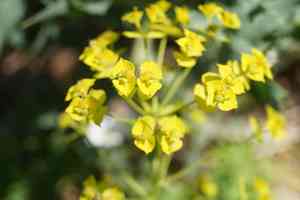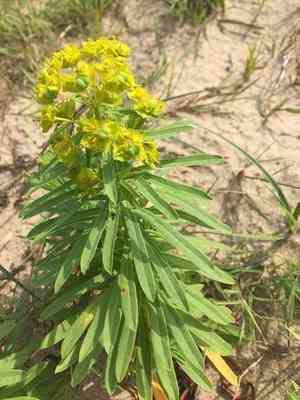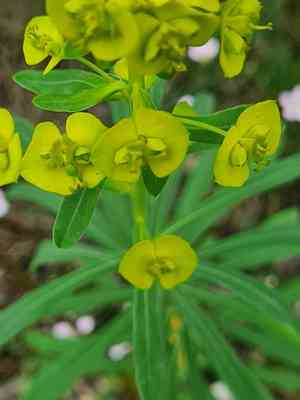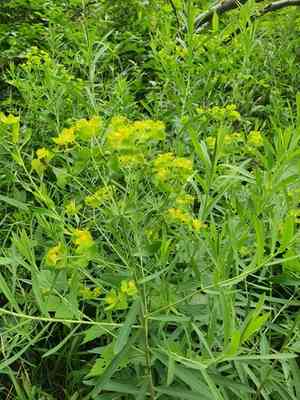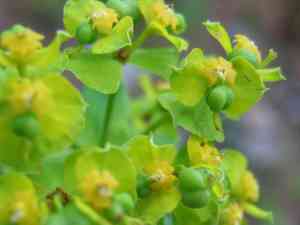
Leafy spurge(Euphorbia esula)

Leafy spurge (Euphorbia esula)

Also known as: Hungarian spurge, Faitour's grass

Leafy spurge (Euphorbia esula) is a hardy perennial that can reach up to 91 cm in height. Known for its aggressive growth, it features an extensive root system and proliferates through both its deep roots and prolific seed production. The plant has small, yellow-green flowers surrounded by characteristic yellow-green bracts. It exudes a milky sap that can cause skin irritation and is toxic to certain animals.

Attributes of Leafy spurge

Lifespan
Perennial
Plant Type
Herb
Plant Height
1 m to 1.2 m
Spread
40 cm
Leaf Color
Green Blue
Flower Size
2.5 cm
Flower Color
Yellow Green Gold

PlantJoy - Identify plants with a snap

Identify and diagnose plants, get toxicity alerts, and explore safety guides for all types of fungi.

Try for Free

Images of Leafy spurge

Leafy spurge(Euphorbia esula)

Quickly Identify Leafy spurge

1
Milky sap exuded from stems; toxic when broken.
2
Bright yellow-green petal-like bracts surrounding tiny flowers.
3
Explosive dehiscence of tiny, 3-chambered fruit capsules.
4
Lanceolate leaves measuring 1.5-3 inches (3.8-7.6 cm) long.
5
Simple stem with umbrella-like branching pattern; light green color.

Scientific Classification of Leafy spurge

Phylum
Vascular plants
Class
Dicotyledons
Order
Malpighiales
Family
Spurge
Genus
Spurges
Species
Leafy spurge

Planting and Growing of Leafy spurge

Care Difficulty
Hard
Watering Schedule
Every 2 days
Sunlight Requirements
Full sun
Sunshine Duration
6-8 hours
Ideal Temperature
60-75℉
Soil Type
Potting Mix, Peat Mix
Soil pH
6.5-7.5
Fertilizer Type
Balanced
Pruning Season
Spring, Summer
Pruning Area
Branches, Leaves
Pruning Frequency
2 times a year
Repotting Season
Spring
Pot Type
Plastic, Ceramic

water icon How to Water Leafy spurge?

For Euphorbia esula, watering should be thorough but infrequent. Ensure that the soil is completely soaked but that no water is left pooling at the base. This plant appreciates a deep watering that thoroughly moistens the soil without creating waterlogged conditions.
What are the symptoms of an underwatered Leafy spurge?
What should I do if my Leafy spurge is not getting enough water?
What are the symptoms of an overwatered Leafy spurge?
How to save an overwatered Leafy spurge?

sunlight icon What Are the Sunlight Requirements for Leafy spurge?

Sunlight Requirements: Full sun, Partial sun
Duration of light: 6 to 8 hours daily
Euphorbia esula thrives best under full to partial sun, benefiting from around 6 to 8 hours of light daily. Proper sunlight exposure ensures optimal growth, vibrant foliage, and enhanced resilience, mimicking natural environments.
What type of light does Euphorbia esula prefer?
How can I ensure Euphorbia esula receives ideal light?
What benefits arise from optimal light exposure for Euphorbia esula?

temperature icon What Is the Ideal Temperature Range for Leafy spurge?

Ideal Temperature: 60 ~ 75℉
The ideal temperature range for growing Euphorbia esula is between 60°F and 75°F. This temperature allows the plant to thrive by providing conditions that promote optimal growth and development. Maintaining this range helps ensure that the plant has adequate warmth without the stress of heat or cold.

soil icon What Soil is Best for Leafy spurge?

Soil type: Loam, Sandy loam, Calcareous soil
Soil PH: 6.5 ~ 7.5
Euphorbia esula thrives in soil with excellent drainage capabilities. Proper drainage prevents waterlogging, which can lead to root rot and other fungal diseases, ensuring the plant remains healthy and vibrant. This plant benefits from soils rich in organic matter. The nutrients provided by loam or enriched sandy loam support strong growth and vitality, enhancing its resilience against environmental stressors. While Euphorbia esula is drought-tolerant, moderate soil moisture is crucial during its initial growth stages. Ensuring the right moisture balance promotes optimal growth without compromising its natural hardiness.

fertilize icon How to Fertilize Leafy spurge?

Fertilizer type: Balanced
For Euphorbia esula, it's crucial to apply fertilizer sparingly due to its low nutrient requirements. A diluted liquid fertilizer at half the recommended strength (usually around 10-10-10) should suffice during the active growing season. Over-fertilizing can harm the plant more than help it.

prune icon How to Prune Leafy spurge?

Pruning Time: Spring, Summer
Begin by identifying Euphorbia esula stems that are older, damaged, or overly elongated. Carefully trace these stems back to their base, ensuring a clean cut close to the soil. Pruning at this point will redirect the plant's energy into producing healthier, more vibrant new growth. Avoid cutting too close to the main root structure to prevent potential damage. Use a pair of sharp, sterilized pruning shears to trim the stems. The sharpness ensures a clean cut which minimizes plant stress, while sterilization helps prevent disease transmission. For thicker or more established stems, a small pruning saw may be necessary. After pruning, clean your tools again to prevent the spread of any plant pathogens.

propagate icon How to Propagate Leafy spurge plant?

Propagate Time: Spring, Early Spring, Summer
1
Collect seeds from mature Euphorbia esula plants once the seed pods have dried and turned brown. Ensure seeds are fully mature for the best germination rates. Store them in a cool, dry place if not sowing immediately.
2
Use a well-draining potting mix enriched with sand or perlite for seed propagation. Fill seed trays with this mix, ensuring it’s evenly moist but not waterlogged, to provide an ideal growing medium.
3
Select a healthy, non-flowering stem and use sharp pruning shears to cut a section 4-6 inches long. Remove the leaves from the lower half to allow the inserted part to develop roots easily.

repot icon How to Repot Leafy spurge plant?

Repotting frequency: Every 2-3 years
1
Euphorbia esula should be repotted when you notice the roots are circling the pot or protruding out from the drainage holes. Other signs include reduced growth or water pooling at the pot’s surface. These indicate that the plant has outgrown its current container.
2
Select a pot that provides adequate drainage, with sufficient depth and a diameter 1-2 inches larger than the current pot. A terracotta pot can offer better air exchange and root aeration, which helps regulate moisture and prevents root rot.
3
Opt for a sandy, well-draining soil mix to mimic Euphorbia esula’s natural conditions. This encourages proper root growth and reduces the risk of soil compaction, which can lead to poor water absorption and root diseases.

PlantJoy - Identify plants with a snap

Find the best spots for them to optimize their health, simply using your phone.

Try for Free

Toxicity of Leafy spurge

Is Leafy spurge toxic to humans?

Leafy spurge has a moderate toxicity level for humans, with severe reactions to the sap potentially necessitating a visit to a healthcare professional. This plant exudes a milky sap throughout its entire structure, which can leak or ooze when any part of it is broken or harmed. Contact with this sap can lead to reactions such as skin redness, itchiness, and intense inflammation. Additionally, it can be highly irritating to the eyes, potentially causing photosensitization or heightened sensitivity to sunlight. While ingestion is uncommon, consuming the sap may result in gastrointestinal upset. This plant may often be found growing wild as a weed in temperate regions, and individuals most at risk of contact with the toxic sap typically include gardeners who pull weeds without wearing protective gloves.

Is Leafy spurge toxic to cat?

Leafy spurge is a poisonous plant for cats, as every part of it presents a danger of toxicity upon ingestion. If a cat inadvertently consumes any portion of leafy spurge, it may suffer from physical discomfort and various health issues. In these cases, it is essential to promptly obtain medical assistance at a veterinary clinic to mitigate possible negative health consequences.

Is Leafy spurge toxic to dog?

Leafy spurge is recognized as toxic to dogs. If dogs inadvertently consume any part of this plant, they face the danger of poisoning. The entire structure of the plant, which includes leaves, stems, and roots, is laden with harmful toxins that can adversely affect a dog's well-being. Signs of toxicity may manifest as vomiting, diarrhea, lethargy, and in more severe instances, critical symptoms like altered heart rate or seizures. It is essential for dog owners to prevent their pets from accessing regions where leafy spurge grows, while also being cautious to remove any fallen plant material within their dogs' reach. If a dog is suspected to have ingested leafy spurge, seeking immediate veterinary attention is paramount to ensure the best possible outcome for the animal.

Identify toxic plants for your safety

Learn which plants are harmful to you and your pets, and make informed choices for a safer home!

Try for Free
WARNING
The judgment on toxicity and danger is for reference only. We DO NOT GUARANTEE any accuracy of such judgment. Therefore, you SHALL NOT rely on such judgment. It is IMPORTANT TO SEEK PROFESSIONAL ADVICE in advance when necessary.
More About Toxic Techniques