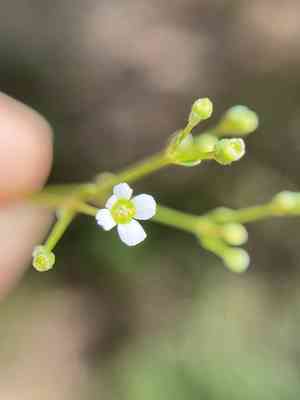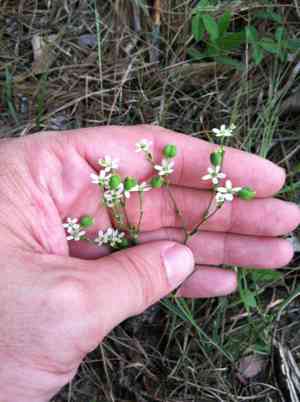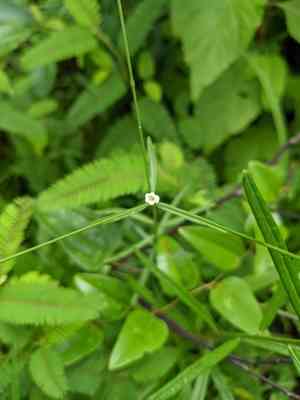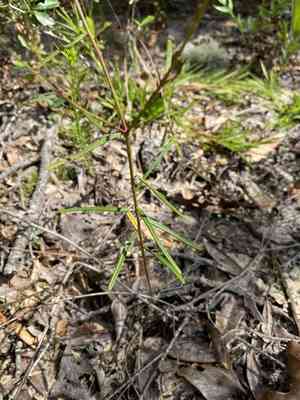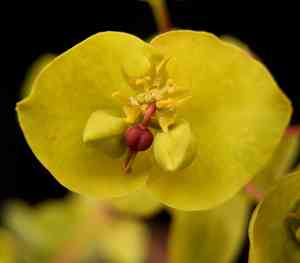
Summer spurge(Euphorbia discoidalis)

Summer spurge (Euphorbia discoidalis)

Also known as: Disco Euphorbia, Disk Euphorbia

Summer spurge, or Euphorbia maculata, is well-suited to arid environments due to several adaptive traits:

1. **Extensive Root System**: It features a deep root network that taps into subsurface moisture, crucial for survival in dry conditions.
2. **Drought Resistance**: Its ability to endure long periods without water helps it to thrive where other plants might fail.
3. **Quick Reproduction**: The plant grows and reproduces rapidly, ensuring its presence even in challenging environments.
4. **Small, Resilient Leaves**: These leaves minimize water loss and are designed to withstand arid climates.
5. **Milky Latex**: This sap deters herbivores and reduces damage, conserving the plant's water.

These combined characteristics enable summer spurge to excel in dry, sunlit areas.

Attributes of Summer spurge

Lifespan
Annual
Plant Type
Succulent, Shrub
Plant Height
30 cm to 91 cm
Spread
Up to 15 cm
Leaf Color
Green
Flower Size
Less than 1 cm
Flower Color
Yellow or Greenish

ForwardPlant - Identify plants with a snap

Identify and diagnose plants, get toxicity alerts, and explore safety guides for all types of fungi.

Try for Free

Images of Summer spurge

Summer spurge(Euphorbia discoidalis)

Quickly Identify Summer spurge

1
Euphorbia discoidalis can be identified by its compact, flattened stem that resembles a disk. The plant has small, rounded leaves and may produce tiny, inconspicuous flowers. It\'s also important to handle the plant with care due to its potential to exude a milky latex that can be irritating to the skin.

Scientific Classification of Summer spurge

Phylum
Vascular plants
Class
Dicotyledons
Order
Malpighiales
Family
Spurge
Genus
Spurges
Species
Summer spurge

Planting and Growing of Summer spurge

Care Difficulty
Hard
Watering Schedule
Every 2 days
Sunlight Requirements
Partial sun
Sunshine Duration
3-6 hours
Ideal Temperature
65-75℉
Soil Type
Potting Mix, Peat Mix
Soil pH
6.5-7.5
Fertilizer Type
Balanced
Pruning Season
Spring, Summer
Pruning Area
Branches, Leaves
Pruning Frequency
2 times a year
Repotting Season
Spring
Pot Type
Plastic, Ceramic

water icon How to Water Summer spurge?

Euphorbia discoidalis prefers its soil to be moderately dry between watering sessions. Watering should be thorough, ensuring the water reaches down to the roots, but the soil should never be soggy or waterlogged. A volume of about 250 milliliters is typically sufficient, depending on pot size and environmental conditions.
What are the symptoms of an underwatered Summer spurge?
What should I do if my Summer spurge is not getting enough water?
What are the symptoms of an overwatered Summer spurge?
How to save an overwatered Summer spurge?

sunlight icon What Are the Sunlight Requirements for Summer spurge?

Sunlight Requirements: Partial sun
Duration of light: 4 to 6 hours daily
Ideal light conditions for Euphorbia discoidalis involve partial sun with about 4-6 hours of filtered sunlight daily, promoting balanced growth and vibrant leaf color.
What is the best type of sunlight for Euphorbia discoidalis?
How can I achieve ideal lighting conditions for Euphorbia discoidalis?
What are the benefits of ideal lighting for Euphorbia discoidalis?

temperature icon What Is the Ideal Temperature Range for Summer spurge?

Ideal Temperature: 65 ~ 75℉
The ideal temperature range for cultivating Euphorbia discoidalis is between 65°F and 75°F. This range ensures optimal growth and health, providing the necessary warmth without risking overheating or chilling. Within this range, the plant can efficiently carry out photosynthesis, maintain appropriate metabolism, and develop its characteristic features.

soil icon What Soil is Best for Summer spurge?

Soil type: Sandy loam, Loam
Soil PH: 6.5 ~ 7.5
Euphorbia discoidalis thrives in well-drained soil, which helps prevent root rot and other moisture-related issues. This type of soil allows excess water to slide away effortlessly, ensuring the plant's roots get the right balance of moisture without saturation. A nutrient-rich substrate is crucial for the healthy growth of Euphorbia discoidalis. It ensures that the plant has sufficient access to essential minerals and nutrients that promote lush foliage and robust growth. Maintaining a slightly alkaline to neutral pH range between 6.5 and 7.5 is essential for Euphorbia discoidalis. This pH level optimizes nutrient availability and uptake, ensuring that the plant receives all necessary nutrients efficiently.

fertilize icon How to Fertilize Summer spurge?

Fertilizer type: Balanced
For Euphorbia discoidalis, it is essential to maintain a balanced fertilizer regimen. Use a balanced liquid fertilizer diluted to half the recommended strength every two weeks. For solid fertilizers, apply a slow-release formula at the beginning of the growing season in early spring, with three applications per year. Over-fertilizing can lead to salt build-up, damaging the plant.

prune icon How to Prune Summer spurge?

Pruning Time: Spring, Summer
Start by thoroughly inspecting your Euphorbia discoidalis for any dead, diseased, or discolored stems. Identifying these areas will help focus your pruning efforts correctly, ensuring you do not remove healthy growth by mistake. Use your tools to cut back any unhealthy stems back to their base or to a point of healthy growth. If shaping, trim long, leggy branches to encourage a more compact form, cutting just above a leaf node or side shoot. While pruning, keep the natural shape of the plant in mind. Euphorbia discoidalis typically has a rounded form, so prune accordingly to maintain balance and symmetry. More About Pruning Techniques

propagate icon How to Propagate Summer spurge plant?

Propagate Time: Spring,Early summer
1
Cut a healthy stem segment approximately 4-6 inches long. Ensure the stem is from a mature part of the plant with no signs of disease or damage.
2
Remove the lower leaves from the cutting, leaving at least 2-3 leaves at the top. Allow the cutting to dry for a few hours to reduce sap bleeding and potential rot.
3
Place the prepared cutting into a pot filled with a mixture of sand and potting soil. Water lightly and ensure the cutting is stable and upright.
More About Propagating Techniques

repot icon How to Repot Summer spurge plant?

Repotting frequency: Every 2-3 years
1
Euphorbia discoidalis requires repotting when it outgrows its current pot, evident by roots appearing through drainage holes or circling the pot. Another signal is when growth appears stunted despite proper care. The best time for repotting is during its active growing seasons, summer and autumn, as the plant can recover more swiftly.
2
Select a pot slightly larger than the current one, ensuring it has ample drainage holes. Euphorbias appreciate good airflow around their roots, and a terracotta pot is ideal as it allows exchange of moisture and air, reducing the risk of root rot.
3
Use a well-draining cactus soil mix, which mimics Euphorbia discoidalis's natural environment. This ensures adequate drainage, preventing root rot, and provides the necessary nutrients for healthy growth. Adding perlite or coarse sand can enhance the drainage quality of the soil.

ForwardPlant - Identify plants with a snap

Find the best spots for them to optimize their health, simply using your phone.

Try for Free

Toxicity

ingestion, skin contact

Identify toxic plants for your safety

Learn which plants are harmful to you and your pets, and make informed choices for a safer home!

Try for Free
WARNING
The judgment on toxicity and danger is for reference only. We DO NOT GUARANTEE any accuracy of such judgment. Therefore, you SHALL NOT rely on such judgment. It is IMPORTANT TO SEEK PROFESSIONAL ADVICE in advance when necessary.