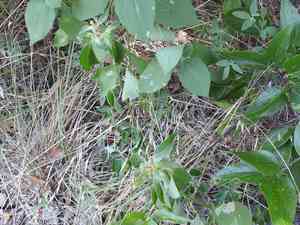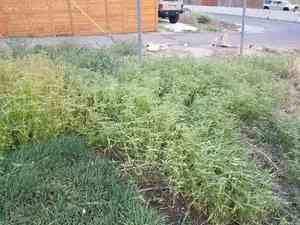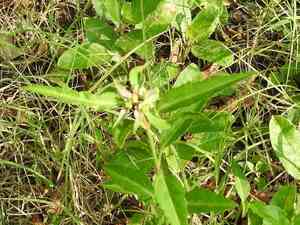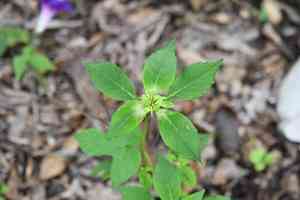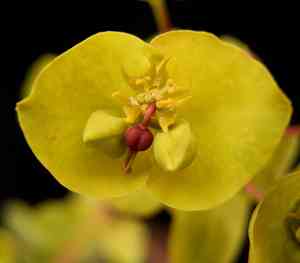
Toothed spurge(Euphorbia dentata)

Toothed spurge (Euphorbia dentata)

Also known as: Green poinsettia, Toothedleaf poinsettia

Toothed spurge, or Euphorbia dentata, gets its names from its serrated leaf edges, with "dentata" meaning "toothed" in Latin. This plant often colonizes disturbed areas such as roadsides and vacant lots, and is considered a noxious weed in certain parts of the United States.

Attributes of Toothed spurge

Lifespan
Annual
Plant Type
Herb
Plant Height
23 cm to 61 cm
Spread
30 cm
Leaf Color
Green Red
Flower Size
2.5 cm
Flower Color
Yellow Green

ForwardPlant - Identify plants with a snap

Identify and diagnose plants, get toxicity alerts, and explore safety guides for all types of fungi.

Try for Free

Images of Toothed spurge

Toothed spurge(Euphorbia dentata)

Quickly Identify Toothed spurge

1
Euphorbia dentata can be identified by its toothed, lanceolate leaves which are alternately arranged along the stem. The small, greenish-yellow flowers often form in clusters at the leaf axils. When broken, the plant exudes a milky, latex sap, which is a characteristic feature of the Euphorbia genus.

Scientific Classification of Toothed spurge

Phylum
Vascular plants
Class
Dicotyledons
Order
Malpighiales
Family
Spurge
Genus
Spurges
Species
Toothed spurge

Planting and Growing of Toothed spurge

Care Difficulty
Easy
Watering Schedule
Every 2 days
Sunlight Requirements
Full sun
Sunshine Duration
4-8 hours
Ideal Temperature
68-77℉
Soil Type
Potting Mix, Peat Mix
Soil pH
6.5-7.5
Fertilizer Type
Balanced
Pruning Season
Spring, Summer
Pruning Area
Branches, Leaves
Pruning Frequency
2 times a year
Repotting Season
Spring
Pot Type
Terracotta, Plastic

water icon How to Water Toothed spurge?

When watering Euphorbia dentata, ensure that the soil is thoroughly moistened, allowing approximately 200 ml of water. The goal is to keep the soil slightly moist yet not continuously saturated, allowing for proper drainage.
What are the symptoms of an underwatered Toothed spurge?
What should I do if my Toothed spurge is not getting enough water?
What are the symptoms of an overwatered Toothed spurge?
How to save an overwatered Toothed spurge?

sunlight icon What Are the Sunlight Requirements for Toothed spurge?

Sunlight Requirements: Full sun, Partial sun
Duration of light: 6-8 hours daily
Euphorbia dentata flourishes with a light range of full to partial sun. This exposure helps maintain its foliage density and encourages healthy flowering by optimizing the process of photosynthesis.
How much sunlight is optimal for Euphorbia dentata?
What are the solutions for achieving ideal lighting?
What benefits does optimal sunlight provide to the plant?

temperature icon What Is the Ideal Temperature Range for Toothed spurge?

Ideal Temperature: 68 ~ 77℉
The optimal temperature range for growing Euphorbia dentata is between 68°F and 77°F. This range ensures the plant can photosynthesize effectively and maintain healthy growth. Within this range, Euphorbia dentata can utilize nutrients efficiently, which supports robust development and flowering.

soil icon What Soil is Best for Toothed spurge?

Soil type: Loam, Sandy loam
Soil PH: 6.5 ~ 7.5
Euphorbia dentata thrives in well-drained soils that prevent water from pooling around the roots, reducing the risk of root rot and promoting healthy growth. Soil with moderate fertility ensures that Euphorbia dentata gets essential nutrients without excessive richness that could lead to overgrowth and weakening of the plant structure. Preferring a soil pH between 6.5 and 7.5, Euphorbia dentata enjoys conditions that enhance nutrient availability and root function, resulting in vigorous plant health.

fertilize icon How to Fertilize Toothed spurge?

Fertilizer type: Balanced
Euphorbia dentata thrives with balanced fertilization. Use a well-diluted liquid fertilizer, approximately 1/4 the recommended strength for general plants. For slow-release granular fertilizers, apply around 1 tablespoon per square foot of soil surface.

prune icon How to Prune Toothed spurge?

Pruning Time: Spring, Summer, Autumn
Start by identifying dead or damaged branches, which should be removed first. Next, thin out crowded areas to improve air circulation and sunlight penetration. For optimal results, make cuts at a slight angle, about a quarter-inch above a node. This encourages new growth and prevents water from settling on cut surfaces, which can cause disease. When pruning, be cautious around new growth as it is particularly tender and susceptible to damage. Avoid unnecessary cutting of new shoots.

propagate icon How to Propagate Toothed spurge plant?

Propagate Time: Spring, Early summer
1
Harvest the seeds from mature Euphorbia dentata plants. Gently shake or manually remove seeds from the seed pods when they are dry, and avoid collecting in wet conditions.
2
Select healthy stems from the parent plant and cut them at a node. Remove the lower leaves to prevent rotting when placed in the soil or water.
3
Sow seeds evenly in the tray, or insert the prepared cuttings into the soil. Maintain consistent moisture levels and provide indirect sunlight for optimal growth.

repot icon How to Repot Toothed spurge plant?

Repotting frequency: Every two years
1
You should consider repotting Euphorbia dentata when you notice the roots are growing through the drainage holes, the soil is drying out faster than usual, or the plant has become top-heavy and unstable. Additionally, if the growth of the plant has significantly slowed down, it might be a signal that repotting is needed.
2
Select a pot that is one size larger than the current one, ensuring it has adequate drainage holes. A pot that is too large can retain excess moisture, which is not ideal for Euphorbia dentata. A slightly larger pot supports healthy growth by providing just enough space for root expansion without creating water retention issues.
3
Opt for a well-draining soil mix that mimics the plant's natural habitat. A cactus or succulent mix is ideal as it prevents waterlogging, which can lead to root rot. The well-draining nature of this soil mix ensures that moisture doesn’t linger around the roots, promoting overall plant health.

ForwardPlant - Identify plants with a snap

Find the best spots for them to optimize their health, simply using your phone.

Try for Free

Toxicity of Toothed spurge

Is Toothed spurge toxic to humans?

Toothed spurge possesses a milky sap within its stems that is released upon any damage to the plant. This sap is toxic to humans, and the severity of the poisoning varies based on individual susceptibility. Direct skin contact with the sap can lead to severe dermatitis, often resulting in painful blisters. If the sap enters the eyes, it can inflict lasting damage, potentially leading to blindness. It is crucial to emphasize that this plant is also dangerous to chew and ingest. There is no indication that toothed spurge worsens the symptoms of hay fever.

Is Toothed spurge toxic to cat?

Toothed spurge represents a significant danger to cats due to the highly toxic nature of its sap. If a cat consumes any section of this plant, it can lead to severe repercussions. Ingestion usually happens when a curious cat nibbles on or swallows portions of the plant. After exposure, affected cats may exhibit noticeable signs of distress, necessitating urgent attention. Owing to the extreme toxicity levels, it is vital for pet owners to keep toothed spurge safely away from their cats and to seek immediate veterinary assistance if their pet comes into contact with it.

Is Toothed spurge toxic to dog?

The plant species known as toothed spurge possesses a high toxicity level specifically for dogs. If a dog ingests any part of this plant, it can lead to poisoning, primarily due to the harmful sap or juice it contains. Following ingestion, a dog might display a range of symptoms that indicate poisoning. These symptoms can vary from mild to severe, potentially including vomiting, diarrhea, lethargy, abdominal discomfort, or more alarming signs like tremors or seizures. Therefore, it is crucial for dog owners to keep their pets away from toothed spurge, and in the event of exposure, they must seek immediate veterinary care to secure the best possible recovery for their furry companions.

Identify toxic plants for your safety

Learn which plants are harmful to you and your pets, and make informed choices for a safer home!

Try for Free
WARNING
The judgment on toxicity and danger is for reference only. We DO NOT GUARANTEE any accuracy of such judgment. Therefore, you SHALL NOT rely on such judgment. It is IMPORTANT TO SEEK PROFESSIONAL ADVICE in advance when necessary.
More About Toxic Techniques