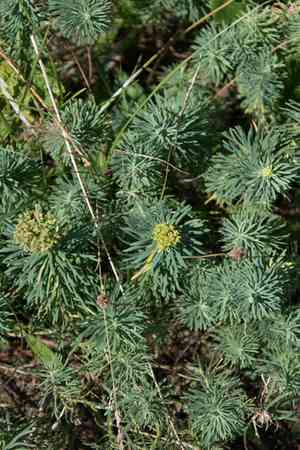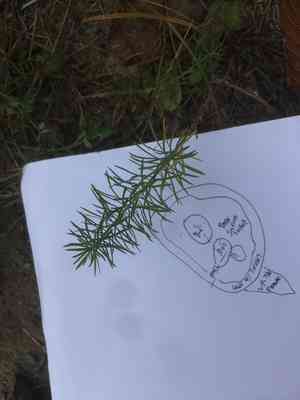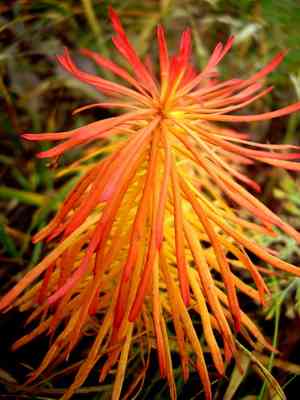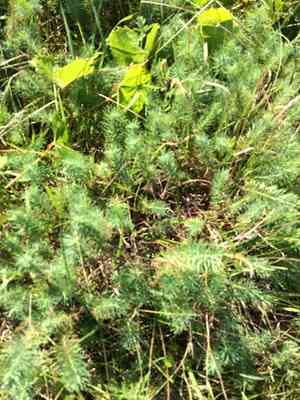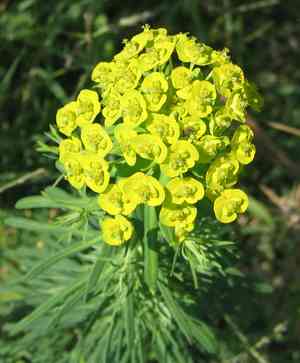
Cypress spurge(Euphorbia cyparissias)

Cypress spurge (Euphorbia cyparissias)

Also known as: Irish moss, Love in a huddle

Cypress spurge (Euphorbia cyparissias) is an ornamental plant originating from Europe. Due to its aggressive nature and ability to dominate other species' habitats, it is deemed a noxious weed in numerous states, including Colorado. While it is attractive to bees and other pollinators, certain parts of the plant are toxic and contain irritants.

Attributes of Cypress spurge

Lifespan
Perennial
Plant Type
Herb
Plant Height
15 cm to 50 cm
Spread
30 cm to 60 cm
Leaf Color
Green Blue Red Purple
Flower Size
8 mm to 1.2 cm
Flower Color
Yellow Green Red Orange

PlantJoy - Identify plants with a snap

Identify and diagnose plants, get toxicity alerts, and explore safety guides for all types of fungi.

Try for Free

Images of Cypress spurge

Cypress spurge(Euphorbia cyparissias)

Quickly Identify Cypress spurge

1
Upright stems 12-20 inches tall with needle-like foliage resembling a soft bottlebrush.
2
Yellow, crescent moon-shaped glands bordering cup-like flowers at stem tips.
3
Clusters of vibrant greenish-yellow flowers crowding at branch tips in pseudo-umbels.
4
Smooth, terete (cylindrical), hairless stems reaching 1-3 feet with consistent vibrant green color.
5
Toxic milky sap-containing leaves with narrow, linear-oblong shape and distinct chartreuse to lilac hues.

Scientific Classification of Cypress spurge

Phylum
Vascular plants
Class
Dicotyledons
Order
Malpighiales
Family
Spurge
Genus
Spurges
Species
Cypress spurge

Planting and Growing of Cypress spurge

Care Difficulty
Easy
Watering Schedule
Every 2 days
Sunlight Requirements
Full sun
Sunshine Duration
6-10 hours
Ideal Temperature
60-75℉
Soil Type
Potting Mix, Peat Mix
Soil pH
6.5-7.5
Fertilizer Type
Balanced
Pruning Season
Spring, Summer
Pruning Area
Branches, Leaves
Pruning Frequency
2 times a year
Repotting Season
Spring
Pot Type
Plastic, Ceramic

water icon How to Water Cypress spurge?

Euphorbia cyparissias prefers to be watered deeply but infrequently. Ensure the soil is thoroughly moist, allowing excess water to drain. A good rule of thumb is to water until you see about 250 ml of drainage from the pot, ensuring the roots receive adequate moisture without becoming waterlogged.
What are the symptoms of an underwatered Cypress spurge?
What should I do if my Cypress spurge is not getting enough water?
What are the symptoms of an overwatered Cypress spurge?
How to save an overwatered Cypress spurge?

sunlight icon What Are the Sunlight Requirements for Cypress spurge?

Sunlight Requirements: Full sun, Partial sun
Duration of light: 6-8 hours daily
Euphorbia cyparissias thrives in full to partial sun conditions. Optimal light leads to vigorous growth, strong stems, and abundant flowering, enhancing its decorative appeal and health.
What is the optimal sunlight exposure?
How can I achieve ideal lighting for this plant?
What benefits arise from proper sunlight exposure?

temperature icon What Is the Ideal Temperature Range for Cypress spurge?

Ideal Temperature: 60 ~ 75℉
Euphorbia cyparissias thrives best in moderate climates where the temperature stays consistently between 60°F and 75°F. This range allows the plant's metabolic processes to function optimally, supporting healthy growth and vibrant foliage. Maintaining these temperatures, particularly during the active growing season, ensures that the plant can maximize photosynthesis and nutrient absorption.

soil icon What Soil is Best for Cypress spurge?

Soil type: Sandy soil, Loam, Calcareous soil
Soil PH: 6.5 ~ 7.5
Euphorbia cyparissias thrives in well-drained soil conditions, which prevent water from pooling around the roots, thus avoiding root rot and diseases. Such soil promotes healthy root development by providing adequate oxygen. While Euphorbia cyparissias can tolerate poorer soils, slightly nutrient-rich soil aids in better growth and flowering. This is especially beneficial in early growth stages when nutrients help establish the plant. Incorporating moderate organic matter improves soil structure and retains moisture, ensuring that while the plant's roots don't remain waterlogged, they have access to moisture when needed.

fertilize icon How to Fertilize Cypress spurge?

Fertilizer type: Balanced
For Euphorbia cyparissias, it is crucial to apply fertilizer sparingly. This plant thrives in lean soil conditions; hence, excessive fertilizer can harm its growth. When using liquid fertilizer, dilute it to half strength compared to typical houseplant applications. Approximately 1 teaspoon per gallon of water is usually sufficient. For slow-release fertilizers, use a small amount, about 1 tablespoon per square foot, applied in early spring.

prune icon How to Prune Cypress spurge?

Pruning Time: Spring, Summer
First, inspect your Euphorbia cyparissias for any stems that are dead, discolored, or showing signs of disease. These should be removed to enhance the overall health of the plant and prevent the spread of infection. Trim back excessive growth to maintain the plant's desired shape and prevent it from becoming leggy. Cut above a node to encourage new growth and ensure the plant remains bushy and aesthetically pleasing.

propagate icon How to Propagate Cypress spurge plant?

Propagate Time: Spring, Early spring
1
Fill the seed tray with a well-draining soil mixture, and then scatter the seeds evenly across the surface. Cover them lightly with soil, then water gently to keep the soil moist.
2
Dig up a mature plant using a garden trowel, ensuring you dig deep enough to preserve as much of the root system as possible. Split the plant into smaller sections, each with its own roots and shoots, then replant them in desired locations.
3
After sowing seeds or dividing plants, water them regularly to keep the soil moist. Avoid overwatering, as this can lead to root rot. Monitor the plants for growth and pests.

repot icon How to Repot Cypress spurge plant?

Repotting frequency: Every 2-3 years
1
Euphorbia cyparissias should be repotted when roots start to emerge from the drainage holes or the plant appears to have outgrown its current pot, usually indicated by the plant showing signs of stunted growth or diminished vigor.
2
Select a pot that is slightly larger than the current one with good drainage holes. A terracotta pot is ideal, as it allows excess moisture to evaporate, preventing root rot and offering the plant adequate support for healthy growth.
3
Choose a well-draining, sandy soil mix, ideally cactus or succulent mix, to ensure proper aeration and prevent waterlogged conditions. This soil mix supports optimum root health by mimicking the plant's natural habitat.

PlantJoy - Identify plants with a snap

Find the best spots for them to optimize their health, simply using your phone.

Try for Free

Toxicity of Cypress spurge

Is Cypress spurge toxic to humans?

Cypress spurge is characterized by its milky sap, which can lead to skin reactions like burns and blisters upon contact. Additionally, its mature bracts feature tiny barbs that may penetrate the skin, resulting in prolonged irritation. If handling this plant is necessary, it is essential to don gloves, wear long sleeves to cover your arms, and avoid any contact between your skin and the gloves. Furthermore, the roots exhibit laxative properties, and ingestion of large quantities can lead to significant dehydration.

Is Cypress spurge toxic to cat?

Cypress spurge is deemed to possess a toxicity level that raises concern for cats. If a feline inadvertently consumes any part of this plant, it may experience various symptoms of discomfort or pain, indicating the necessity for urgent medical care. Therefore, it is crucial for cat owners to be aware of the signs of potential poisoning and to swiftly consult a veterinary hospital to secure the health of their pet.

Is Cypress spurge toxic to dog?

Cypress spurge is a plant that presents a considerable threat to dogs due to its toxic properties. Dogs may inadvertently consume parts of cypress spurge, resulting in poisoning. The entire plant—which includes leaves, stems, and flowers—harbors toxic compounds that can be detrimental if ingested by dogs. Signs of poisoning in dogs can encompass vomiting, diarrhea, lethargy, and more alarming symptoms such as alterations in heart rate or breathing difficulties. It is essential for dog owners to be attentive and deter their pets from areas where cypress spurge is present. If a dog consumes any part of this plant, it is critical to seek prompt veterinary assistance to secure the best possible outcome for the affected pet.

Identify toxic plants for your safety

Learn which plants are harmful to you and your pets, and make informed choices for a safer home!

Try for Free
WARNING
The judgment on toxicity and danger is for reference only. We DO NOT GUARANTEE any accuracy of such judgment. Therefore, you SHALL NOT rely on such judgment. It is IMPORTANT TO SEEK PROFESSIONAL ADVICE in advance when necessary.
More About Toxic Techniques