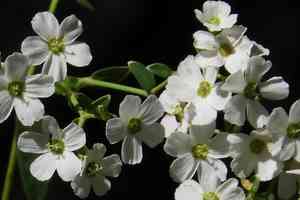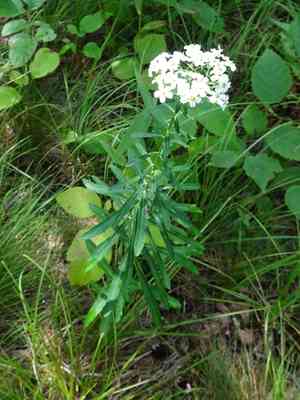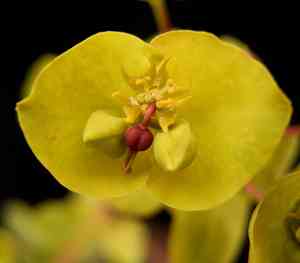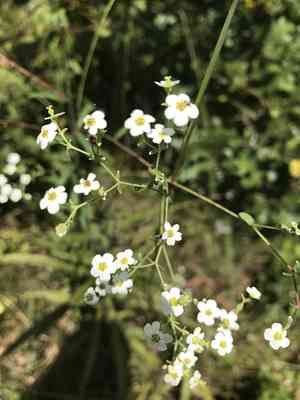
Flowering Spurge(Euphorbia corollata)

Flowering Spurge (Euphorbia corollata)

Also known as: Tramp's Spurge, Garden Spurge, Snake Milk, Wild Hippo

Common Milkweed (Asclepias syriaca) is a flowering plant indigenous to North America. The plant exudes a milky sap that can cause irritation to human skin and eyes. It serves as an attractant for various insects, including monarch butterflies, bees, and wasps, and is also frequented by birds such as the monarch butterfly's caterpillar.

Attributes of Flowering Spurge

Lifespan
Perennial
Plant Type
Herb
Plant Height
30 cm to 61 cm
Spread
30 cm to 60 cm
Leaf Color
Green
Flower Size
15 cm
Flower Color
White

PlantJoy - Identify plants with a snap

Identify and diagnose plants, get toxicity alerts, and explore safety guides for all types of fungi.

Try for Free

Images of Flowering Spurge

Flowering Spurge(Euphorbia corollata)

Quickly Identify Flowering Spurge

1
Whorls of leaves beneath blooms
2
Explosive seed dispersal via capsules
3
Erect, unbranched stems with inflorescences
4
Globoid, 3-celled fruit with unique seed-ejecting behavior
5
Light green, smooth stems with occasional bluish hue

Scientific Classification of Flowering Spurge

Phylum
Vascular plants
Class
Dicotyledons
Order
Malpighiales
Family
Spurge
Genus
Spurges
Species
Flowering Spurge

Planting and Growing of Flowering Spurge

Care Difficulty
Easy
Watering Schedule
Every 2 days
Sunlight Requirements
Full sun
Sunshine Duration
6-10 hours
Ideal Temperature
65-75℉
Soil Type
Potting Mix, Peat Mix
Soil pH
6.5-7.5
Fertilizer Type
Balanced
Pruning Season
Spring, Summer
Pruning Area
Branches, Leaves
Pruning Frequency
2 times a year
Repotting Season
Spring
Pot Type
Plastic, Ceramic

water icon How to Water Flowering Spurge?

Euphorbia corollata prefers well-draining soil, and watering should follow a soak-and-dry approach. Water the plant deeply with about 250 ml of water until the soil is moist but not soggy, and allow it to dry out nearly completely between waterings.
What are the symptoms of an underwatered Flowering Spurge?
What should I do if my Flowering Spurge is not getting enough water?
What are the symptoms of an overwatered Flowering Spurge?
How to save an overwatered Flowering Spurge?

sunlight icon What Are the Sunlight Requirements for Flowering Spurge?

Sunlight Requirements: Full sun, Partial sun
Duration of light: 6 to 8 hours
Euphorbia corollata thrives best in an environment providing full to partial sunlight. Ideal lighting ensures robust growth, proper flowering, and minimal susceptibility to disease or decay.
Ideal Light Levels
Solutions to Achieve Ideal Lighting
Effects of Optimal Lighting
More About Sunlight Requirements Techniques

temperature icon What Is the Ideal Temperature Range for Flowering Spurge?

Ideal Temperature: 65 ~ 75℉
Euphorbia corollata thrives best in temperatures between 65°F and 75°F. This range ensures optimal metabolic rates and growth conditions, helping the plant maintain its energy and nutrient use efficiency. By keeping the temperature within this range, you can simulate the environment conditions similar to its native habitat.

soil icon What Soil is Best for Flowering Spurge?

Soil type: Sandy loam, Loam
Soil PH: 6.5 ~ 7.5
Euphorbia corollata thrives in well-drained soil, which prevents waterlogging and root rot. Adequate drainage ensures the roots receive enough oxygen and reduce fungal infections. This plant prefers soil with moderate fertility levels, which provides essential nutrients without overwhelming the plant. A balanced nutrient supply supports healthy growth and vibrant blooms. Light soil texture, such as sandy loam, allows for easy root penetration and expansion. This promotes a robust root system and improves nutrient uptake, leading to vigorous plant health.

fertilize icon How to Fertilize Flowering Spurge?

Fertilizer type: Balanced
For Euphorbia corollata, a moderate amount of fertilizer is essential. During the growing season, apply roughly half the recommended dose on the fertilizer package. This ensures the plant receives nutrients slowly and steadily, promoting healthy growth without the risk of nutrient burn.

prune icon How to Prune Flowering Spurge?

Pruning Time: Spring, Summer
Select sharp and clean pruning shears to make precise cuts without causing damage to the plant tissues. Ensuring your tools are clean reduces the risk of disease transmission, which is essential when dealing with multiple plants in your garden. Inspect the plant for any dead, damaged, or diseased stems and remove them immediately. Focus on the older stems to make room for new growth. When shaping the plant, make clean cuts just above a node to encourage a fuller appearance. While it's important to manage the plant's shape, avoid cutting more than a third of the plant at one time. Excessive pruning can stress Euphorbia corollata, potentially harming its health and reducing its ability to flower. More About Pruning Techniques

propagate icon How to Propagate Flowering Spurge plant?

Propagate Time: Spring,Early spring,Late spring,Summer
1
When propagating by seed, collect seeds from mature plants in late summer to early autumn. Ensure that seeds are fully ripened to increase germination rates when planted the following spring.
2
For cutting propagation, select healthy, non-flowering stems and use pruning shears to cut 4-6 inch sections. Remove lower leaves and let the cut ends dry out a little to reduce moisture and prevent rot.
3
To propagate by division, carefully lift a mature plant and separate the root ball into sections. This is best done in early spring to give each section ample time to establish before the growing season.
More About Propagating Techniques

repot icon How to Repot Flowering Spurge plant?

Repotting frequency: Every 2-3 years
1
Euphorbia corollata typically needs repotting when you notice roots emerging from the drainage holes or its growth becoming stunted. Spring and summer are ideal times as the plant is in its growing phase, allowing it to recover quickly.
2
Select a pot that is one size larger than the current one, with ample drainage holes. A well-sized pot allows the roots to spread, preventing them from becoming root-bound, and ensures excess water drains properly, reducing the risk of root rot.
3
Opt for a well-draining sandy loam mix to mimic Euphorbia corollata's natural conditions. This ensures proper aeration and prevents waterlogging, maintaining the necessary balance of moisture for healthy growth.

PlantJoy - Identify plants with a snap

Find the best spots for them to optimize their health, simply using your phone.

Try for Free

Toxicity of Flowering Spurge

Is Flowering Spurge toxic to humans?

The flowering Spurge is a toxic plant characterized by a moderate to high level of toxicity. Contact with the skin can result in irritation, while ingesting it in significant quantities may result in internal poisoning. Every part of the plant is poisonous due to the presence of a toxic milky latex. The primary toxic constituents are diterpene esters found in this sap. Common symptoms of skin irritation from the sap of the flowering Spurge include redness, swelling, itching, blisters, and pain. When consumed, this plant can cause gastrointestinal disturbances ranging from mild to severe, including nausea, vomiting, diarrhea, and stomach cramps. Additionally, the toxins within the plant are known to induce photosensitivity, resulting in severe skin irritation upon exposure to sunlight.

Is Flowering Spurge toxic to cat?

Flowering Spurge presents a moderate risk of toxicity to felines. Should a cat touch the plant’s sap or accidentally ingest any part of it, there is a potential for poisoning to occur. Exposure typically occurs through skin contact or unintentional consumption. A cat that has been poisoned by flowering Spurge may show signs of physical distress. Diterpene esters found in the plant are responsible for its toxic properties. If poisoning is suspected, it is vital to obtain prompt veterinary assistance to safeguard the health and welfare of the cat in question.

Is Flowering Spurge toxic to dog?

Flowering Spurge presents a moderate toxicity hazard to dogs. Canines can experience poisoning from flowering Spurge through skin contact with the plant's sap or by accidental ingestion. The main toxic agents found in flowering Spurge are diterpene esters, which can induce various symptoms upon exposure. Dogs that have interacted with or consumed parts of flowering Spurge may show signs such as vomiting, diarrhea, weakness, and skin irritation. Considering the risk of moderate toxicity, it is essential for dog owners to vigilantly observe their pets and seek prompt veterinary assistance if they believe their dog may have ingested flowering Spurge. Quick medical treatment is vital in addressing the effects of the toxins contained in flowering Spurge.

Identify toxic plants for your safety

Learn which plants are harmful to you and your pets, and make informed choices for a safer home!

Try for Free
WARNING
The judgment on toxicity and danger is for reference only. We DO NOT GUARANTEE any accuracy of such judgment. Therefore, you SHALL NOT rely on such judgment. It is IMPORTANT TO SEEK PROFESSIONAL ADVICE in advance when necessary.
More About Toxic Techniques