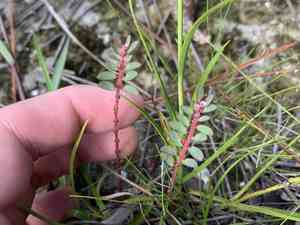
Everglade key sandmat (Euphorbia conferta)
Also known as: N/A
The Everglade key sandmat (Chamaesyce garberi) is a hardy plant well-suited for arid conditions. It typically grows in compact formations and is characterized by its fine branching structure. The plant's thin stems are adorned with tiny, water-retentive leaves that help minimize water loss. Its reproductive structures, known as cyathia, are often visually striking and attract pollinators, aiding in its reproduction even in challenging environments.
In This Article
Attributes of Everglade key sandmat
Lifespan
Perennial
Plant Type
Succulent
Plant Height
30-60 cm
Spread
Varies depending on growth conditions
Leaf Color
Green or pale green
Flower Size
Very small, usually not exceeding a few millimeters
Flower Color
Yellowish
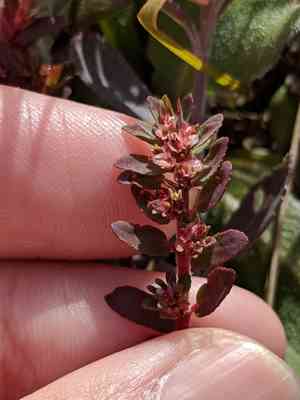
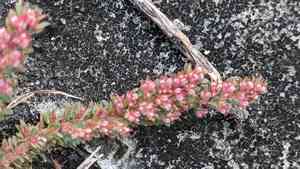
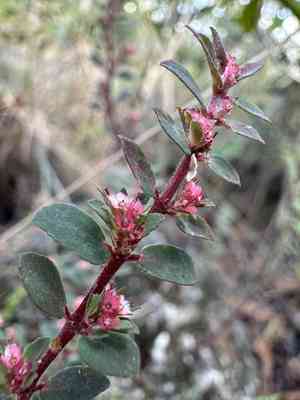
Images of Everglade key sandmat
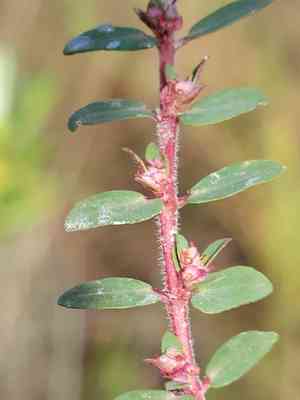
Quickly Identify Everglade key sandmat
1
The plant can be identified by its thick, succulent stems and branches that often have a milky sap. It typically has small, inconspicuous flowers.
Scientific Classification of Everglade key sandmat
Phylum
Vascular plants
Class
Dicotyledons
Order
Malpighiales
Family
Spurge
Genus
Spurges
Species
Everglade key sandmat
Planting and Growing of Everglade key sandmat
Care Difficulty
Easy
Watering Schedule
Every 2 days
Sunlight Requirements
Partial sun
Sunshine Duration
6-10 hours
Ideal Temperature
60-75℉
Soil Type
Potting Mix, Peat Mix
Soil pH
6.5-7.5
Fertilizer Type
Balanced
Pruning Season
Spring, Summer
Pruning Area
Branches, Leaves
Pruning Frequency
2 times a year
Repotting Season
Spring
Pot Type
Plastic, Terracotta
 How to Water Everglade key sandmat?
Euphorbia conferta prefers to be watered moderately, with around 250 milliliters each time. It's important to ensure that the soil is evenly moist but not waterlogged. Allow the topsoil to dry out slightly between waterings to prevent root rot.
What are the symptoms of an underwatered Everglade key sandmat?
›
What should I do if my Everglade key sandmat is not getting enough water?
›
What are the symptoms of an overwatered Everglade key sandmat?
›
How to save an overwatered Everglade key sandmat?
›
 What Are the Sunlight Requirements for Everglade key sandmat?
The plant flourishes best with partial sun exposure. This means receiving filtered sunlight for a few hours a day, enhancing photosynthesis and preventing damage associated with too much or too little light.
Solution for Optimal Lighting
›
Procedures to Ensure Ideal Lighting
›
Benefits of Optimal Lighting
›
 What Is the Ideal Temperature Range for Everglade key sandmat?
Euphorbia conferta thrives best within a temperature range of 60 to 75°F. This range allows for optimal photosynthesis and growth. Keeping your plant within this range helps avoid heat stress or cold shock, ensuring proper metabolic functions and healthy development throughout its growth cycle.
 What Soil is Best for Everglade key sandmat?
Euphorbia conferta thrives in well-drained soils where excess water doesn't accumulate. Proper drainage prevents root rot, ensuring the plant maintains robust health. Additionally, draining soils help in maintaining the aeration roots need. A soil mixture rich in organic matter ensures the Euphorbia conferta receives the necessary nutrients for growth. Rich soils promote vigorous plant growth, resulting in lush foliage and healthy blooms. While the soil should drain well, it should also retain sufficient moisture to keep the roots adequately hydrated. Soil with moderate moisture retention helps in maintaining consistent hydration levels, preventing wilting.
 How to Fertilize Everglade key sandmat?
For Euphorbia conferta, use a balanced 20-20-20 liquid fertilizer diluted to half the recommended strength. This helps in avoiding root burn while providing essential nutrients.
 How to Prune Everglade key sandmat?
Start by removing any dead or damaged stems to prevent disease spread. Use sharp, clean pruning shears for a precise cut just above a leaf node. Trim the top of the plant to maintain your desired height, and thin out any congested areas to improve air circulation around the plant.
More About Pruning Techniques→
 How to Propagate Everglade key sandmat plant?
1
If propagating from seeds, collect them once the seed pods mature and begin to dry. For cuttings, choose a healthy stem, ideally with several leaf nodes, for optimal growth potential.
2
For both seeds and cuttings, prepare a potting mix with equal parts of sand, perlite, and peat. This mix provides excellent drainage and holds enough moisture for seed germination or cutting establishment.
3
Sow seeds shallowly in the soil and lightly cover them. For cuttings, insert the cutting's base into the soil mix, ensuring at least one node is buried. Mist the area lightly to provide a humid environment favorable for growth.
 How to Repot Everglade key sandmat plant?
1
Euphorbia conferta signals repotting needs through roots emerging at drainage holes or slowed growth. Ideally, repot during spring or autumn when the plant is less stressed.
2
Choose a pot that's 1-2 inches larger in diameter than the current one, with adequate drainage holes. This prevents waterlogging, reduces root rot risk, and promotes healthy root development.
3
Opt for a well-draining cactus mix, which is crucial for preventing root rot and ensuring the roots receive adequate oxygen. A mix with pumice or perlite enhances drainage.
Toxicity
Ingestion, contact with sap
WARNING
The judgment on toxicity and danger is for reference only. We DO NOT GUARANTEE any accuracy of such judgment. Therefore, you SHALL NOT rely on such judgment. It is IMPORTANT TO SEEK PROFESSIONAL ADVICE in advance when necessary.
Learn More About Everglade key sandmat Diseases
Anthracnose
Bacterial Leaf Spot
Bacterial Soft Rot
Bacterial Wilt
Black Spot
Chemical Injury
Crown Gall
Cyst Nematode
Damping-off
Drought Stress
Fusarium Wilt
Gray Mold
Leaf Curl
Leaf Spot
Mosaic
Nutrient Deficiency
Nutrient Toxicity
Powdery Mildew
Root Rot
Root-knot Nematode
Rusts
Sooty Mold
Spider Mites
Temperature Stress
Thrips Damage
White Mold


