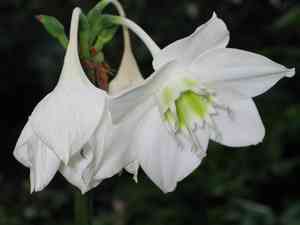
Amazon Lily(Eucharis amazonica)

Amazon Lily (Eucharis amazonica)

Also known as: Amazon lily, Eucharis lily

The Amazon Lily (Eucharis amazonica) is a perennial plant originally from Peru and has also spread to places like Venezuela, Mexico, and various tropical islands. This plant can reach a height of up to 75 cm and is recognized for its large, waxy leaves and pleasantly scented flowers. The term "Amazon Lily" is sometimes broadly applied to the entire Eucharis genus, which can lead to some confusion.

Attributes of Amazon Lily

Lifespan
Perennial
Plant Type
Herb
Plant Height
45 cm to 75 cm
Spread
45 cm to 60 cm
Leaf Color
Green
Flower Size
6 cm to 9 cm
Flower Color
White

ForwardPlant - Identify plants with a snap

Identify and diagnose plants, get toxicity alerts, and explore safety guides for all types of fungi.

Try for Free

Images of Amazon Lily

Amazon Lily(Eucharis amazonica)

Quickly Identify Amazon Lily

1
The Amazon lily can be identified by its broad, glossy, dark green leaves and clusters of star-shaped white flowers that have a sweet fragrance. The flowers typically bloom in late winter or early spring.

Scientific Classification of Amazon Lily

Phylum
Vascular plants
Class
Monocotyledons
Order
Asparagales
Family
Amaryllis
Genus
Amazon lily
Species
Amazon Lily

Planting and Growing of Amazon Lily

Care Difficulty
Easy
Watering Schedule
Every 3 days
Sunlight Requirements
Partial sun
Sunshine Duration
4-8 hours
Ideal Temperature
65-75℉
Soil Type
Potting Mix, Peat Mix
Soil pH
6.5-7.5
Fertilizer Type
Balanced
Pruning Season
Spring, Summer
Pruning Area
Branches, Leaves
Pruning Frequency
2 times a year
Repotting Season
Spring
Pot Type
Plastic, Ceramic

water icon How to Water Amazon Lily?

For Eucharis amazonica, water approximately 200 milliliters per session. It's crucial to ensure that the soil becomes moist but not soggy. The watering should be thorough, allowing excess to drain away. This helps prevent root rot while ensuring the plant gets enough moisture.
What are the symptoms of an underwatered Amazon Lily?
What should I do if my Amazon Lily is not getting enough water?
What are the symptoms of an overwatered Amazon Lily?
How to save an overwatered Amazon Lily?
More About Watering Techniques

sunlight icon What Are the Sunlight Requirements for Amazon Lily?

Sunlight Requirements: Partial sun, Full shade
Duration of light: 4 to 6 hours
Eucharis amazonica prefers partial sun to full shade, benefiting from 4 to 6 hours of indirect light. Ideal lighting promotes healthy, lush foliage and enhances flowering by simulating natural forest floor conditions.
What is the ideal light for Eucharis amazonica?
How can I provide the ideal lighting conditions?
What are the benefits of ideal lighting?
More About Sunlight Requirements Techniques

temperature icon What Is the Ideal Temperature Range for Amazon Lily?

Ideal Temperature: 65 ~ 75℉
Eucharis amazonica thrives best at temperatures between 65°F and 75°F. This range mimics the warm, humid conditions of its native habitat in the Amazon, ensuring optimal growth and blooming.

soil icon What Soil is Best for Amazon Lily?

Soil type: Loam, Sandy loam, Peat soil
Soil PH: 6.5 ~ 7.5
Eucharis amazonica thrives in soil that can retain adequate moisture without becoming waterlogged. This aids in steady plant growth and helps in maintaining lush foliage, essential for its ornamental appeal. Rich, fertile soil is crucial for the vigorous growth of Eucharis amazonica. It ensures a steady supply of essential nutrients, promoting healthy blooms and robust foliage. Soil that drains well is vital for preventing root rot in Eucharis amazonica. It ensures roots remain healthy by allowing excess water to escape, thus keeping the plant vibrant and thriving. More About Soil

fertilize icon How to Fertilize Amazon Lily?

Fertilizer type: Balanced
For Eucharis amazonica, the fertilizer amount should be administered sparingly. A balanced liquid houseplant fertilizer can be used, diluted to half the recommended strength for common indoor plants. Apply approximately 10-15 ml per liter of water, ensuring it is well mixed and evenly distributed to avoid root burn. More About Fertilizing Techniques

prune icon How to Prune Amazon Lily?

Pruning Time: Spring, Summer
Begin by identifying old, yellowing, or damaged leaves. These should be the primary focus for removal, as they no longer contribute to the plant’s health and can detract from its aesthetic appeal. Carefully cut these leaves as close to the base as possible without damaging the surrounding healthy foliage. This helps the plant direct energy to newer, more vibrant leaves and supports robust growth. After removing the unwanted leaves, step back and assess the plant’s shape. Ensure it maintains a balanced, elegant form, which is especially important for Eucharis amazonica as it’s often prized for its lush appearance. More About Pruning Techniques

propagate icon How to Propagate Amazon Lily plant?

Propagate Time: Spring, Early summer
1
Begin by gently removing the Eucharis amazonica from its pot. Carefully shake off excess soil, taking care not to damage the roots or bulbs. Inspect the plant to identify healthy rhizomes suitable for division.
2
Use a sharp knife or pruning shears to cut the rhizomes into sections, each containing at least one bulb and a few healthy roots. Ensure that each section has a good root system to support new growth.
3
Plant each division in a well-draining potting mix, burying the rhizomes slightly below the soil surface. Water lightly to settle the soil around the roots and encourage initial growth.
More About Propagating Techniques

repot icon How to Repot Amazon Lily plant?

Repotting frequency: Every 2-3 years
1
Repotting Eucharis amazonica is necessary when the plant shows signs of overcrowding in its pot or when growth has visibly slowed. These are common indicators that the roots need more space and fresh nutrients. Ideally, check for these signals early in spring or during autumn, when the plant is at its most resilient and can handle the transition better.
2
Select a pot that is one size larger than the current one, ensuring it has adequate drainage holes. A slightly deeper pot is preferable, allowing ample space for the bulbous roots to expand. Choosing the right pot size minimizes the risk of root rot and supports healthy, robust growth.
3
Opt for a rich, well-draining soil mix that mimics the plant's natural tropical environment. This can include a blend of peat moss, pine bark, and perlite. The right soil ensures adequate aeration and moisture retention, promoting healthy root proliferation and preventing waterlogging.
More About Repotting Techniques

ForwardPlant - Identify plants with a snap

Find the best spots for them to optimize their health, simply using your phone.

Try for Free

Toxicity of Amazon Lily

Is Amazon Lily toxic to humans?

The Amazon Lily presents a moderate risk of toxicity in humans if ingested. This entire plant is known to contain lycorine, a compound recognized for its toxic characteristics. Ingesting Amazon Lily can result in various symptoms, which may include nausea, vomiting, diarrhea, and abdominal discomfort. The intensity of these symptoms can differ based on the quantity consumed. Given that all components of the Amazon Lily are toxic, precautions should be taken to avoid accidental ingestion, particularly in settings where children or pets might be present.

Is Amazon Lily toxic to cat?

The Amazon Lily exhibits a moderate toxicity level to cats, which may cause poisoning if ingested by mistake. Every component of the Amazon Lily contains lycorine, a compound that, when ingested, can trigger signs of physical unease in felines. Exposure may result in a range of symptoms, necessitating prompt consultation with a veterinary expert. It is crucial to obtain treatment at a veterinary facility without hesitation to safeguard the cat's health following any suspected ingestion of Amazon Lily.

Is Amazon Lily toxic to dog?

The Amazon Lily is regarded as possessing moderate toxicity for dogs. If any part of this plant is ingested, dogs can suffer from poisoning because the entire Amazon Lily is harmful. Even small quantities can trigger a variety of symptoms, including vomiting, diarrhea, abdominal discomfort, excessive salivation, and potentially more serious effects such as tremors or cardiac irregularities, primarily caused by lycorine. It is essential for dog owners to restrict their pets' access to this plant and to be observant for any signs of distress that may suggest poisoning. In the event that a dog consumes the Amazon Lily, seeking immediate veterinary attention is vital to effectively manage the symptoms and ensure the best possible recovery for the affected animal.

Identify toxic plants for your safety

Learn which plants are harmful to you and your pets, and make informed choices for a safer home!

Try for Free
WARNING
The judgment on toxicity and danger is for reference only. We DO NOT GUARANTEE any accuracy of such judgment. Therefore, you SHALL NOT rely on such judgment. It is IMPORTANT TO SEEK PROFESSIONAL ADVICE in advance when necessary.
More About Toxic Techniques