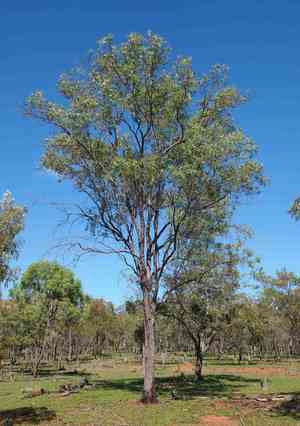
Queensland peppermint(Eucalyptus exserta)

Queensland peppermint (Eucalyptus exserta)

Also known as: Yellow messmate

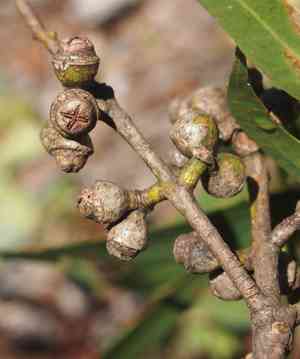
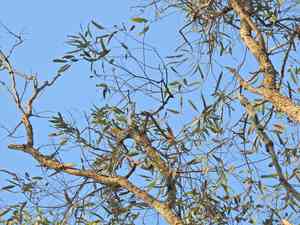
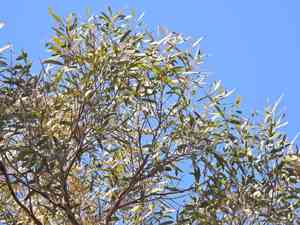
Eucalyptus exserta, also known as Queensland peppermint, can grow either as a mallee reaching up to 5 meters or as a tree up to 20 meters in height, and it forms a lignotuber. The bark is rough, fibrous, and grey, extending from the base to the smaller branches.

The leaves are narrow lance-shaped to lance-shaped, typically 7 to 18 cm in length and 7 to 27 mm in width, with a petiole measuring 8 to 20 mm. They are arranged alternately and are usually a dull to slightly glossy green.

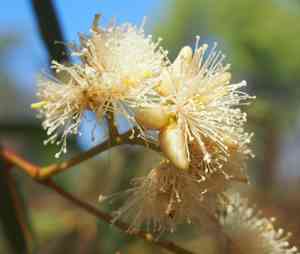
Flower buds are grouped in sevens, and the tree blooms with white flowers. The fruit is hemispherical to cup-shaped. Eucalyptus exserta is well-suited for arid conditions, making it a good choice for reforestation and land rehabilitation projects.

Attributes of Queensland peppermint

Lifespan
Perennial
Plant Type
Tree
Plant Height
10-25 meters
Spread
5-15 meters
Leaf Color
Green
Flower Size
1-2 cm
Flower Color
White

ForwardPlant - Identify plants with a snap

Identify and diagnose plants, get toxicity alerts, and explore safety guides for all types of fungi.

Try for Free

Images of Queensland peppermint

Queensland peppermint(Eucalyptus exserta)

Quickly Identify Queensland peppermint

1
The tree can be identified by its rough, fibrous bark which covers most of the trunk and branches. The leaves are narrow, lance-shaped, and have a distinct eucalyptus scent. The flowers are white and appear in clusters.

Scientific Classification of Queensland peppermint

Phylum
Vascular plants
Class
Dicotyledons
Order
Myrtle order
Family
Myrtle
Genus
Eucalypts
Species
Queensland peppermint

Planting and Growing of Queensland peppermint

Care Difficulty
Easy
Watering Schedule
Every day
Sunlight Requirements
Full sun
Sunshine Duration
6-10 hours
Ideal Temperature
65-77℉
Soil Type
Potting Mix, Peat Mix
Soil pH
6.5-7.5
Fertilizer Type
Balanced
Pruning Season
Spring, Summer
Pruning Area
Branches, Leaves
Pruning Frequency
2 times a year
Repotting Season
Spring
Pot Type
Plastic, Ceramic

water icon How to Water Queensland peppermint?

For Eucalyptus exserta, ensure the soil is well-drained and water until the soil is thoroughly moist but not waterlogged. A typical watering amount is approximately 500 ml per session, depending on the size of the plant and container. It's best to let the top 2 inches of soil dry out between waterings.
What are the symptoms of an underwatered Queensland peppermint?
What should I do if my Queensland peppermint is not getting enough water?
What are the symptoms of an overwatered Queensland peppermint?
How to save an overwatered Queensland peppermint?

sunlight icon What Are the Sunlight Requirements for Queensland peppermint?

Sunlight Requirements: Full sun
Duration of light: 6-8 hours daily
Eucalyptus exserta thrives in full sun environments, such as open gardens and sunny landscapes. Ideal sunlight helps maintain its vibrant leaf color and robust growth.
What is the ideal lighting solution?
How can one achieve this lighting condition?
What are the benefits of getting the ideal lighting?
More About Sunlight Requirements Techniques

temperature icon What Is the Ideal Temperature Range for Queensland peppermint?

Ideal Temperature: 65 ~ 77℉
The ideal temperature range for Eucalyptus exserta is between 65°F and 77°F. This temperature range provides optimal conditions for growth, allowing the plant to perform photosynthesis efficiently and maintain healthy physiological processes. At these temperatures, Eucalyptus exserta can develop strong root systems and lush foliage, crucial for its development.

soil icon What Soil is Best for Queensland peppermint?

Soil type: Sandy soil, Loam, Sandy loam
Soil PH: 6.5 ~ 7.5
Eucalyptus exserta thrives best in well-draining soils. Proper drainage prevents waterlogging, which can lead to root rot. Ensuring the soil is loose lets roots access air and nutrients efficiently. This species favors sandy or loamy textures, which allow for easier root penetration and optimal growth. Such textures help in retaining essential moisture while not holding excessive water. While Eucalyptus exserta can grow in nutrient-poor soils, providing a balanced nutrient mix encourages vigorous growth. Regularly amending the soil with organic matter can support its metabolic needs.

fertilize icon How to Fertilize Queensland peppermint?

Fertilizer type: Balanced
For Eucalyptus exserta, the amount of fertilizer required depends on its growth stage. Young saplings benefit from a balanced fertilizer with a ratio of 10-10-10 at 200 grams per tree. Mature trees need less frequent feeding and can use a low-nitrogen mix. Always ensure even distribution around the drip line.

prune icon How to Prune Queensland peppermint?

Pruning Time: Spring, Autumn
When pruning, focus on removing dead, damaged, or rubbing branches. This aids in air circulation and minimizes disease risk. Remember to cut at a slight angle just above a leaf node or lateral branch. Aim for a balanced and open structure when pruning. This ensures even distribution of sunlight and encourages even growth, while also enhancing the picturesque aesthetic of the tree. More About Pruning Techniques

propagate icon How to Propagate Queensland peppermint plant?

Propagate Time: Early spring, Late spring, Early autumn
1
Obtain seeds from a reliable source, soaking them in water overnight to enhance germination. Ensure the seeds are of good quality and free from any signs of diseases or pest damages.
2
Fill the seed tray with a well-draining potting mix, planting seeds slightly below the surface. Keep the soil moist but not waterlogged to encourage healthy seedling emergence and growth.
3
Choose healthy, semi-hardwood stems from a mature eucalyptus plant, ideally in early spring or late spring. Cut the stems at a node and ensure they are about 4 to 6 inches long for better rooting chances.

repot icon How to Repot Queensland peppermint plant?

Repotting frequency: Every 2-3 years
1
Eucalyptus exserta signals a need for repotting when its roots begin to outgrow their container. This can often be seen when roots start poking out from drainage holes or appearing on the soil surface. Additionally, slowed growth and constant dry roots are signals that the plant needs more space. Spring and autumn are ideal times for repotting to minimize stress on the plant.
2
Picking the appropriate pot for Eucalyptus exserta is crucial. Opt for a pot that is one size larger than the current one, ensuring it has good drainage holes. Using a slightly bigger pot supports healthy root expansion without drowning them in excess soil, which could lead to issues like root rot. Terra cotta pots are recommended for their breathable nature, allowing the roots to stay aerated.
3
A well-drained sandy loam is ideal for repotting Eucalyptus exserta. This mix provides an excellent balance of moisture retention and drainage, crucial for preventing root rot. It allows air to reach the roots easily, supporting healthy growth and reducing the likelihood of overwatering problems. Incorporating a bit of mulch can also help in retaining adequate moisture.

ForwardPlant - Identify plants with a snap

Find the best spots for them to optimize their health, simply using your phone.

Try for Free

Toxicity

ingestion, skin contact

Identify toxic plants for your safety

Learn which plants are harmful to you and your pets, and make informed choices for a safer home!

Try for Free
WARNING
The judgment on toxicity and danger is for reference only. We DO NOT GUARANTEE any accuracy of such judgment. Therefore, you SHALL NOT rely on such judgment. It is IMPORTANT TO SEEK PROFESSIONAL ADVICE in advance when necessary.