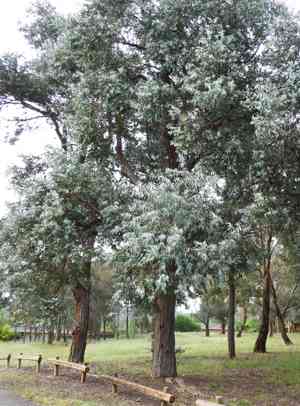
Argyle apple (Eucalyptus cinerea)
Also known as: Silver dollar tree, Florist's gum
Argyle apple (Eucalyptus cinerea) is an evergreen tree reaching heights of 6-15 meters and spreading 6-12 meters wide. Its silver-gray, coin-like leaves are aromatic, adding visual and sensory appeal. In spring, it produces abundant clusters of white flowers. This tree prefers full sun and thrives in well-drained soil with dry to medium moisture levels. It is also drought-tolerant once established, making it a striking and low-maintenance addition to any garden.
Attributes of Argyle apple
Images of Argyle apple
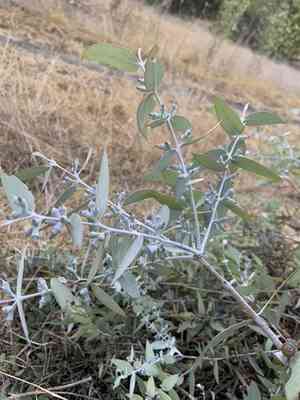
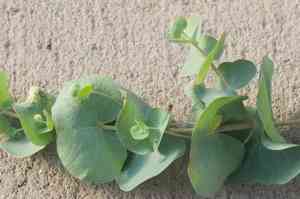
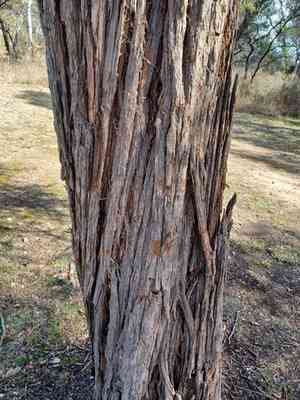
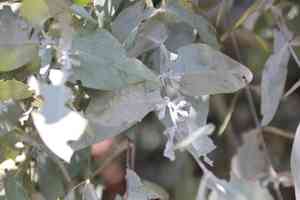
Quickly Identify Argyle apple
Scientific Classification of Argyle apple
Planting and Growing of Argyle apple
 How to Water Argyle apple?
 What Are the Sunlight Requirements for Argyle apple?
 What Is the Ideal Temperature Range for Argyle apple?
 What Soil is Best for Argyle apple?
 How to Fertilize Argyle apple?
 How to Prune Argyle apple?
 How to Propagate Argyle apple plant?
 How to Repot Argyle apple plant?
Toxicity of Argyle apple
Is Argyle apple toxic to humans?
The Argyle apple exhibits a moderate toxicity level to humans, primarily associated with the consumption of its essential oil. This oil contains specific compounds that, when ingested, can result in various symptoms typical of poisoning. Individuals who inadvertently take in the essential oil may encounter gastrointestinal issues, which can include intense abdominal pain, nausea, and vomiting. Furthermore, the symptoms may affect the central nervous system, leading to disorientation, dizziness, and, in severe instances, muscle weakness. It is vital for individuals to refrain from consuming the essential oil of the Argyle apple to avert these toxic consequences. Although the Argyle apple is not generally consumed as food, the potential for accidental ingestion persists, particularly among populations who could inadvertently come into contact with the plant's oil, unaware of its toxic properties.
Is Argyle apple toxic to cat?
The Argyle apple contains a moderate level of toxicity for cats, presenting a potential hazard if ingested accidentally. The chief toxic components are the essential oils, which can result in physical discomfort for felines upon consumption. It's essential for cat owners to recognize the risks associated with argyle apple and to keep a close watch on their pets for any abnormal behavior or distress signals. If poisoning is suspected, seeking immediate veterinary care is vital, as timely intervention plays a critical role in ensuring the health and recovery of the affected cat.
Is Argyle apple toxic to dog?
The Argyle apple presents a moderate risk of toxicity to dogs. Canines may inadvertently ingest various parts of the plant, especially the essential oil, which is recognized as toxic. Should a dog consume argyle apple, it may show signs such as gastrointestinal disturbances, lethargy, weakness, or excessive drooling. It is essential for dog owners to keep a close watch on their pets and restrict their access to this plant. In cases of suspected poisoning, prompt veterinary intervention is crucial to safeguard the health of the affected animal.



