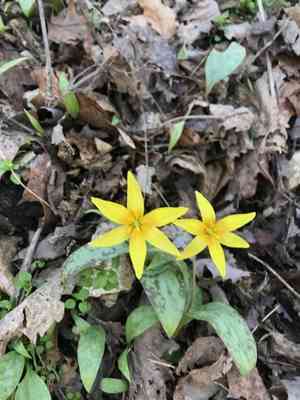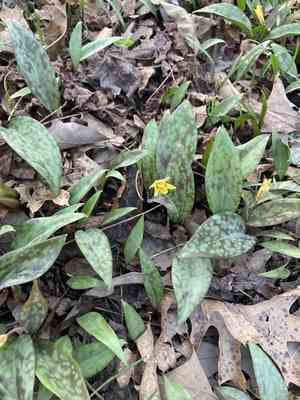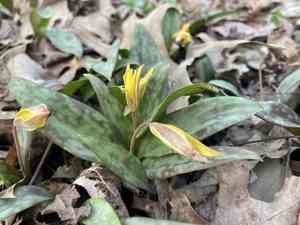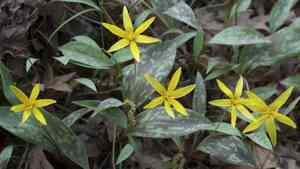
Yellow troutlily(Erythronium rostratum)

Yellow troutlily (Erythronium rostratum)

Also known as: Yellow Trout Lily, Yellow Dogtooth Violet

The yellow troutlily (Erythronium americanum) is a captivating spring wildflower. It showcases delicate, nodding yellow blooms with distinctive recurved petals and a subtle reddish-brown center. The slender stems add to its graceful appearance. Its lance-shaped leaves, mottled with green and brown patterns, are reminiscent of a trout's skin.

**Ideal Growing Conditions:**
- **Light:** Prefers dappled sunlight, thriving in partial to full shade.
- **Soil:** Requires moist, well-draining soil rich in organic material.
- **Habitat:** Naturally found in deciduous woodlands, often in areas with rich, moist soil, such as near streams or in forested regions.

These conditions allow the yellow troutlily to flourish, making it a charming addition to woodland gardens.

Attributes of Yellow troutlily

Lifespan
Perennial
Plant Type
Herb
Plant Height
4 to 8 inches
Spread
N/A
Leaf Color
Green with brown or reddish mottling
Flower Size
1 to 1.5 inches
Flower Color
Yellow

ForwardPlant - Identify plants with a snap

Identify and diagnose plants, get toxicity alerts, and explore safety guides for all types of fungi.

Try for Free

Images of Yellow troutlily

Yellow troutlily(Erythronium rostratum)

Quickly Identify Yellow troutlily

1
Identify Erythronium rostratum by its mottled leaves resembling trout skin, paired with yellow, six-petaled flowers that bend downwards on separate, slender stems.

Scientific Classification of Yellow troutlily

Phylum
Vascular plants
Class
Monocotyledons
Order
Liliales
Family
Lily
Genus
Fawn lilies
Species
Yellow troutlily

Planting and Growing of Yellow troutlily

Care Difficulty
Moderate
Watering Schedule
Every 3 days
Sunlight Requirements
Partial sun
Sunshine Duration
6-10 hours
Ideal Temperature
60-75℉
Soil Type
Potting Mix, Peat Mix
Soil pH
6.5-7.5
Fertilizer Type
Balanced
Pruning Season
Spring, Summer
Pruning Area
Branches, Leaves
Pruning Frequency
Once a year
Repotting Season
Spring
Pot Type
Plastic, Ceramic

water icon How to Water Yellow troutlily?

Erythronium rostratum requires a balanced watering regime. It's crucial to provide approximately 250 milliliters of water per session. Water until the soil feels evenly moist but not waterlogged, allowing excess water to drain adequately to prevent root rot. The goal is to maintain consistent moisture without oversaturating the soil.
What are the symptoms of an underwatered Yellow troutlily?
What should I do if my Yellow troutlily is not getting enough water?
What are the symptoms of an overwatered Yellow troutlily?
How to save an overwatered Yellow troutlily?

sunlight icon What Are the Sunlight Requirements for Yellow troutlily?

Sunlight Requirements: Partial sun
Duration of light: 4 to 6 hours
For optimal health, Erythronium rostratum thrives best in partial sun environments, receiving 4 to 6 hours of sunlight daily. This amount ensures balanced photosynthesis and energy production, fostering robust growth and vibrant flowers.
What is the ideal light condition for Erythronium rostratum?
How can I ensure Erythronium rostratum gets ideal lighting?
Why is ideal lighting beneficial for Erythronium rostratum?

temperature icon What Is the Ideal Temperature Range for Yellow troutlily?

Ideal Temperature: 60 ~ 75℉
For the optimal growth of Erythronium rostratum, the ideal temperature range should be maintained between 60°F and 75°F. Within this temperature range, the plant can perform photosynthesis efficiently and metabolize nutrients effectively, promoting vibrant blooms and healthy foliage. During these temperatures, the plant is less likely to face stress related challenges, which ensures consistent growth and vitality.

soil icon What Soil is Best for Yellow troutlily?

Soil type: Loam, Sandy loam
Soil PH: 6.5 ~ 7.5
Erythronium rostratum thrives in soils that retain adequate moisture without becoming waterlogged. Adequate moisture ensures the plant's fibrous roots remain hydrated, thereby promoting optimal growth and vibrant bloom displays. Rich in organic matter, the soil meets the plant's nutrient needs. This nutritional wealth supports healthy foliage and robust flowering by providing essential macronutrients and micronutrients. Well-aerated soils enable root respiration and nutrient uptake. For Erythronium rostratum, good aeration helps avoid root rot and promotes vigorous development, enhancing overall plant health.

fertilize icon How to Fertilize Yellow troutlily?

Fertilizer type: Balanced
For Erythronium rostratum, it's important to apply a balanced fertilizer at a dose that reflects the plant's growth stage and seasonal requirements. Typically, using a 10-10-10 NPK formulation with a dose of about one tablespoon per gallon of water for liquid feeds works well, ensuring not to over-saturate the soil.

prune icon How to Prune Yellow troutlily?

Pruning Time: Spring, Summer
Begin by carefully examining the Erythronium rostratum to identify dead or damaged leaves. Use sharp, clean scissors or pruning shears to make the cuts. Ensure good air circulation around the base to prevent diseases, and cut back any dried flower stalks close to the ground for tidiness. Focus on creating a neat appearance by trimming any unruly or sprawling growth that detracts from the plant's natural elegance. Ensure to cut at a slight angle just above a healthy leaf or bud to prevent water pooling on the cut surface, which can lead to rot. More About Pruning Techniques

propagate icon How to Propagate Yellow troutlily plant?

Propagate Time: Early spring, Spring
1
Start with a well-draining mix. Moisten it slightly before filling your seed trays, ensuring the medium stays loose and promotes good seed-to-soil contact for better germination.
2
Distribute the seeds evenly across the surface of the prepared tray, covering lightly with soil. Erythronium rostratum needs light to germinate, so avoid burying them too deep.
3
Carefully lift the bulbs with a garden fork in early spring. Split them into smaller sections ensuring each has a portion of the root system. Replant immediately for best results.
More About Propagating Techniques

repot icon How to Repot Yellow troutlily plant?

Repotting frequency: Every couple of years
1
Erythronium rostratum should be repotted when you notice overcrowding in the pot, or when the bulbs have visibly outgrown their container. This typically becomes apparent when leaf production starts to decline, or roots start emerging from drainage holes. Spring is the best season, as the plant is in active growth and can quickly establish in the new soil.
2
Select a pot that is slightly larger than the current one—just enough to accommodate the new growth comfortably. A pot with sufficient drainage holes is essential to prevent waterlogging, which could cause root rot. The material of the pot, whether ceramic or terracotta, should ensure good breathability and stability, promoting healthy growth.
3
Opt for a well-draining, loamy soil mix to mimic the natural conditions in which this plant thrives. This type of soil provides the necessary nutrients while ensuring proper drainage. Good drainage is crucial in preventing water retention, which reduces the risk of bulb rot, thus promoting robust root health.

ForwardPlant - Identify plants with a snap

Find the best spots for them to optimize their health, simply using your phone.

Try for Free