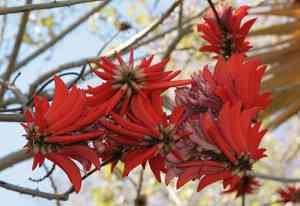
Shrove tuesday (Erythrina corallodendron)
Also known as: Red bean tree, Cutlass bush, Jumbie bread, Spanish machete
The Flamboyant tree, or Delonix regia, is notable for its brilliant red flowers that bloom in the summer. It's often planted in agroforestry systems to serve as a living fence and is also valued for its wood.
In This Article
Attributes of Shrove tuesday
Lifespan
Perennial
Plant Type
Tree, Shrub
Plant Height
3 m to 5 m
Spread
1.8 m to 3 m
Leaf Color
Green
Flower Size
2.5 cm to 5 cm
Flower Color
Red
Quickly Identify Shrove tuesday
1
This tree can be identified by its trifoliate leaves, thorny branches, and vibrant red or orange flowers. The flowers are tubular and often appear before the leaves, making them particularly noticeable.
Scientific Classification of Shrove tuesday
Phylum
Vascular plants
Class
Dicotyledons
Order
Legumes, milkworts and allies
Family
Legume
Genus
Coral trees
Species
Shrove tuesday
Planting and Growing of Shrove tuesday
Care Difficulty
Hard
Watering Schedule
Every 2 days
Sunlight Requirements
Full sun
Sunshine Duration
6-10 hours
Ideal Temperature
68-85℉
Soil Type
Potting Mix, Peat Mix
Soil pH
6.5-7.5
Fertilizer Type
Balanced
Pruning Season
Spring, Summer
Pruning Area
Branches, Leaves
Pruning Frequency
2 times a year
Repotting Season
Spring
Pot Type
Plastic, Terracotta
 How to Water Shrove tuesday?
Erythrina corallodendron, known for its vibrant coral-like flowers, requires a balanced approach to watering. Each watering session should deliver about 500 ml, thoroughly soaking the root zone but ensuring that excess moisture drains away to mimic the tropical conditions it thrives in.
What are the symptoms of an underwatered Shrove tuesday?
›
What should I do if my Shrove tuesday is not getting enough water?
›
What are the symptoms of an overwatered Shrove tuesday?
›
How to save an overwatered Shrove tuesday?
›
 What Are the Sunlight Requirements for Shrove tuesday?
Full sun to partial sun is optimal for Erythrina corallodendron, ensuring vibrant flowering. Adequate light promotes robust growth and supports the plant's natural aesthetic charm.
More About Sunlight Requirements Techniques→
What type of light is best for Erythrina corallodendron?
›
How can I ensure Erythrina corallodendron receives the right amount of sunlight?
›
What are the benefits of providing ideal lighting conditions?
›
 What Is the Ideal Temperature Range for Shrove tuesday?
Erythrina corallodendron thrives best within a temperature range of 68°F to 85°F. Within this range, the plant can photosynthesize efficiently, aiding in robust growth and flowering. Maintaining this temperature helps in preventing stress and thus promotes longevity and vibrant health in the plant.
 What Soil is Best for Shrove tuesday?
Erythrina corallodendron thrives in well-drained soils where excess water doesn't accumulate. This condition prevents root rot, promoting healthy root development and robust plant growth. This plant prefers soils rich in organic matter, which provides the essential nutrients needed for optimal growth and vibrant blooms, ensuring the plant maintains its striking appearance. The soil should retain some moisture without becoming waterlogged, allowing the plant to access water during dry periods, thus maintaining its vitality and resilience.
 How to Fertilize Shrove tuesday?
For Erythrina corallodendron, use a balanced fertilizer with an NPK ratio of around 10-10-10. Apply liquid fertilizer following the manufacturer's instructions but use at half the recommended strength to avoid over-fertilization. For granular fertilizers, apply about 1/4 cup evenly spread around the base of the plant.
 How to Prune Shrove tuesday?
Begin by cutting away any dead or damaged branches. Make clean cuts at the base of the branch to prevent snags and allow the plant to heal quickly. Trim back overgrown branches to maintain the desired shape of your plant. Remove crossing branches to allow light and air to penetrate the canopy, reducing the risk of fungal infections. To promote vigorous new growth, prune back some of the older branches. This will stimulate the development of new shoots and is likely to result in more abundant flowering.
More About Pruning Techniques→
 How to Propagate Shrove tuesday plant?
1
Harvest seeds from mature Erythrina corallodendron pods and allow them to dry. Ensure the seeds are mature and fully formed for the best chances of germination.
2
select healthy, semi-hardwood stems from the parent plant. Cut at a 45-degree angle to increase the root surface area and remove any leaves from the lower third of the stem.
3
Sow seeds in containers filled with a well-draining potting mix, or place cuttings in pots with a suitable rooting medium. Keep them warm and moist to promote root development.
 How to Repot Shrove tuesday plant?
1
Erythrina corallodendron, or the Coral Bean Tree, signals its need for repotting when you observe roots coiling around the bottom of the pot or protruding from drainage holes. Additionally, if the plant appears stunted or has slow growth despite optimal care, it's time to consider repotting. Ensuring you repot during its active growth seasons in spring or summer can help minimize transplantation stress and encourage a vibrant rebound.
2
Select a pot that is only slightly larger than its current one; a pot that is 2-3 inches wider in diameter provides adequate room for growth. This shallow increase helps in avoiding excessive soil that may retain too much moisture, which could lead to root rot. Ensure the pot has adequate drainage holes to prevent waterlogging, which is crucial for the well-being of Erythrina corallodendron.
3
Choose a well-draining sandy loam mixture enriched with organic matter for repotting. This type of soil ensures proper aeration and allows excess water to drain quickly, preventing the roots from sitting in soggy conditions. A soil blend that retains some moisture while providing excellent aeration is beneficial for maintaining healthy root growth and overall plant vitality.
Learn More About Shrove tuesday Diseases
Anthracnose
Bacterial Leaf Spot
Bacterial Wilt
Crown Gall
Cyst Nematode
Damping-off
Drought Stress
Fusarium Wilt
Gray Mold
Leaf Curl
Leaf Spot
Mosaic
Nutrient Deficiency
Nutrient Toxicity
Powdery Mildew
Root Rot
Root-knot Nematode
Rusts
Sooty Mold
Spider Mites
Temperature Stress
Thrips Damage
White Mold



