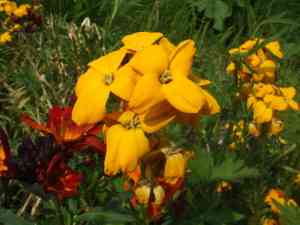
Wallflower(Erysimum cheiri)

Wallflower (Erysimum cheiri)

Also known as: Garden wallflower

The Wallflower (Erysimum cheiri) is a slender, flowering plant that often thrives in rocky crevices. It produces a profusion of fragrant flowers in spring, showcasing a variety of colors including yellow, orange, red, purple, brown, and white. Gardeners frequently grow Wallflowers as biennials, planting seeds one year to safeguard the roots from a common disease called clubfoot.

Attributes of Wallflower

Lifespan
Perennial, Biennial, Annual
Plant Type
Herb
Plant Height
15 cm to 80 cm
Spread
50 cm
Leaf Color
Green
Flower Size
2 cm to 2.5 cm
Flower Color
Orange Red White Yellow Purple

ForwardPlant - Identify plants with a snap

Identify and diagnose plants, get toxicity alerts, and explore safety guides for all types of fungi.

Try for Free

Images of Wallflower

Wallflower(Erysimum cheiri)

Quickly Identify Wallflower

1
Wallflowers typically have fragrant, four-petaled flowers that come in shades of yellow, orange, red, and purple. They have a bushy growth habit with narrow, lance-shaped leaves.

Scientific Classification of Wallflower

Phylum
Vascular plants
Class
Dicotyledons
Order
Mustards, capers, and allies
Family
Cruciferae
Genus
Wallflower
Species
Wallflower

Planting and Growing of Wallflower

Care Difficulty
Easy
Watering Schedule
Every 4 days
Sunlight Requirements
Full sun
Sunshine Duration
4-8 hours
Ideal Temperature
60-70℉
Soil Type
Potting Mix, Peat Mix
Soil pH
6.5-7.5
Fertilizer Type
Balanced
Pruning Season
Spring, Summer
Pruning Area
Branches, Leaves
Pruning Frequency
2 times a year
Repotting Season
Spring
Pot Type
Ceramic, Plastic

water icon How to Water Wallflower?

Erysimum cheiri prefers its soil to be consistently moist but not waterlogged. Ensure that the top 1-2 inches of soil dry out between waterings. You should provide around 500ml of water per watering session, making sure it penetrates deeply into the root zone.
What are the symptoms of an underwatered Wallflower?
What should I do if my Wallflower is not getting enough water?
What are the symptoms of an overwatered Wallflower?
How to save an overwatered Wallflower?
More About Watering Techniques

sunlight icon What Are the Sunlight Requirements for Wallflower?

Sunlight Requirements: Full sun, Partial sun
Duration of light: 6 to 8 hours
Erysimum cheiri thrives in full sun to partial sun, ideally receiving 6 to 8 hours of sunlight daily. This range encourages vigorous blooming and healthy foliage, maximizing its ornamental appeal and robustness.
What is the ideal light level for Erysimum cheiri?
How can I ensure my Erysimum cheiri receives enough light?
What are the benefits of ideal lighting for Erysimum cheiri?
More About Sunlight Requirements Techniques

temperature icon What Is the Ideal Temperature Range for Wallflower?

Ideal Temperature: 60 ~ 70℉
The recommended temperature range for optimal growth of Erysimum cheiri is between 60°F and 70°F. Within this range, the plant can photosynthesize and metabolize efficiently. This temperature range not only supports healthy leaf and flower development but also encourages the plant's optimal structural growth. Additionally, maintaining this range helps in maximizing the flowering period and enhancing the fragrance, leading to a more aesthetically pleasing plant.

soil icon What Soil is Best for Wallflower?

Soil type: Loam, Calcareous soil, Sandy loam
Soil PH: 6.5 ~ 7.5
Erysimum cheiri thrives in a nutrient-dense substrate, beneficial for providing necessary elements for its vibrant blooms and lush foliage. Adequate drainage is crucial to prevent waterlogging, which can lead to root rot; ensuring the plant's roots receive enough oxygen promotes healthy growth. While requiring good drainage, the soil should still retain enough moisture to sustain the plant during dry spells, balancing hydration for robust health. More About Soil

fertilize icon How to Fertilize Wallflower?

Fertilizer type: Balanced
For Erysimum cheiri, a modest amount of fertilizer goes a long way. Use approximately half the recommended rate for typical flowering plants. This means that for liquid fertilizers, usually mix about 10 ml of concentrated solution with 1 liter of water. For granular or slow-release types, scatter lightly around the base of the plant, ensuring never to exceed a tablespoon per plant to avoid root burns. More About Fertilizing Techniques

prune icon How to Prune Wallflower?

Pruning Time: Spring, Summer
Start by using clean, sharp pruning shears. First, remove any dead or diseased stems, cutting them back to healthy tissue. If the plant becomes leggy, trim back up to one-third of the stems to encourage more compact growth. Target any overgrown stems, making cuts just above a leaf joint to spur new growth. This basic approach will keep your Erysimum cheiri thriving. Deadheading is essential for prolonging the blooming season. After the flowers fade, use your fingers or shears to snap off the spent blooms at their base. This process redirects the plant's energy from seed production back to forming new flowers, ensuring a beautiful display throughout the flowering months. Consistent deadheading can vastly improve the aesthetics and performance of your wallflowers. More About Pruning Techniques

propagate icon How to Propagate Wallflower plant?

Propagate Time: Spring, Early summer
1
Start by filling the seed tray with a well-draining potting mix. Ensure it is moist but not waterlogged. This provides an ideal environment for the seeds to germinate and ensures good root development.
2
Distribute the seeds evenly over the surface of the soil in the seed tray. Cover them lightly with a thin layer of soil to protect them from pests and to ensure adequate coverage for proper germination.
3
Use a sterilized tool to take 4-6 inch cuttings from the healthy sections of a mature plant. Remove lower leaves and dip the cut end in rooting hormone to enhance root formation.
More About Propagating Techniques

repot icon How to Repot Wallflower plant?

Repotting frequency: Every 2-3 years
1
The ideal time to repot Erysimum cheiri is when you notice roots spiraling at the base of the pot or growth starts declining. If the plant appears root-bound or water drains too quickly, it's time for repotting, preferably during spring or autumn when growth conditions are optimal and the plant can settle into its new environment without additional stress.
2
Choose a pot that is 1-2 inches larger in diameter than the current one. It should have adequate drainage holes to prevent waterlogging, which can cause root rot. Opting for terracotta pots can also be beneficial, as they allow the soil to breathe, enhancing drainage and airflow around the roots, thus promoting a healthier root environment.
3
Select a well-draining potting mix that mimics the plant's natural growing conditions. A blend that contains peat, sand, and organic matter ensures sufficient aeration and nutrient availability. This type of soil mix prevents water retention, reducing the risk of overwatering while providing the necessary nutrients for strong growth and vibrant blooms.

ForwardPlant - Identify plants with a snap

Find the best spots for them to optimize their health, simply using your phone.

Try for Free

Toxicity of Wallflower

Is Wallflower toxic to humans?

Wallflower exhibits a moderate toxicity level to humans, with the entire plant being capable of inducing poisoning when ingested. Upon consumption, individuals might exhibit various symptoms associated with poisoning, which could encompass gastrointestinal issues such as nausea, vomiting, and diarrhea. Furthermore, symptoms may progress to neurological effects like headaches, dizziness, or even more serious central nervous system reactions. Although the specific toxic compounds in wallflower are not identified, every part of the plant—including leaves, stems, flowers, and roots—should be regarded as potentially harmful if ingested. Accidental consumption is the main concern, as wallflower usually does not get recognized as an edible species. It's crucial to exercise caution around wallflower to avert unintentional ingestion, particularly by children or pets attracted to its vibrant colors.

Is Wallflower toxic to cat?

Wallflower, often referred to simply as Wallflower, carries a moderate risk of toxicity for cats. Should a cat consume any portion of this plant, which is toxic throughout, it may exhibit symptoms of discomfort or illness. Poisoning usually happens when a cat mistakenly ingests portions of wallflower. Pet owners must vigilantly observe their cats for any unusual behaviors or signs of distress, as these may indicate possible poisoning. If ingestion is suspected, it is essential to rapidly seek veterinary care to guarantee the safety and health of the cat.

Is Wallflower toxic to dog?

The plant species known as wallflower is recognized for its moderate toxicity to dogs. If ingested accidentally, this plant can poison dogs. All parts of the wallflower are toxic, meaning that any portion can endanger canine health. Therefore, pet owners must remain vigilant and ensure that their dogs do not have access to this plant. Signs of poisoning in dogs may manifest as gastrointestinal issues, vomiting, diarrhea, or more severe reactions depending on the quantity consumed. It is essential for dog owners to keep a close watch on their pets and seek immediate veterinary assistance if they suspect their dog has eaten wallflower. Timely treatment at a veterinary clinic is critical for the recovery of an affected dog.

Identify toxic plants for your safety

Learn which plants are harmful to you and your pets, and make informed choices for a safer home!

Try for Free
WARNING
The judgment on toxicity and danger is for reference only. We DO NOT GUARANTEE any accuracy of such judgment. Therefore, you SHALL NOT rely on such judgment. It is IMPORTANT TO SEEK PROFESSIONAL ADVICE in advance when necessary.
More About Toxic Techniques

