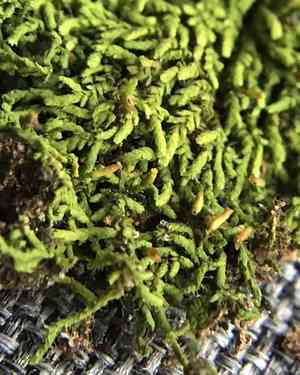
Domingo erpodium moss (Erpodium domingense)
Also known as: None
Domingo erpodium moss is a tropical epiphyte that thrives on tree branches in humid climates. Its compact, hardy leaves are designed to capture and hold onto moisture from mist and rain. Exhibiting a mat-forming growth pattern, the moss displays vibrant green hues that enhance its tree-dwelling habitat, showcasing its effective adaptation strategy for survival in elevated, moisture-variable environments.
In This Article
Attributes of Domingo erpodium moss
Lifespan
Perennial
Plant Type
Moss
Plant Height
Up to 2 cm
Spread
Not applicable
Leaf Color
Light Green to Dark Green
Flower Size
Not applicable
Flower Color
Not applicable
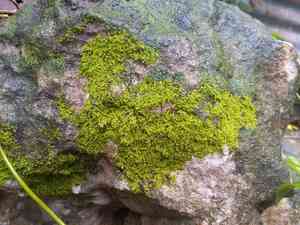
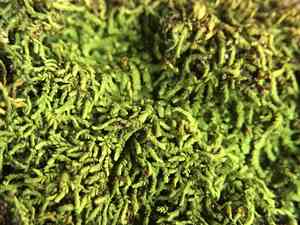
Images of Domingo erpodium moss
Quickly Identify Domingo erpodium moss
1
Erpodium domingense can be identified by its small, cushion-like growth form. Its leaves are simple and arranged spirally around the stem, giving it a dense, tufted appearance.
Scientific Classification of Domingo erpodium moss
Phylum
Mosses
Class
True mosses
Order
Pottiales
Family
Erpodiaceae
Genus
Erpodium moss
Species
Domingo erpodium moss
Planting and Growing of Domingo erpodium moss
Care Difficulty
Moderate
Watering Schedule
Every 2 days
Sunlight Requirements
Full shade
Sunshine Duration
4-6 hours
Ideal Temperature
60-75℉
Soil Type
Potting Mix, Peat Mix
Soil pH
6-7.5
Fertilizer Type
Balanced
Pruning Season
Spring, Summer
Pruning Area
Branches, Leaves
Pruning Frequency
2 times a year
Repotting Season
Spring
Pot Type
Plastic, Ceramic
 How to Water Domingo erpodium moss?
For Erpodium domingense, it's essential to maintain slightly moist soil without waterlogging. A good rule of thumb is to water until you see a little excess moisture at the bottom of the container, which suggests the soil is adequately saturated but not drenched.
What are the symptoms of an underwatered Domingo erpodium moss?
›
What should I do if my Domingo erpodium moss is not getting enough water?
›
What are the symptoms of an overwatered Domingo erpodium moss?
›
How to save an overwatered Domingo erpodium moss?
›
 What Are the Sunlight Requirements for Domingo erpodium moss?
Erpodium domingense ideally grows in partial to full shade, similar to the understory of a forest. This light range supports healthy foliage and soil moisture retention, crucial for optimal plant health.
Optimal Light Levels
›
Solution
›
Achieved Benefits
›
 What Is the Ideal Temperature Range for Domingo erpodium moss?
Erpodium domingense thrives best in temperatures ranging between 60°F to 75°F. This range ensures optimal growth by providing the energy necessary for photosynthesis and metabolism without stressing the plant. Maintaining this temperature range is crucial for healthy foliage and flowering.
 What Soil is Best for Domingo erpodium moss?
Erpodium domingense thrives in well-draining soils that prevent water stagnation, which is crucial for root health. Good drainage ensures the roots receive adequate oxygen and mitigates the risk of root rot. This plant benefits from soils that have moderate fertility levels, providing essential nutrients without overwhelming delicate root systems, encouraging balanced growth. The presence of organic material in the soil supports Erpodium domingense by improving soil structure, moisture retention, and offer a slow release of nutrients, crucial for steady growth.
 How to Fertilize Domingo erpodium moss?
For Erpodium domingense, it's advisable to use a dilute liquid fertilizer solution at 1/4th of the recommended strength for other houseplants. This ensures that the delicate bryophyte does not experience nutrient shock, which could lead to detrimental effects on its health.
 How to Prune Domingo erpodium moss?
To prune Erpodium domingense, use sharp, clean scissors or shears. Carefully trim away any overgrown or leggy portions, focusing on maintaining a uniform shape. Be gentle during the process to avoid dislodging any healthy plant sections. Trim small sections at a time to ensure precision and avoid over-pruning. Pruning can also be used to encourage horizontal expansion. Trim sections that are excessively upward-growing to redirect energy towards spreading and filling in gaps. This technique ensures a lush, carpet-like appearance over time.
 How to Propagate Domingo erpodium moss plant?
1
Before dividing, water the plant thoroughly to ensure the soil is moist but not waterlogged. This conditions the roots for easier division and reduces stress. An adequately hydrated plant divides more smoothly and recovers quicker.
2
Carefully remove the plant from its pot or ground. Use your hands or a knife to separate the root ball into smaller sections, ensuring each section has healthy roots. Handle the roots as delicately as possible to prevent damage.
3
Once divided, immediately plant each section into pots or ground with suitable soil. Press the soil gently around the roots to eliminate any air gaps. Water each section to settle the soil and encourage root establishment.
 How to Repot Domingo erpodium moss plant?
1
Erpodium domingense should be repotted when growth slows considerably, or when the roots become visible through the drainage holes. Spring and Autumn are ideal as these seasons align with active growth periods, allowing the plant to recover effectively. If moss appears dry and lifeless, it's a sign that repotting can refresh the substrate and offer the plant revitalized nutrition and moisture control.
2
Choose a pot slightly larger than the current one to promote healthy growth while avoiding excessive space that could lead to waterlogging. Ensure the pot has ample drainage holes to prevent moisture accumulation, as good drainage is crucial for Erpodium domingense. Clay pots are an excellent choice since they allow for air circulation and help regulate soil moisture.
3
Opt for a well-draining mossy mix, enriched with organic matter to provide ample nutrients. This type of soil mimics the plant's natural environment, retaining necessary moisture while ensuring excess water quickly drains away. Such balance prevents root rot and supports the healthy growth of Erpodium domingense.

